Outside In Print weekly sheet
Bob's Almanack
A weekly note from Robert V. Ussley with new essays, cartoons, and brief notes from Outside In Print.
A public rule is only as clean as the place where it lands.
New from Outside In Print
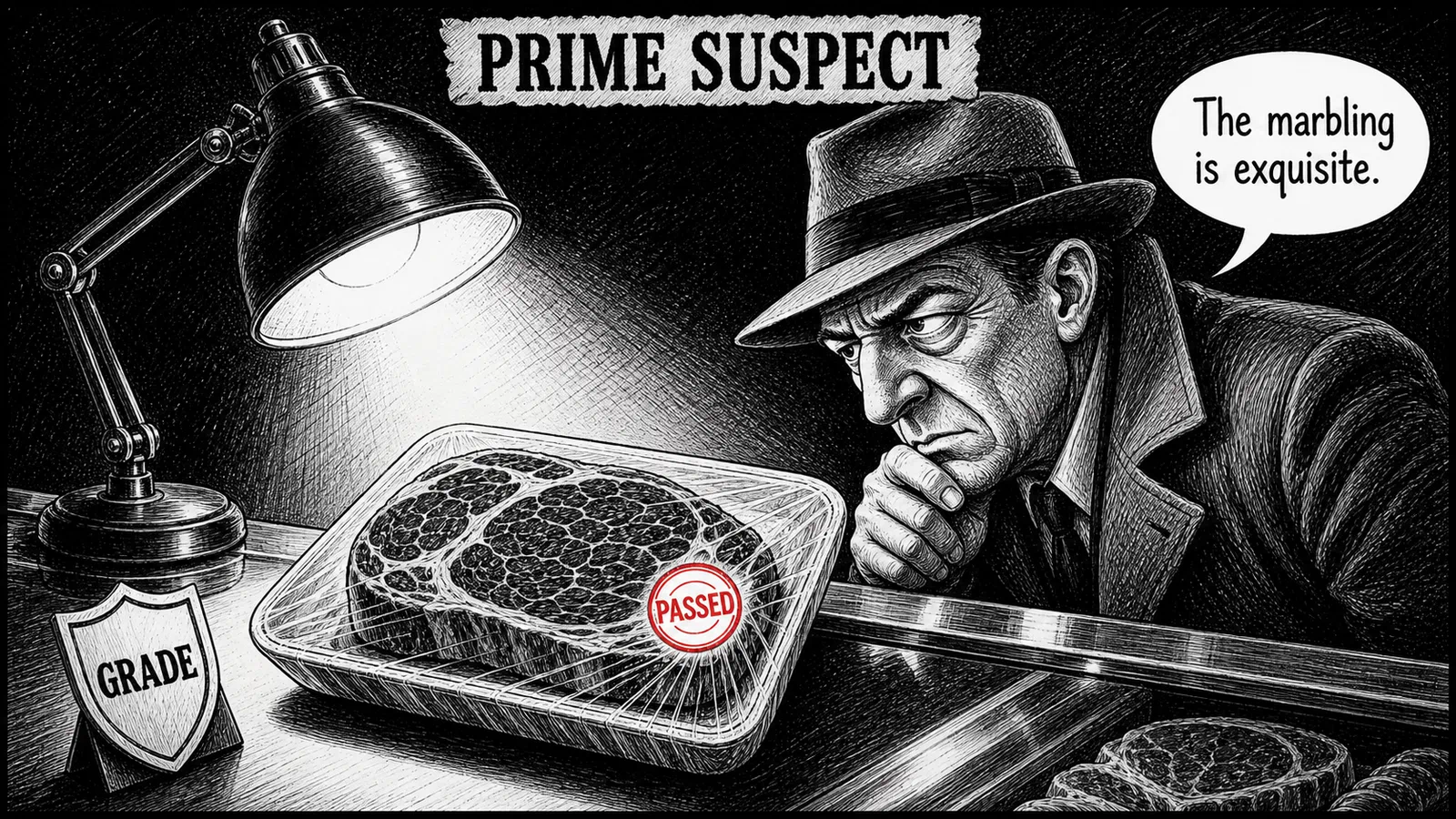
The Stamp on the Meat
The meat inspection stamp turns hidden slaughterhouse judgment into a portable public fact, then asks shoppers to know where official trust ends.
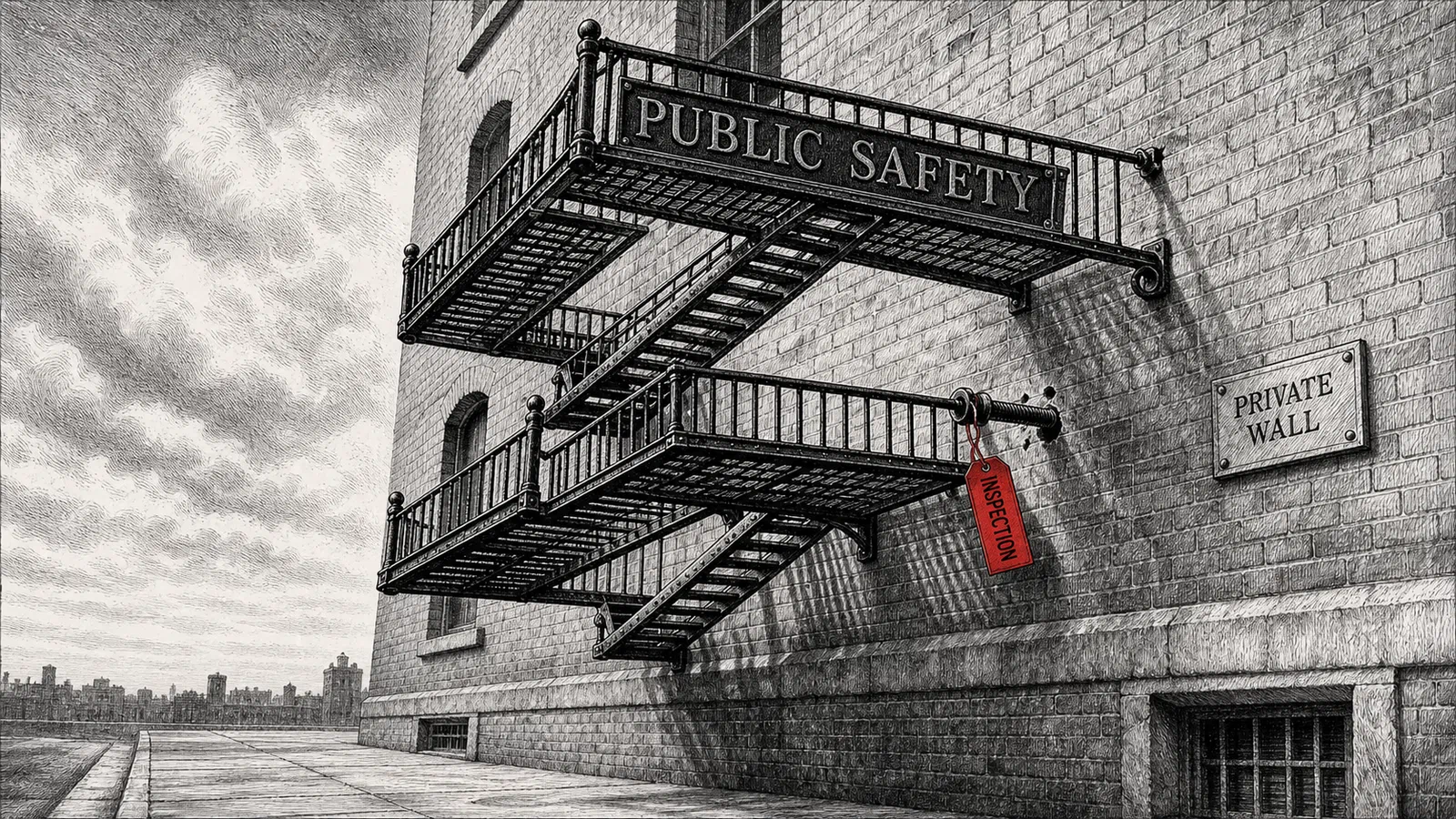
The Ladder Outside the Window
New York's fire escape began as emergency law bolted onto dense private housing, then became a visible contract among owners, tenants, inspectors, preservation, and public safety.
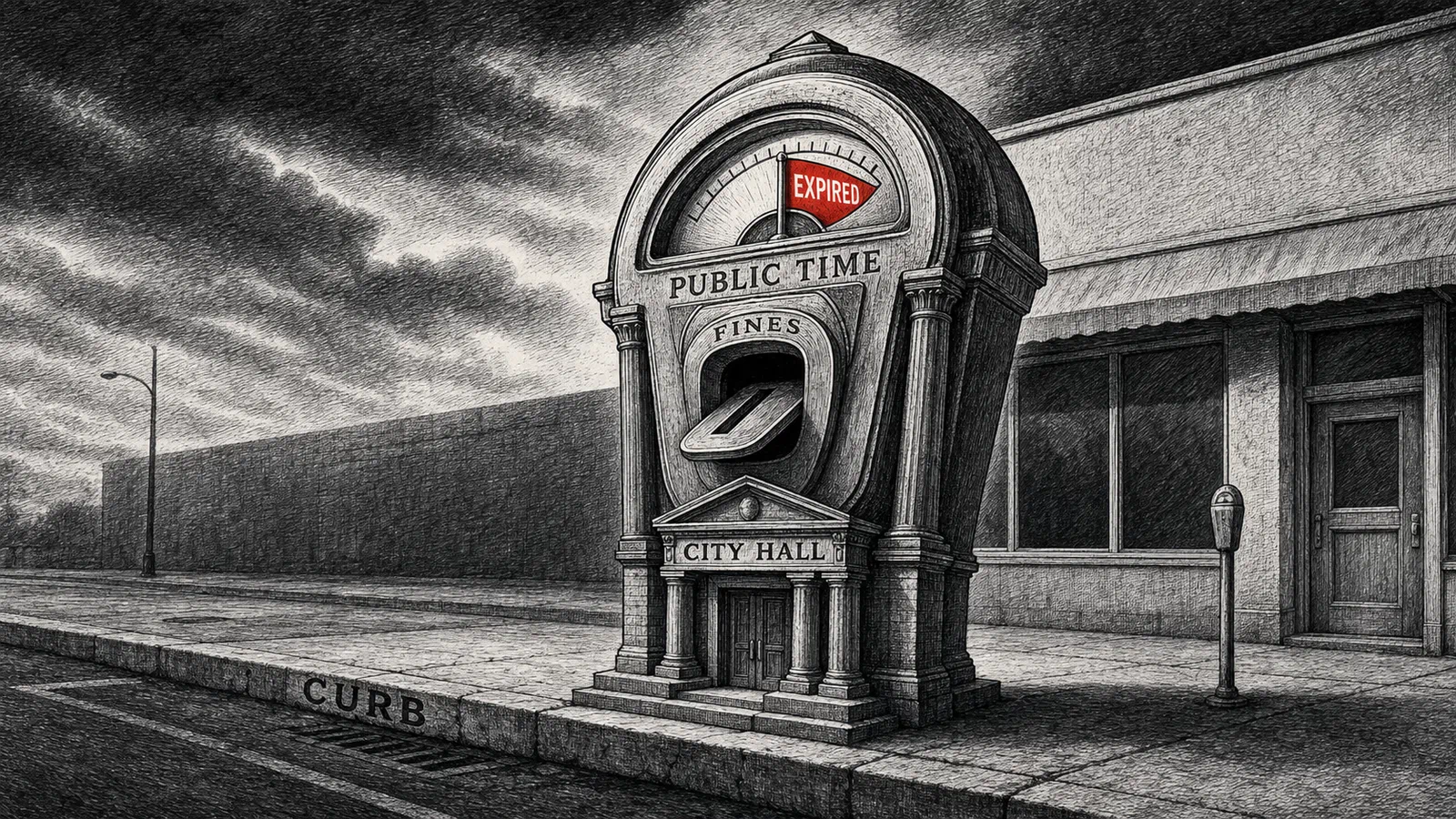
The Meter at the Curb
The parking meter turns a public curb into priced time, exposing the civic account behind access, enforcement, revenue, delivery, and street trust.
This Week's Virtue
Sincerity
Sincerity is not softness. It is the habit of making the public sign say only what the record can support. A stamp, permit, inspection tag, or price clock loses civic force when it borrows trust it did not earn. Say what was checked. Say what was not. Let the mark carry its weight.
He that speaks much, is much mistaken.
Worth Reprinting
The Warning Label in the Weeds
Read it beside this issue's stamp essay because a label only helps when it names a bounded public risk instead of borrowing trust for everything around it.
The bill can be hidden, but it still knows your address.