
A Public Record Must Outlast the Feed
People need a way to find what was said, who said it, and what changed.
Edited by Robert V. Ussley
Suppose a resident wants to check a city’s promise about a public service. They remember a short video online, or a screenshot of a few words. A search turns up comments about the news, but the city’s own link leads to a new home page. The resident can’t find the full notice.
This is a made-up case, but it shows a gap in how we share public news. We can put a statement in front of many people and leave them with no clear way to check it later. A feed answers, ‘What is being shown now?’ A public record must also answer, ‘What was available then, who issued it, and what changed?’
Public bodies can keep using social sites, provided they also keep a full record that people can find and check once the post has slipped out of view.
When the link loses the record
A statement may pass through a website, a social account, a search result, and a newsletter before people share a cropped screenshot. Each step can help the words reach more readers, while stripping away the date, the name of the source, or a note that corrects a mistake.
Sometimes a link stops working, a problem called link rot. In other cases, the link works, but the content differs from the version first cited. This is content drift. Researchers call the two problems ‘reference rot.’
A 2014 study of web references in research papers examined over a million web references. Using part of its data, the researchers estimated that about one in five science, technology, and medicine articles published from 2009 to 2012 had at least one web reference that failed to load or lacked a suitable archived copy. That estimate concerns research papers ~ it does not measure how often government websites or social posts fail. The finding shows why readers need more than a link that works today.
People often need a record long after it first appears. A parent may want to check an old school rule. A reporter may need to trace a changed notice. An employee may need to know when work guidance changed. They need the words that applied at the time, along with the facts needed to read them fairly.
Keep the page and its history
Start with a clear title, the name of the publisher, and the date, then show what changed and when. A web address can stay the same while someone edits the page behind it. A PDF can be overwritten, too, just like an HTML web page. Either format needs a way for readers to trace its history.
The U.S. National Archives gives guidance on metadata for the transfer of permanent electronic records . Metadata means details that help explain a saved record, such as who made it and when.
The Library of Congress’s guidance for its digital collections calls for details about each item, checks on whether a file is intact, and an identifier so it can be tracked. A small publisher can use some of the same care.
Assign a person or role to maintain the change log and old links, and to check that readers can find the record. Keep dated copies in a separate place, too, so a failed website does not take every copy with it. The Library of Congress explains the value of copies stored in different places . This work takes staff time. A small team can start with notices that affect access to services, deadlines, or safety, then build a routine it can keep up.
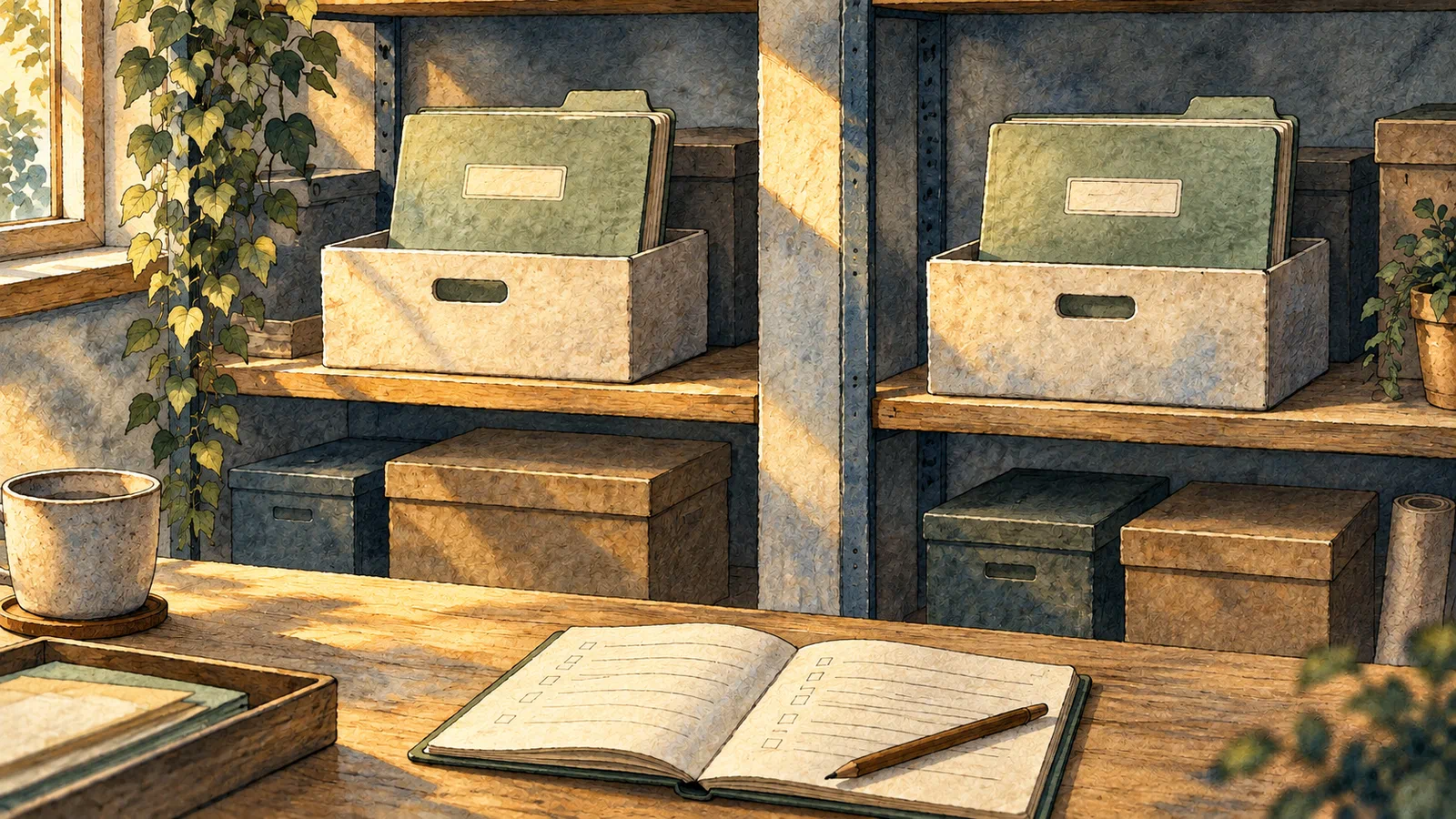
Saved copies also need someone to check and maintain them.
Five checks for a useful record
1. Make the source easy to reach. Follow a link from a post, newsletter, or search result to check whether it leads to the full item. Its page should name the organization that issued it. A home page alone may leave the reader lost. If the item’s main address changes, send the old link to that same item at its new address.
2. Show which version the reader has. Put the date of publication beside the item. Add a ’last materially updated’ date for changes that affect its meaning, with a brief note to explain major changes. If a claim was wrong, show the correction so readers can see what was fixed.
3. Keep the words in context. Retain the heading and the name of the writer or issuing office. Keep definitions, limits on claims, and source links with the text. A short image card rarely holds all of this. Help readers tell an original source apart from comments about it. Link factual claims to the evidence where possible.
4. Let people read what was said. A spoken notice with no searchable text is harder to find or quote and leaves out people who can’t hear it. For prerecorded audio on its own, provide a transcript : a written account of the spoken words and important sounds. For prerecorded video with meaningful sound, use captions that follow the sound. The World Wide Web Consortium explains how captions make audio available as text . Publish searchable words as well as any image of the text.
5. Ask someone else to find it. Six months after you publish an item, ask a person who isn’t familiar with it to find it. Give them its title, topic, and rough date. Your team may know shortcuts that other readers don’t. Write down what happens, fix any broken path, and try again.
Show the change in a notice
Take a fictional bus agency that posts a notice saying a route will change on the first Monday of a month. Two days later, the start date moves to the second Monday. The agency could edit the first notice in silence, or delete it and post a new one with no link between them. Either choice leaves people sharing the first screenshot with no clear account of the change.
The agency should keep the notice at a stable address and add a visible note:
Revised [date]: the start date has moved from the first Monday to the second Monday ~ the planned route change remains the same.
The page should link to the full current schedule and, where appropriate, a saved copy of the earlier version. Mark that older copy as superseded, meaning a newer notice has replaced it. Show when each version took effect, and link the old copy to the current one. Someone with the first screenshot can then see which date to use and what changed.
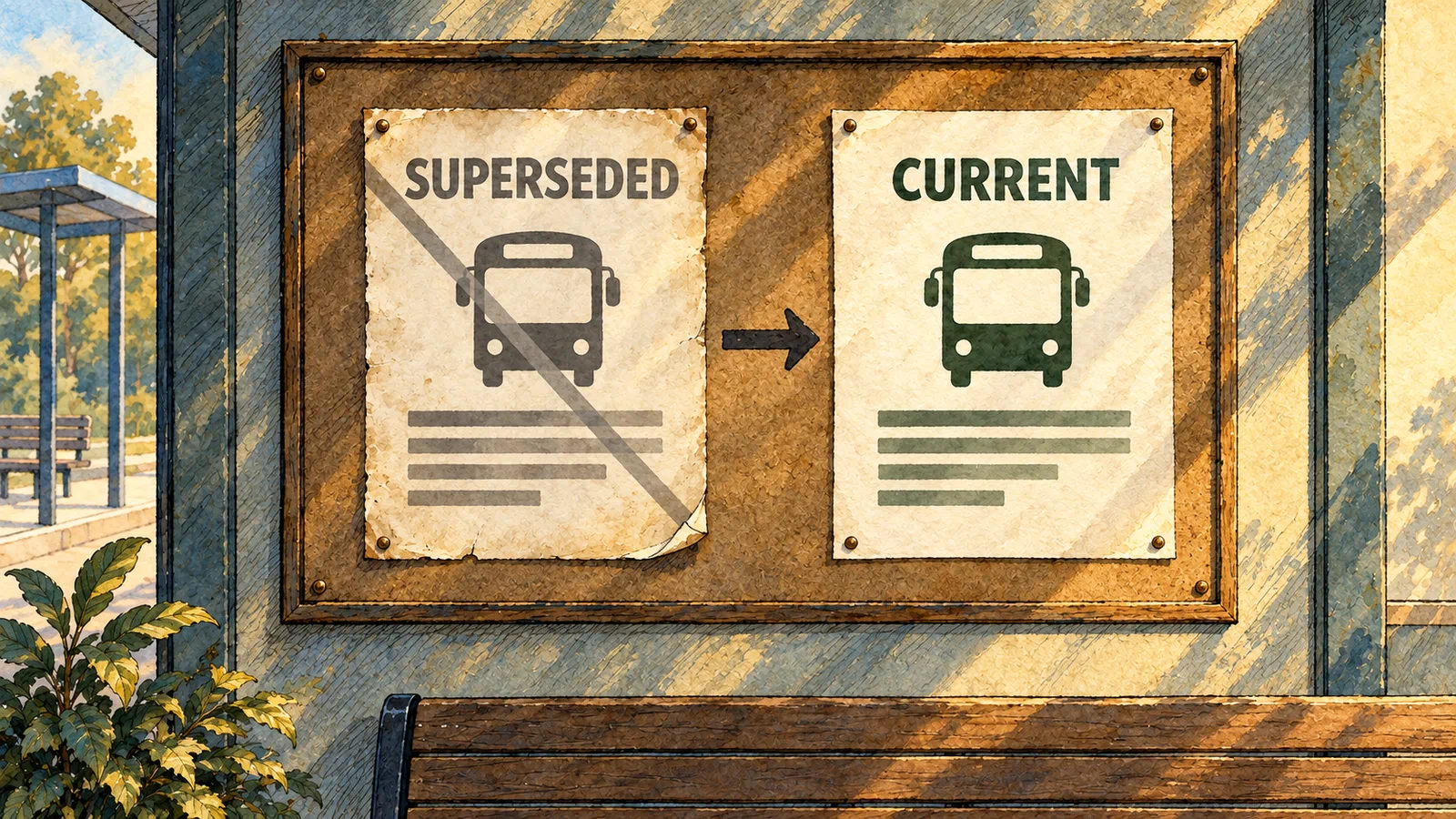
An old notice should show that a newer version has replaced it.
A visible correction may draw attention to a mistake and doesn’t guarantee that every reader will trust the agency. It will let people check the order of events and see which words changed.
These steps concern notices meant for public release. Some saved records contain private or otherwise restricted information. The National Archives catalog guide explains that access to some holdings is restricted. Keeping a record can serve a purpose even when access must be limited. Staff need to check what may be shared before putting an older copy online.
Keep the record useful after publication
Add transcripts where needed and an index of related records. Each quarter, test a few older items with someone outside the team. Where formal recordkeeping rules apply, these steps support that work ~ they don’t replace legal retention requirements.
The resident who missed the city’s first post should be able to find the full notice later, tell its versions apart, and check the evidence behind it. Keeping that path open is part of the work of publishing.
About the author
Douglas B. Vandergraph is a senior program/project manager, Christian writer, and independent digital publisher based in Fort Collins, Colorado. He maintains an interconnected library of long-form writing, video, and audio resources at DouglasVandergraph.com .