A Really Boring Topic
Tunneling Machines
Beneath the Surface
Exploring the Tunnel Boring Industry’s Past, Present, and Future
All images created using ChatGPT in January 2025.
The tunnel boring industry plays a pivotal role in shaping modern infrastructure, addressing the needs of an urbanizing and resource-hungry world. From its origins in 19th-century engineering breakthroughs to its adoption of cutting-edge technologies, this industry continues to expand what’s possible beneath the surface. This essay examines the history, emerging trends, future scenarios, and growth potential of the tunnel boring sector while reflecting on its broader impact on global development.
A Journey Through History
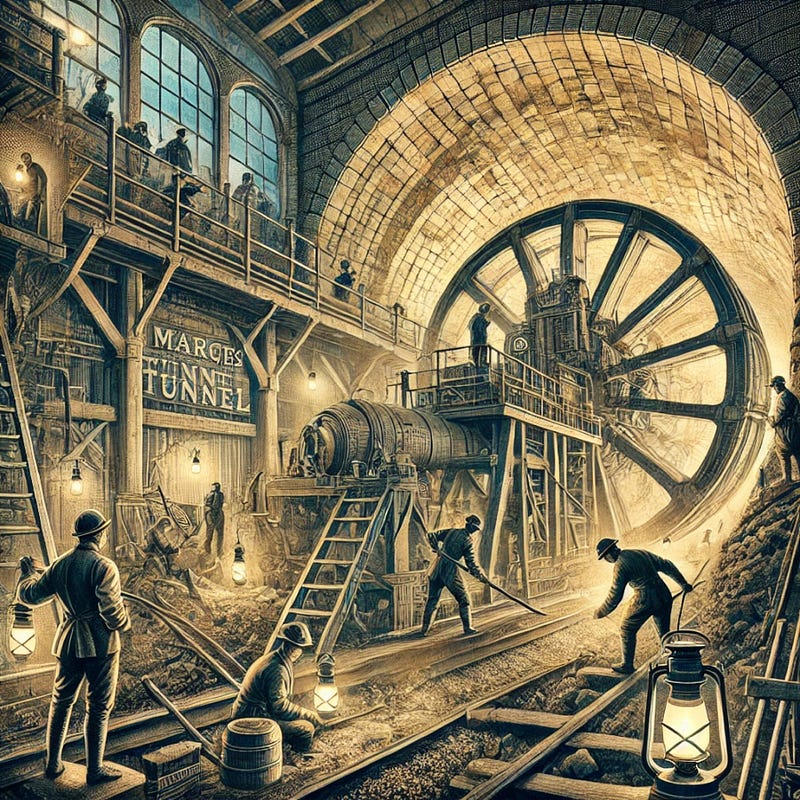
The tunnel boring industry traces its roots to the 19th century, when Marc Isambard Brunel pioneered the tunneling shield, enabling the construction of the Thames Tunnel in 1843. This engineering marvel, the first tunnel built beneath a river, solved the challenge of safely excavating through unstable ground and laid the foundation for modern tunneling.
The mid-20th century witnessed another leap forward with the invention of the modern tunnel boring machine (TBM) by James S. Robbins in 1952. Designed for hard rock excavation, Robbins’ TBM was first used in projects such as the Oahe Dam in South Dakota and the Humber River Sewer Tunnel in Canada. Subsequent innovations, such as bentonite tunneling machines in the 1960s, expanded capabilities to softer soils.
Major milestones like the Channel Tunnel (1994), connecting the United Kingdom and France, and the Gotthard Base Tunnel (2016), the world’s longest and deepest rail tunnel, showcase the transformative power of TBMs. These projects highlight the industry’s ability to tackle diverse geological and engineering challenges.
Emerging Trends and Technologies
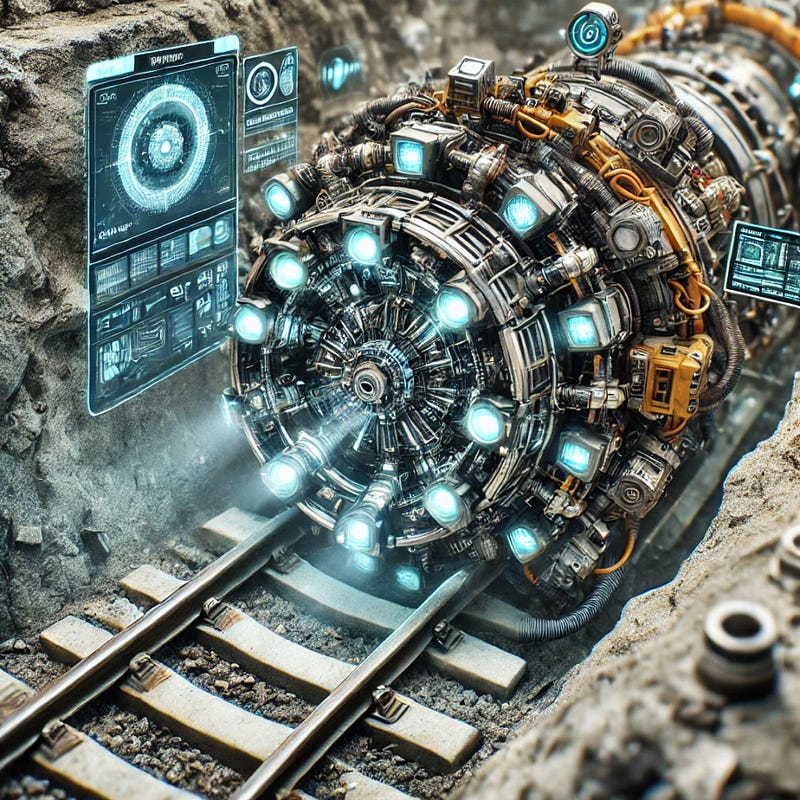
The tunnel boring industry is undergoing a technological transformation, driven by innovations that improve efficiency, safety, and sustainability.
- Automation and Robotics
Modern TBMs are increasingly automated, equipped with advanced sensors and systems that monitor and adjust operations in real time. Robotic systems now perform repetitive and hazardous tasks like muck removal and tunnel lining installation, improving both safety and precision.
- Artificial Intelligence and Data Analytics
AI-powered TBMs analyze real-time data to optimize cutting speeds, predict maintenance needs, and adapt to varying geological conditions. For instance, Herrenknecht’s smart TBMs use AI to reduce downtime and improve operational efficiency.
- Advanced Materials
The use of lightweight, durable, and sustainable materials is extending tunnel lifespans and reducing environmental impacts. TBMs equipped with recycling systems repurpose excavated material into construction-grade aggregates, further enhancing sustainability.
- Microtunneling and Trenchless Technology
Microtunneling, a minimally invasive construction method, is ideal for creating small-diameter tunnels in urban areas. It is increasingly used for utilities and sewage systems, minimizing surface disruption.
- Sustainability Initiatives
As sustainability becomes a priority, TBM manufacturers are adopting eco-friendly practices, such as energy-efficient machines and low-impact tunneling methods, to align with global environmental goals.
Potential Scenarios for the Future
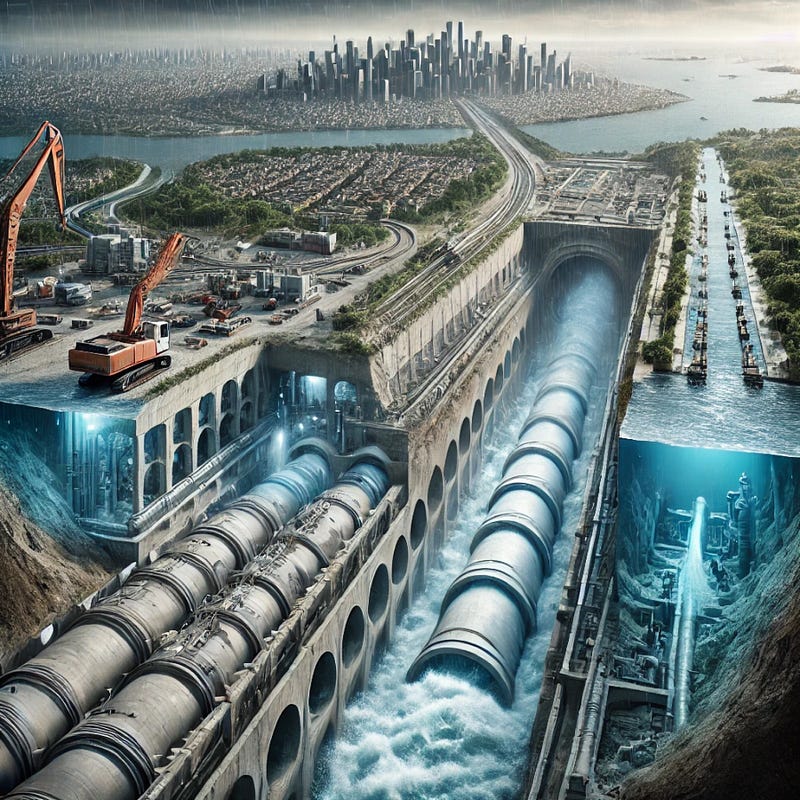
The tunnel boring industry’s importance could grow exponentially in response to emerging challenges and opportunities. Here are several scenarios where tunneling technologies may play a transformative role:
- Mining Asteroids and Other Planets
The pursuit of resources beyond Earth, such as metals on asteroids or water on the Moon, could require specialized TBMs capable of operating in extreme environments. These machines would enable resource extraction critical for space exploration and industries on Earth.
- Subterranean Cities
As urban areas face space constraints and climate challenges, underground cities could emerge as a solution. TBMs would be essential for creating habitable spaces, from underground transportation networks to entire communities shielded from extreme weather.
- Renewable Energy Projects
The transition to renewable energy may demand extensive tunneling for geothermal power, underground hydrogen storage, and hydropower systems. TBMs could play a key role in enabling these projects in challenging environments.
- Climate Change Adaptation
Rising sea levels and extreme weather events are driving the need for flood protection tunnels, stormwater management systems, and underground shelters. TBMs will be critical in constructing resilient infrastructure to safeguard vulnerable regions.
- Underground Resource Management
Future solutions for food and water shortages could involve subterranean vertical farms, underground reservoirs, and water transport systems. TBMs would help create these sustainable systems, ensuring access to vital resources.
The Global Market and Growth Potential
The global TBM market is projected to grow from approximately $6.7 billion in 2024 to over $10.6 billion by 2032. This growth is driven by:
Urbanization: By 2050, 68% of the global population is expected to live in urban areas, increasing the demand for underground infrastructure.
Infrastructure Investments: Governments worldwide are allocating significant funds for tunneling projects. In the U.S., the Infrastructure Investment and Jobs Act includes provisions for transit systems requiring tunnels, while China’s Belt and Road Initiative funds large-scale projects.
Regional Growth: Asia-Pacific leads the market, with countries like China and India driving demand. North America and Europe are also heavily investing in underground infrastructure.
Conclusion
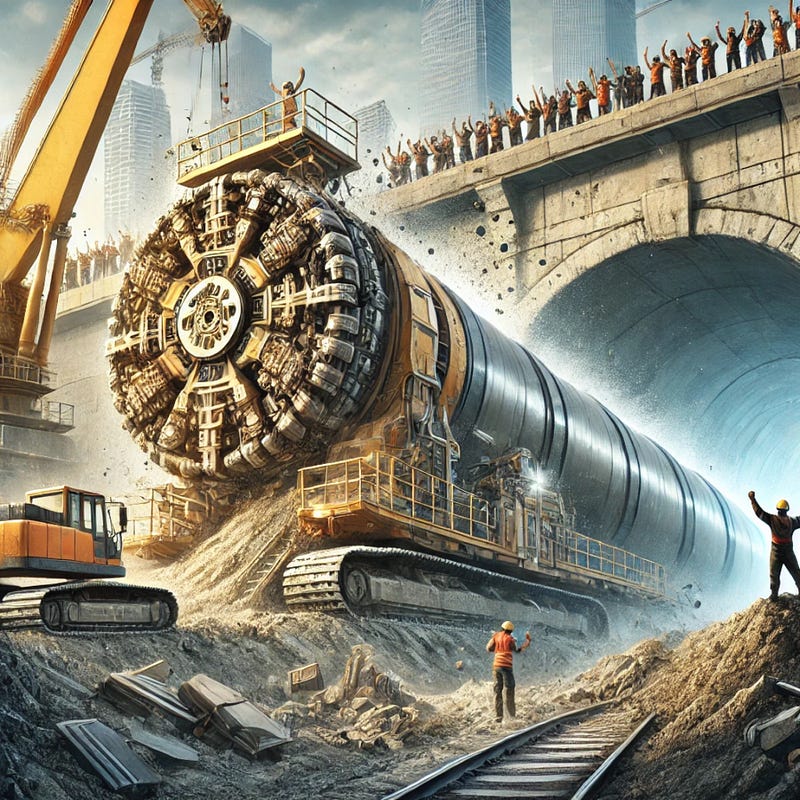
The tunnel boring industry stands at the forefront of modern engineering, blending historical ingenuity with cutting-edge innovation. As the world urbanizes and grapples with climate change and resource scarcity, tunneling technologies will only grow in importance. From creating subterranean cities to enabling space mining, the possibilities for this industry are vast and transformative.
Beneath our feet lies a world of potential, waiting to be uncovered. Whether it’s improving transportation, safeguarding cities, or reaching for the stars, the tunnel boring industry continues to redefine what humanity can achieve beneath the surface.