Canvas Fails Finals Week
How Leveraged Buyout Cowboys Ruin Our Institutions
In this article
There is a special kind of panic that belongs only to finals week.
Not the ordinary academic panic. Not the late-night coffee, half-written paper, half-remembered lecture panic. Something colder. Something administrative. The panic of clicking the one portal where the course lives and finding that the portal is not there.
At James Madison University, that panic became a schedule. On Thursday, May 7, 2026, JMU told students and faculty that Canvas sites at universities worldwide, including JMU, were down “in response to a security breach.” Exams scheduled for Friday, May 8 at 8:00 a.m. and 10:30 a.m. were delayed until Wednesday, May 13. Faculty were told to prepare for exams and grading without Canvas. Students were told their instructors were aware. By the next day, Canvas was back up, but the school had to explain why two exam blocks had been moved in the middle of the most compressed week of the semester. (jmu.edu )
That is the opening fact.
Not a theory. Not a mood. Not a metaphor.
A vendor incident became a finals-week problem.
So the question is simple:
What kind of school system can be interrupted from a vendor status page?
The answer is not simply “a hacked one.” That is too easy. Hacks happen. Criminals attack valuable systems. Software breaks. Vendors patch. Campuses scramble. The first layer of the story is technical, and it deserves to be handled carefully.
Instructure, the parent company of Canvas, disclosed a cybersecurity incident on May 1, 2026. On its status page, Instructure said it was investigating the matter with outside forensic experts. It later said the incident appeared contained, that it had revoked privileged credentials and access tokens tied to affected systems, deployed patches, rotated certain keys as a precaution, and increased monitoring. The company said the information involved appeared to include names, email addresses, student ID numbers, and messages among users. It also said it had found no evidence that passwords, dates of birth, government identifiers, or financial information were involved. (status.instructure.com )
The vendor’s narrow language sets the boundary for the claim.
A careful account should not claim that Social Security numbers were exposed. It should not claim that grades were exposed. It should not claim that passwords or financial records were exposed. The vendor did not say that. Several schools repeated the same narrower language. Rutgers said it was unclear what Rutgers data was involved, but that Instructure had indicated no sign that passwords, dates of birth, government identifiers, or financial information were involved. Columbia said Instructure had not yet made clear what CourseWorks data may have been affected, and noted that Columbia’s CourseWorks data does not include dates of birth, Social Security numbers, or financial information. (canvas.rutgers.edu )
The point is not to inflate the breach.
The point is to understand the dependency.
Because the most revealing records are not the wildest rumors. They are the boring updates. The status page. The campus alerts. The procurement memos. The vendor press release. The PDFs no one reads unless something has already gone wrong.
The platform was back. The dependency remained.
By the evening of May 7, Instructure’s status page said Canvas was available for most users while Canvas Beta and Canvas Test remained in maintenance. The same page recorded that Instructure had placed Canvas, Canvas Beta, and Canvas Test in maintenance mode earlier that day. On May 8, the public status page listed no incidents reported that day, while preserving the prior confirmed security incident record. (status.instructure.com )
That sounds reassuring.
But restoration is not the same thing as resilience.
The University of Virginia restored UVACanvas and UVACanvas Connect by the early morning of May 8, but UVA told instructors they may want to identify alternate options for exams, final assessments, assignments, or other Spring coursework dependent on Canvas. UVA also said Instructure’s investigation remained ongoing and that UVA continued seeking more information about what university data may have been involved. (canvas.virginia.edu )
The University of California took a more cautious line. On May 7, UC said the Canvas login page had displayed a suspicious message originating from a threat actor. UC Office of the President instructed all UC locations to temporarily block or redirect Canvas access, and said access would not be restored until UC was confident the system was secure. (ucnet.universityofcalifornia.edu )
Columbia’s earlier statement said Canvas/CourseWorks remained fully operational and accessible, but also said the investigation was ongoing and that it was not yet clear what CourseWorks data may have been affected. Rutgers said Canvas was fully operational as of its May 6 update. UVA had access, then temporarily isolated Canvas from other university systems while it reconnected tools such as SIS, Zoom, Gradescope, and Microsoft 365 apps. (communications.news.columbia.edu )
There was no single campus story.
Some schools kept Canvas running. Some blocked or redirected access. Some restored the main system while holding back connected tools. Some rescheduled exams. Some told users to monitor for phishing. Some waited for school-specific facts.
That variation is not a weakness in the story. It is the story.
A single vendor incident did not produce one neat outcome. It produced local confusion across many places because Canvas is not just a website. It is a working layer of school life.
It is where assignments are posted.
Where messages are sent.
Where grades are managed.
Where exams are scheduled.
Where third-party tools connect.
Where students go when the semester narrows to a deadline.
So ask the question again:
If the learning management system goes down during finals week, what exactly has gone down?
Not the whole university.
But enough of it to matter.

A course portal can become an operating layer before anyone votes on it.
The operating layer
Instructure knows what it sells.
When KKR and Dragoneer completed their acquisition of Instructure in November 2024, the company’s own press release described Instructure as a “leading global provider of learning management, education-tech effectiveness and credentialing solutions.” It said the company had reached about 200 million learners across more than 100 countries. The CEO’s quoted language was even more direct: Instructure was beginning its next phase as a “mission-critical educational operating system.” (instructure.com )
That phrase is doing a lot of work.
“Operating system” used to mean something inside a computer. Then it became a metaphor for anything that organizes a complex environment. Instructure’s use is marketing language, yes. But marketing language is often most useful when it accidentally tells the truth.
If Canvas is just a classroom website, then a Canvas outage is annoying.
If Canvas is an operating layer, then the outage shows us something larger: the school has moved a piece of its nervous system into a private vendor stack.
The better argument is not that Canvas is evil. It is not that universities should go back to chalkboards and paper gradebooks. It is not that every outside vendor is suspect. Schools need software. Students need digital access. Faculty need tools that work. A modern public university cannot pretend the internet never happened.
The better question is:
Who owns the systems a public school cannot easily teach without?
That is where the story turns from cybersecurity to political economy.
Follow the contract, not the mood
The phrase “private equity owns higher education” is too broad if it means every classroom, professor, seminar, library, dormitory, and budget line.
But a narrower claim survives the record:
Private equity owns a company that operates a core instructional layer used and funded by public colleges and universities.
That claim does not rest on vibes. It rests on ownership records and procurement records.
In July 2024, Instructure announced that it had agreed to be acquired by investment funds managed by KKR, with participation from Dragoneer Investment Group, in an all-cash transaction valued at roughly $4.8 billion. In November 2024, Instructure announced the deal had closed. Its common stock stopped trading, and the company was no longer listed on the New York Stock Exchange. (instructure.com )
That is lane one: ownership.
Lane two is public money.
A second-pass review of public procurement records found a cross-system slice of Canvas spending across public higher education. It is not a national census. It does not prove total U.S. public spending on Canvas. It does not show every campus contract. It is enough to answer the basic question: are public colleges merely using Canvas, or are they paying recurring public money into the Canvas ecosystem?
The Alabama Community College System order form shows a four-year grand total of $3,245,300.78 for Canvas-related products and services, including Canvas Cloud Subscription, support, Studio, Catalog, Impact, and Pathways. (accs.edu )
Valencia College’s May 9, 2024 board transmittal says the college negotiated a three-year renewal at a total discounted rate of $1,746,220 to provide continued access to Canvas LMS. The same memo says Valencia had used Canvas since 2017, after research and a pilot, and that it had previously entered a five-year contract with Instructure through a Florida higher-education LMS procurement. (valenciacollege.edu )
Florida State University’s 2025 board materials list Instructure Inc. at $655,388.31 in expense for fiscal year ending 2025, with a term from January 1, 2021 through December 31, 2026, for “Canvas Higher Ed and Credentials software for ITS.” (trustees.fsu.edu )
The Idaho State Board of Education materials for Online Idaho show a statewide Canvas learning management system contract, with year-two and year-three approval not to exceed $1,417,275 and a total for all three phases with Instructure of $2,335,970. (boardofed.idaho.gov )
The University of New Mexico Board of Regents minutes from February 16, 2021 describe replacing Blackboard Learn with Canvas after an RFP. The seven-year total cost was $2,498,375.56. (regents.unm.edu )
These are not stray subscriptions.
They are multi-year public contracts. They are board approvals. They are statewide frameworks. They are recurring expense lines. They are proof that the Canvas layer is not merely adopted by public higher education. It is purchased by it.
And after November 2024, that money flows into a company controlled by investment funds managed by KKR and Dragoneer.
This does not prove corruption. It does not prove that private equity caused the breach. It does not prove that the outage would not have happened under public ownership, founder ownership, or some other software model.
But it does prove the structure.
Public schools pay.
Private owners hold.
Students depend.
Faculty adapt.
The vendor status page becomes a public educational document.
Is that a bargain we meant to make?
What the title gets right
“How Leveraged Buyout Cowboys Ruin Our Institutions” is an intentionally sharp subtitle.
The official record uses cleaner words. It says transaction. Enterprise value. Investment funds. Growth. Global reach. Portfolio. Ecosystem.
But the cleaner language should not stop us from seeing the shape underneath.
Private equity has a particular genius. It knows how to find the boring chokepoints. Not the glamorous front door. The back office. The payments processor. The credential manager. The records vendor. The software no one thinks about until everyone needs it at once.
Canvas is exactly that kind of chokepoint.
It is not the university. It is not the faculty. It is not the curriculum. It is not the student.
It is the layer between them.
The layer is mundane right up until it fails.
Then everyone discovers that mundane does not mean minor.
When JMU rescheduled exam blocks, it was not because a professor misplaced a syllabus. When UC blocked or redirected access, it was not because one campus had a bad Wi-Fi day. When UVA restored Canvas but warned instructors to consider alternate options for exams and assessments, it was not because faculty had forgotten how to teach.
It was because a private software layer had become part of the public school day.
That is the pressure point.
The problem is not that a vendor exists. The problem is that the public mission can become dependent on a private stack whose ownership, incentives, security posture, and failure modes sit outside the daily view of the people who rely on it.
Who sees the risk before finals week?
The procurement office sees the contract.
The IT office sees the security questionnaire.
The faculty member sees the course shell.
The student sees the assignment.
The board sees the renewal line.
The investor sees the platform.
Each view is partial. Each one is defensible. Put them together, and the picture changes.
The quiet transfer
American higher education has always been more than content delivery.
It sorts. It certifies. It forms habits. It turns attendance into credit, credit into credentials, credentials into labor-market signals. It teaches algebra and anthropology, but it also teaches compliance with schedules, portals, deadlines, policies, rubrics, accounts, and proof.
The operating layer is where the transfer becomes visible.
A learning management system is not just a tool for hosting PDFs. It is part of the administrative grammar of education. It tells students where to look, when to submit, how to communicate, what counts as done, what is missing, what is late, and what has been recorded.
The public university used to hold more of that grammar inside itself. Some of it was physical: classrooms, offices, bulletin boards, registrar windows, blue books, library desks. Some of it was bureaucratic: catalog rules, faculty committees, department secretaries, paper files, local servers. Much of that old world was clunky. Some of it deserved to be replaced.
But replacement is not neutral.
When a school outsources a layer of its academic routine, it does not merely buy convenience. It also buys dependency. It buys a vendor’s roadmap. It buys the vendor’s security model. It buys the vendor’s acquisition future. It buys whatever happens when the vendor becomes attractive to financial owners looking for scale.
The public record rarely says it that plainly.
It says renewal.
It says learning management system.
It says total discounted rate.
It says access.
It says support.
It says credentials.
It says Canvas is available for most users.
But the hidden sentence is this:
A public function now runs through a private chokepoint.
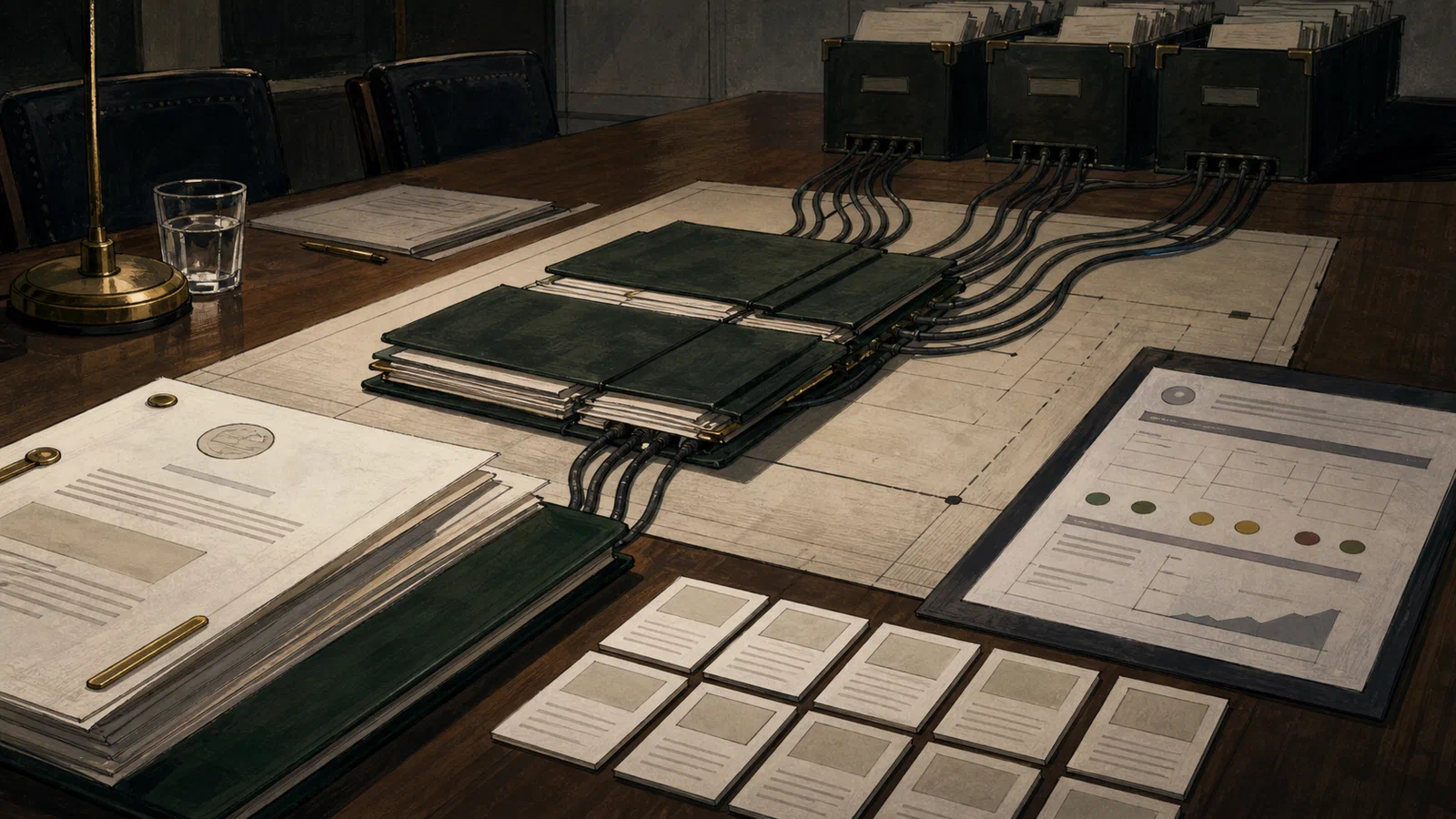
The renewal line, the login page, and the investor presentation belong to the same system.
The fair defense
There is a real defense of Canvas and companies like it.
A school cannot build everything itself. Local software can be worse. Homegrown systems can be insecure, brittle, and expensive. A large vendor may have stronger security teams, better uptime, better support, better accessibility testing, better documentation, and more integrations than any one campus could maintain on its own.
The procurement records often show schools making rational choices. UNM replaced Blackboard Learn after an RFP and chose Canvas as the top candidate. Valencia had used Canvas for years and negotiated discounted rates. Idaho framed Canvas as part of a statewide digital campus. These are not obviously foolish decisions. They look like normal public administration in a digital age. (regents.unm.edu )
And the breach record, as of May 8, 2026, does not justify careless claims. Instructure says it found no evidence that passwords, dates of birth, government identifiers, or financial information were involved. Some schools were not told they were directly affected. Some kept Canvas operating. Some disruptions were short. Some measures were precautionary. (status.instructure.com )
A serious argument has to hold those facts.
The question is not whether Canvas is useful.
The question is whether usefulness has become a substitute for governance.
What should a public college know before it signs away another three-year renewal? What should a board ask before it approves another software stack? What should students know about where their educational messages, IDs, and course records live? What should faculty know about the failure plan if the portal goes dark during finals?
And what should taxpayers know when a public education function becomes a revenue line inside a private-equity-owned software company?
The final exam
Finals week has a way of revealing what a course was really about.
The Canvas incident did the same thing for higher education.
It showed that the classroom is no longer bounded by the classroom. It runs through authentication systems, vendor APIs, cloud hosting, third-party tools, procurement vehicles, security notices, and private ownership structures.
It showed that public colleges can be locally governed but operationally dependent.
It showed that the dullest records may now be the most revealing ones.
A status page says Canvas is available for most users.
A university tells students two exam blocks are delayed.
A board memo approves another renewal.
A press release says the company is now private.
A CEO calls it an educational operating system.
No single sentence proves the whole case.
Together, they ask a harder question:
When a private-equity-owned vendor runs the layer where public education happens, who is really holding the chalk?
That is not a rhetorical flourish. It is a governance question.
The chalkboard did not disappear. It was abstracted. It became a login page. Then a contract. Then a platform. Then a portfolio company.
And during finals week, when students needed the system to be boring, the boring layer became visible.
That may be the most honest thing Canvas did all semester.