Cost Shift
Electricity is not a press release. If a new class of buyers takes more of it, the price question does not disappear because the buyers sign a separate rate agreement.
The Ratepayer Protection Pledge makes one useful promise. AI companies should build, bring, or buy the power they need, pay for required delivery upgrades, and negotiate separate rates with utilities and state governments. That can stop a data center from pushing its direct substation, line, or reserved-capacity bill onto ordinary households.
But that is not the same as saying AI companies will absorb the whole market effect of rising electricity demand.
The Rate Rule
A separate rate assigns a bill. It does not erase demand.
The distinction matters because data centers are becoming a larger buyer of electricity. The Department of Energy says data centers used about 4.4 percent of U.S. electricity in 2023 and could use about 6.7 to 12 percent by 2028.
That does not prove every household bill will rise because of AI. It proves the load is too large to treat as a private side deal with no public consequence.
A separate rate can say: this customer pays for this line, this substation, this reserved power, this delay risk. Good. That is cost assignment.
It cannot say: the national price of electricity will not move when a fast-growing industry demands far more electricity. That is a market question. If usable supply, transmission, fuel, and reliability capacity do not keep pace, pressure appears somewhere.
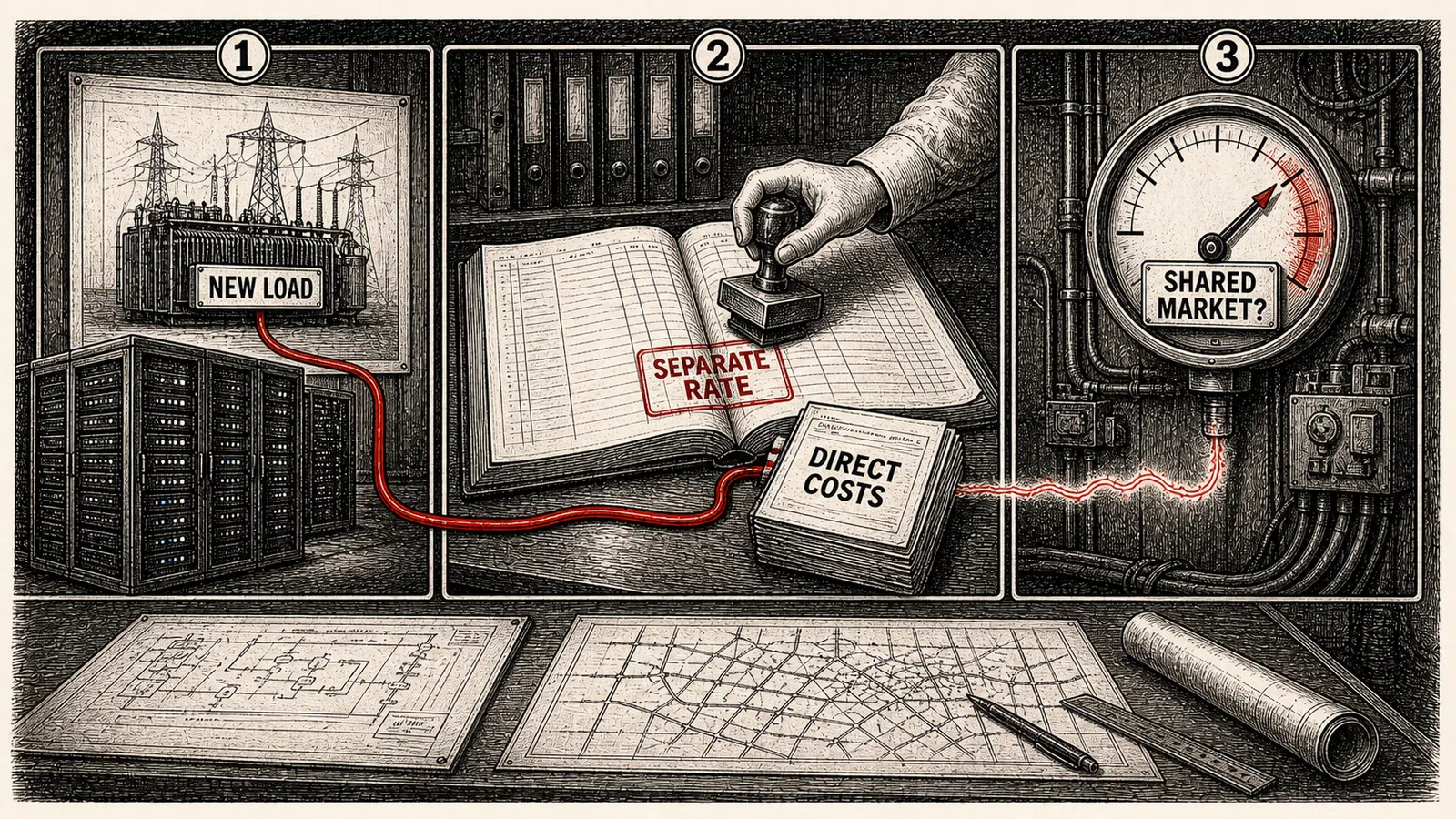
The promise works only if the new load carries the new cost.
The Shared Market
The meter can be separate while the market remains shared.
EIA says electricity prices reflect the cost to build, finance, maintain, and operate power plants and the grid. It also says price changes reflect demand, fuel costs, power plant availability, and supply constraints.
That is the part a pledge cannot wish away. Electricity is the working resource of modern life. Homes need it. Stores need it. Hospitals need it. Factories need it. Data centers need it all day.
If data centers bring enough new supply with them, the pressure can be reduced. If they pay for their own grid upgrades, direct cost shifting can be reduced. If they can flex demand or use onsite generation, the system may benefit.
But if they take a larger share of a constrained system, separate rates alone do not settle the price question. They only settle which account pays named project costs.
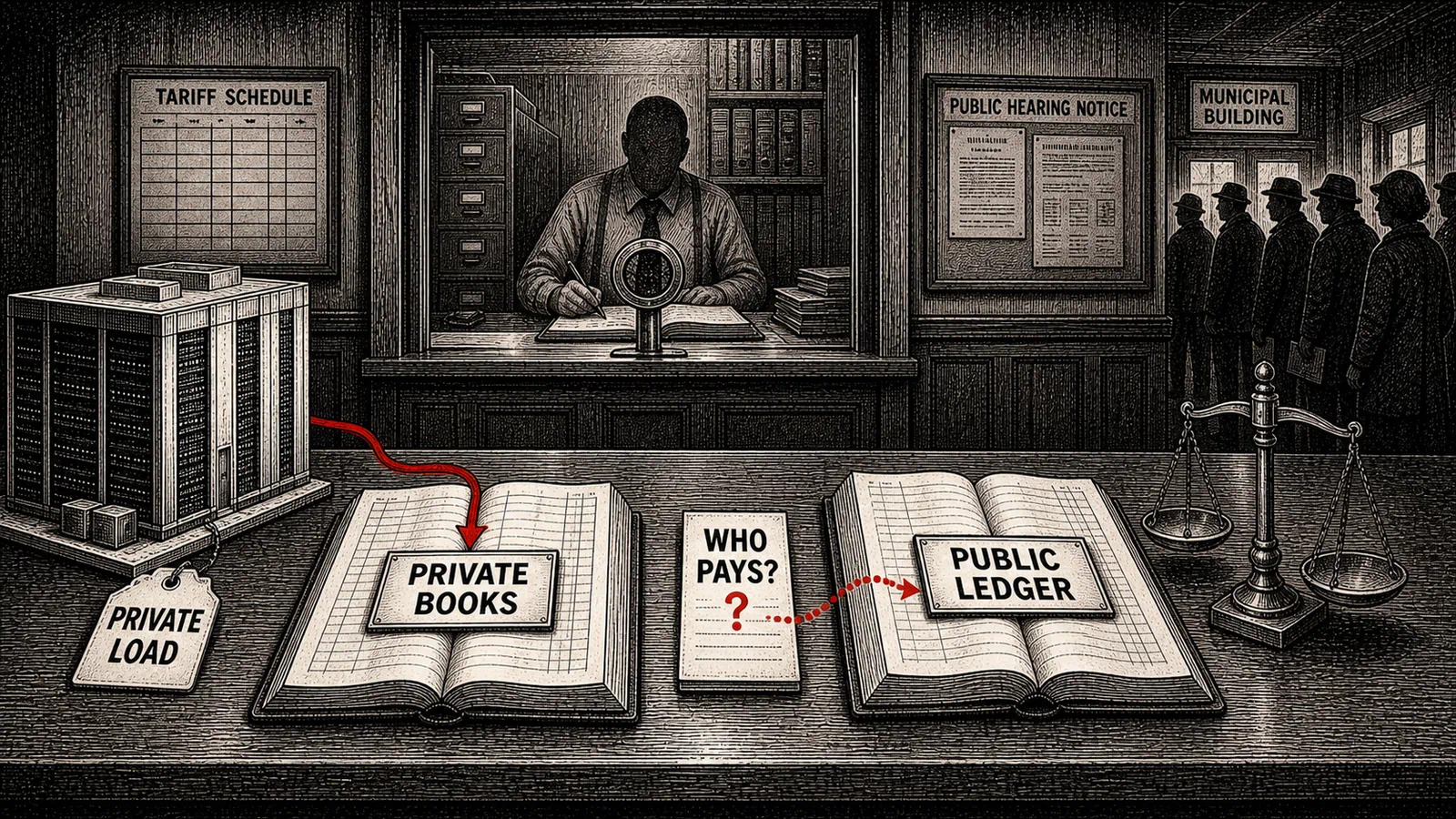
When cost assignment is unclear, the risk shifts toward ordinary bills.
The Public Question
Private load needs private books. Public goods need public ledgers.
FERC is already asking grid operators to justify or change large-load tariff rules, including rules for preventing cost shifting and making transmission costs transparent. That is the right category. The issue is not whether AI is impressive. The issue is whether the bill is public or private.
So name the thing plainly.
Are data centers private companies buying power for private business? Then their direct power costs belong on private books.
Are they public goods, like infrastructure the country needs enough to support? Then say so and put the subsidy on a public ledger.
Railroads were private companies with public importance, public privileges, and heavy regulation. Interstate highways are public infrastructure. Data centers cannot borrow whichever category is cheaper that day.
The rule is simple. If a private load uses the shared grid, separate rates should assign its direct costs. If the public is asked to support the broader price pressure, the public should be told that honestly.
The cost should not become public only after the bill arrives.