How Tucson, AZ Plans for Water Scarcity
Four Ways to Manage Risk in a Desert City ~ and how tucson plans to water its lawns for the next century
Tucson, Arizona is a city built in the desert.
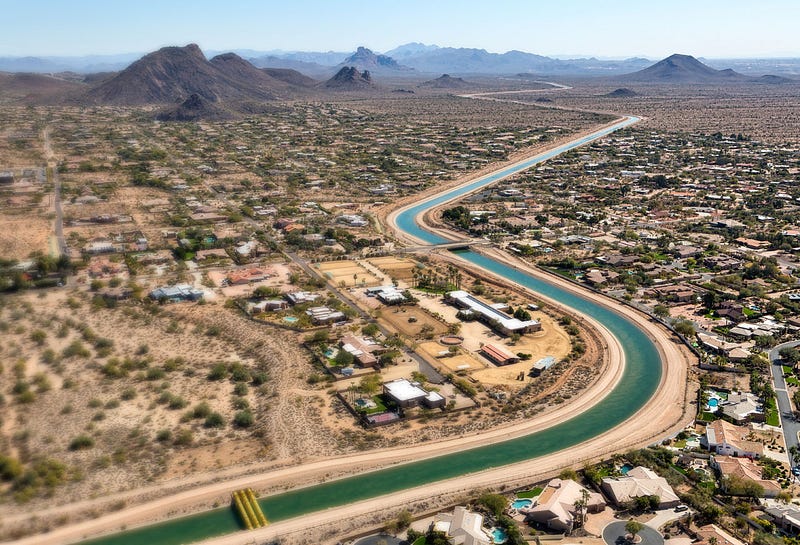
For decades it pumped groundwater faster than the aquifer could recharge, leading to shortages and sinkholes.
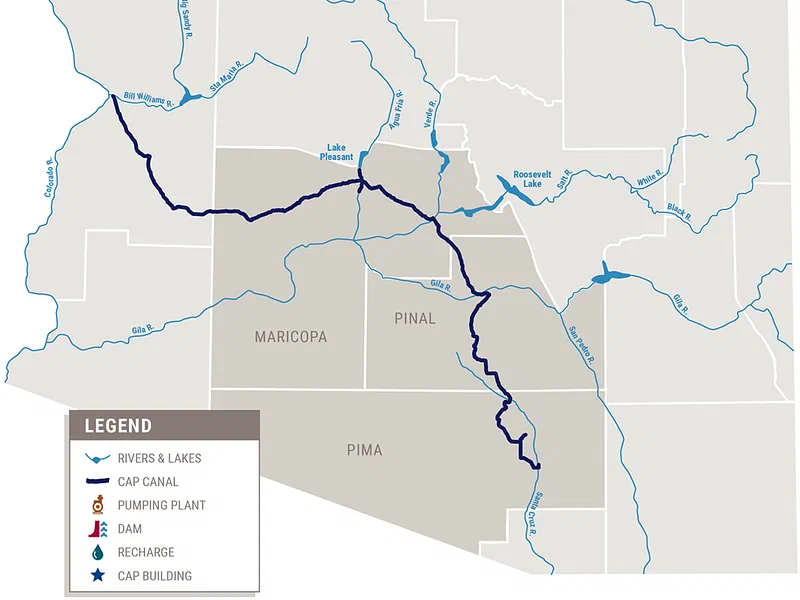
Then came the Central Arizona Project (CAP) ~ a 336-mile aqueduct bringing Colorado River water south and east from Lake Havasu.
CAP’s public history says construction began in 1973 and was completed in 1993.
Today, about four out of five glasses of water in Tucson start their journey in that canal ~ from Lake Havasu in the west all the way to Tucson at the end of the line.
The Colorado River once seemed inexhaustible.
For decades, its dams powered the west and its canals greened the desert.
A century later, two-and-a-half-decades of drought have left the river at a crossroads. Lake Mead and Lake Powell , the twin reservoirs that store the river’s flow, are now half-empty bathtubs ~ pale rings visible.
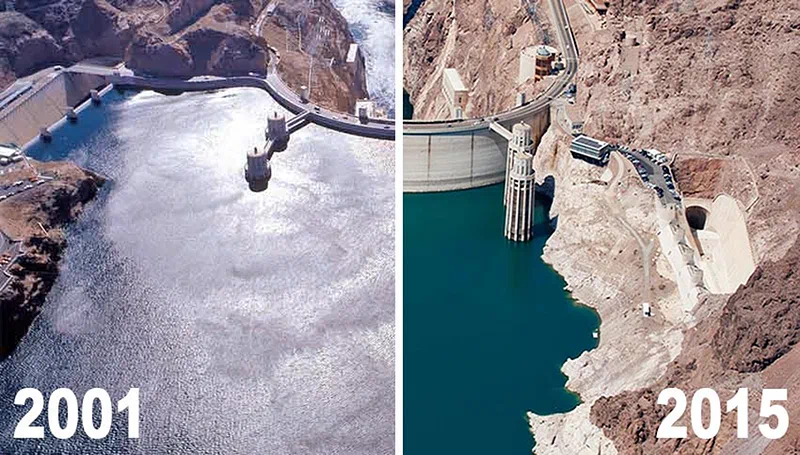

The Colorado River is shrinking.
Interstate agreements that divide up the river promise more water than it provides. That means cities like Tucson must prepare for a future in which their water supply is less predictable, and potentially much smaller.
There’s no blueprint for managing this kind of uncertainty.
Risk management models offer different ways of thinking about problems that stretch across decades and affect a vast array of stakeholders. This paper discusses four generic models for managing water scarcity risk as they apply to cities in the American Southwest.
Tucson’s Water Reality
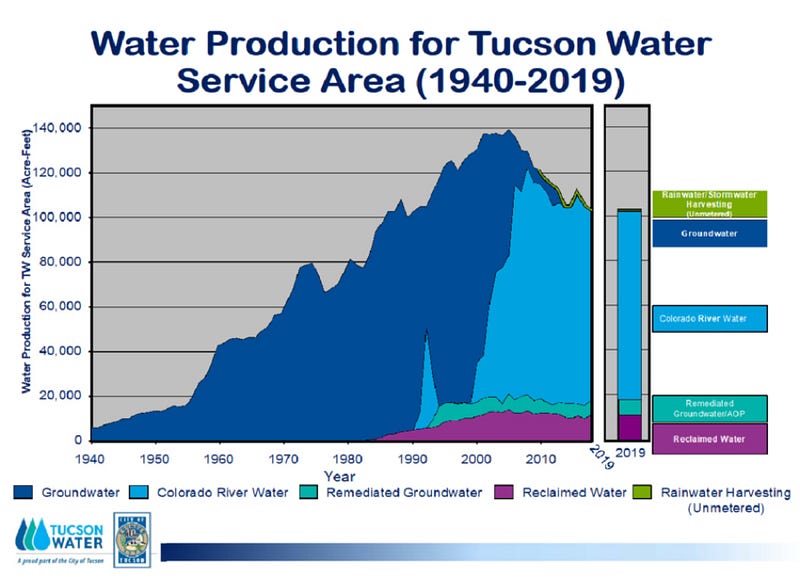
Tucson gets its water from three sources:
- 82% from the Colorado River via CAP.
- 12% recycled water, reused for irrigation and non-drinking purposes.
- 6% treated and remediated groundwater.
The city banks unused CAP water underground as “storage credits” for the future. It uses block rate pricing to encourage conservation, and it has launched innovative projects like Pure Water Tucson ~ an advanced purification plant that will recycle wastewater directly into the drinking supply by the 2030s.
Even with these efforts, the city lives under the shadow of the Colorado River Compact and the Bureau of Reclamation shortage declarations.
For Tucson, with more than half a million people, this isn’t an abstract crisis ~
The city is forced to think about risk, and not just for the next budget cycle, but for the next 50 years and beyond.
Four Generic Frameworks for Risk Management
Risk management isn’t just technical ~ It’s philosophical.
Big Questions ~
- Do you optimize for cost? Safety? Flexibility? Resilience across different potential futures?
- How and when should you engage stakeholders?
- How much should you consult with the public, and when?
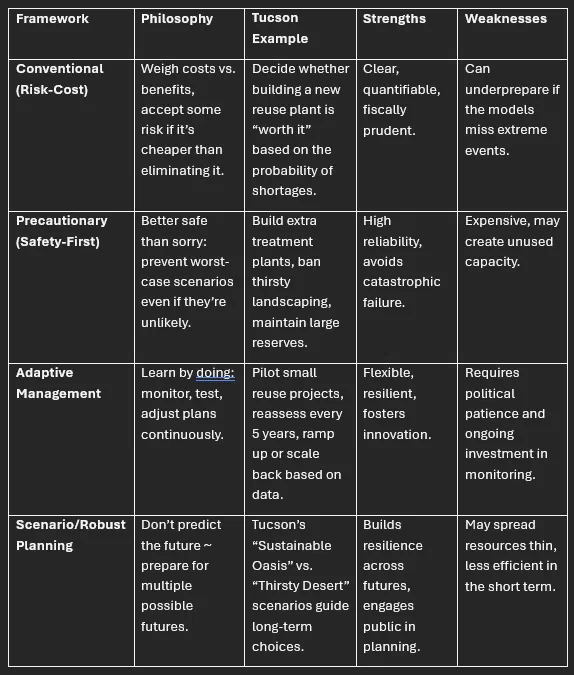
The Four generic ways to think about managing risk ~
- Conventional
- Precautionary
- Adaptive
- Scenario
Tucson’s One Water 2100 plan draws on all four traditions, but each general framework would steer the city in a different direction.
Tucson’s One Water 2100 Plan
Tucson Water’s guiding document is its One Water 2100 plan , released in stages over the past decade.
It rests on three pillars:
- Diversification ~ expanding reclaimed water, remediated groundwater, and eventually potable reuse.
- Adaptation ~ a cycle of monitoring and adjustment every 5 to 10 years.
- Scenario Planning ~ building strategies that can survive a range of futures.
The plan lays out four scenarios, with names designed to make the stakes memorable:
- Sustainable Oasis ~ a future of conservation, diversified supplies, and manageable climate stress.
- Thirsty Desert ~ high growth, hotter climate, shrinking CAP deliveries.
- Two Middle Ground Futures ~ two variations that combine elements of both.
Each scenario is tested against demand forecasts and river supply projections.
The city prioritizes policies that work “well enough” in all scenarios.
That’s why reclaimed water and underground storage are emphasized:
They provide buffers across all potential futures.
Tucson’s plan calls for periodic review of their risk management decisions and process. Every decade, the city plans to re-run its models, check CAP deliveries against projections, and update conservation programs.
Perfect foresight is impossible.
Steady course correction is achievable.
Comparing the Four Generic Approaches
Now that we have discussed Tucson’s actual plan, let’s apply each of the generic frameworks to understand how each might influence the city’s decisions.
Conventional
A conventional plan would keep costs lower in the short term, justifying investments only when models show a clear payoff. But if the river declines faster than expected, Tucson could be caught short.
Precautionary
A precautionary plan would protect against that possibility by over-investing early. Residents might see higher water bills and stricter conservation rules, but the city would be almost immune to crisis.
Adaptive
An adaptive plan would emphasize incremental steps. Tucson already leans this way, updating its One Water 2100 plan every decade and adjusting conservation programs as data comes in. The city treats groundwater as a last-resort backup, while learning from pilot projects in reuse and recharge.
Scenario
A scenario/robust plan would chart multiple futures and design measures that work across them. Tucson developed narratives like “Sustainable Oasis” and “Thirsty Desert” to help policymakers and the public visualize different outcomes.
These risk management frameworks aren’t mutually exclusive.
In practice, Tucson blends the adaptive and scenario frameworks.
Its planning documents include scenario names to engage the public,
while its policies are designed to be adjusted every few years.
That combination helps decision-makers avoid both the rigidity of overconfidence and the paralysis of uncertainty.
The Bigger Picture: Colorado River at a Crossroads
The Colorado River is more than just Tucson’s lifeline.
The river irrigates roughly 5.5 million acres of farmland and supplies water to 40 million people.
The system generates hydropower at dams like the Hoover and Glen Canyon.
Its annual economic value is measured in the hundreds of billions when you count agriculture, energy, and urban growth.
But the river is stretched thin ~
The 1922 Compact assigned rights to 16.5 million acre-feet a year, when the river’s long-term average is closer to 13 to 14 million.
If the millennial drought continues, it may fall to 11 million.
Mexico, entitled to 1.5 million acre-feet, faces salinity issues as flows diminish. Hydropower turbines at Hoover Dam may stop spinning if Lake Mead continues to fall in coming years.
Downstream cities from Phoenix to Los Angeles face the same question Tucson is asking:
How do you plan for scarcity that could last generations?
What Tucson Teaches Us
The lesson isn’t that one framework or model for risk management is best ~
It’s that each lens adds value.
- Conventional risk-cost analysis keeps projects accountable.
- Precautionary thinking guards against catastrophe.
- Adaptive management incorporates steady learning.
- Scenario planning prepares minds as much as systems.
For Tucson, blending adaptive and scenario models has allowed the city to stretch every gallon. It banks water underground, treats wastewater as a resource, and frames futures that residents can imagine and debate.
Tucson’s experience can serve as a model for how other mid-size cities might successfully approach long-term uncertainty in the desert.
Sources
- City of Tucson, One Water 2100 Plan planning documents and summaries.
- Tucson One Water, Pure Water Tucson .
- Central Arizona Project, CAP system history .
- University of Arizona Water Resources Research Center, reclaimed water overview .
- U.S. Geological Survey, Colorado River basin summary .