Inflation Myths: Why Private Banks, Not Just Government Spending, Drive Prices Up
Politicians blame deficits — but what if the real culprit is the banking system?
Inflation dominates headlines, but most people misunderstand what’s really driving it.
Turn on any financial news channel, and you’ll hear it:
“Inflation? Government spending! THE DEFICIT! THE DEBT!”
The argument is simple: Washington prints money, deficits grow, and prices rise.
But is that the full story?
What if banks, not just Washington, are fueling inflation?
Every time a bank issues a loan, it creates new money.
Commercial banks help create money through lending. When a bank makes a loan, it usually creates a matching deposit on its balance sheet, subject to capital rules, liquidity needs, funding costs, borrower demand, and regulation.
Deposits still matter, but banks are not simply lending out the exact dollars sitting in a vault. Across millions of loans, private credit can expand purchasing power and add inflation pressure when it grows faster than real output.
Unlike government spending - debated, voted on, and publicly scrutinized - private credit expands invisibly, behind the scenes, shaping inflation with little oversight.
This essay takes a hard look at the conventional wisdom on inflation - specifically, the idea that government spending is always the main culprit.
Instead of accepting the usual talking points, we examine how government deficits, private credit creation, and Federal Reserve policy have shaped inflation across different economic eras: 1965-1985, pre- and post-2008, and 2020-present.
Along the way, we explore how supply chain breakdowns and financial deregulation have influenced inflation in ways that rarely make the headlines.
The goal? To move beyond simplistic explanations and uncover what’s really driving inflation - because when politicians and pundits reduce it to just government spending, they’re leaving out half the story.
How Money Supply Grows
The money supply grows through two primary channels:
- Government Spending and Deficits
When the government spends more than it collects in taxes, it issues debt.
The Federal Reserve can expand the money supply when it purchases securities, but deficits do not automatically become new money unless fiscal borrowing and monetary policy interact in that direction.
- Private Credit Creation
Commercial banks create money through fractional reserve lending.
When banks issue loans, they expand the money supply beyond what exists in reserves, increasing the total amount of money in circulation.
Both mechanisms cause inflation if the money supply grows faster than the real economy’s productive capacity. However, the relative impact of these forces varies across different time periods.
The Inflation Crisis of 1965 - 1985
Between the mid-1960s and early 1980s, the U.S. experienced sustained high inflation, peaking at 14.8% in 1980.
Many attribute this inflationary era to government spending, particularly on the Vietnam War and Great Society programs. Additionally, oil shocks in 1973 and 1979 caused supply-side price increases, exacerbating inflation.
While government spending played a role, the private sector also contributed to inflation through an explosion in mortgage lending and corporate debt. The 1970s saw a rapid expansion of consumer credit, as financial institutions pushed new forms of loans.
Easy access to credit increased spending power, raising demand for housing, consumer goods, and services - all of which drove up prices alongside federal deficits and oil shocks.
Federal Reserve policies under Arthur Burns and G. William Miller failed to rein in inflation, as interest rates remained too low relative to money supply growth.
It wasn’t until Paul Volcker’s aggressive rate hikes in the early 1980s that inflation was brought under control - at the cost of a severe recession.
While government deficits grew significantly during this period, private credit creation played an equally critical role in amplifying inflation. Fast forward a few decades, and a new kind of inflationary crisis loomed - only this time, the private sector took center stage.
The 2008 Financial Crisis and Private Debt Collapse


The 2008 financial crisis provides a counterexample to the conventional wisdom about government spending and inflation.
The federal government launched massive stimulus packages (remember bailing out the banks?) and ran record deficits, yet inflation remained subdued.
The key reason? Private sector credit creation collapsed. In the years leading up to 2008, banks issued risky mortgages at an unprecedented rate. These loans, bundled into securities, fueled a credit boom.
Financial deregulation, including the repeal of Glass-Steagall in 1999, allowed commercial banks to engage in riskier investment activities, blurring the lines between traditional banking and speculative finance.
This made it easier for financial institutions to expand credit aggressively, further inflating asset bubbles. Between 2000 and 2007, total U.S. household debt skyrocketed from $7 trillion to over $14 trillion, largely fueled by reckless mortgage lending.
When the bubble burst, private debt contraction led to deflationary pressures, despite federal stimulus efforts.
The Federal Reserve responded with quantitative easing (QE) - purchasing financial assets to inject liquidity into the economy.
However, because banks were unwilling to lend aggressively, much of this new money remained in reserves rather than entering circulation.
Private credit contraction had a greater impact on inflation than government stimulus. Despite record deficits, inflation remained low because private money creation declined.
While the 2008 crisis saw inflation subdued due to the collapse of private lending, the COVID-19 era presented a stark contrast -
Government stimulus and private credit expansion occurred simultaneously: conditions for inflation to take off.
2020 - Present: A Perfect Storm for Inflation
The COVID-19 pandemic introduced a new inflationary environment, as both government spending and private credit surged simultaneously.
- Trillions in stimulus checks, enhanced unemployment benefits, and PPP loans funneled money directly into the economy.
- At the same time, near-zero interest rates encouraged a private sector borrowing boom, particularly in housing and financial markets. The U.S. government injected approximately $5 trillion in pandemic relief spending, while mortgage lending skyrocketed - home prices surged 20% in 2021 alone.
By 2021, inflation hit its highest level in four decades, exceeding 9% year-over-year. Unlike the post-2008 period, where monetary expansion remained largely in financial markets, COVID-era stimulus reached consumers and businesses directly, driving up demand.
Meanwhile, global supply chain disruptions further constrained supply, intensifying price pressures.
The inflation spike of 2020 - 2023 was driven by both government stimulus and private credit expansion, making it one of the rare periods where both forces contributed significantly to money supply growth.
The Federal Reserve’s Role in Private Debt Creation
One of the most significant levers affecting private credit creation is the Federal Reserve’s interest rate policy.
The Fed sets the federal funds rate, which influences borrowing costs across the economy.
Low interest rates encourage borrowing by reducing the cost of loans, leading to increased private sector credit creation. This can accelerate economic growth…
It can also fuel inflation if lending expands too quickly.
High interest rates discourage borrowing by making loans more expensive, which slows credit expansion and, in turn, money supply growth.
During periods of inflation, the Fed typically raises interest rates to curb excessive lending and spending.
- For example, in the early 1980s, Paul Volcker aggressively increased rates to over 20%, triggering a recession but ultimately bringing inflation under control.
- Conversely, the near-zero interest rates following the 2008 crisis and during the COVID-19 pandemic contributed to private credit expansion, fueling economic activity but also raising inflation risks. The Federal Reserve’s interest rate decisions have a direct impact on private debt creation, influencing whether inflationary pressures intensify or subside.
Supply Chain Shocks and Post-COVID Inflation
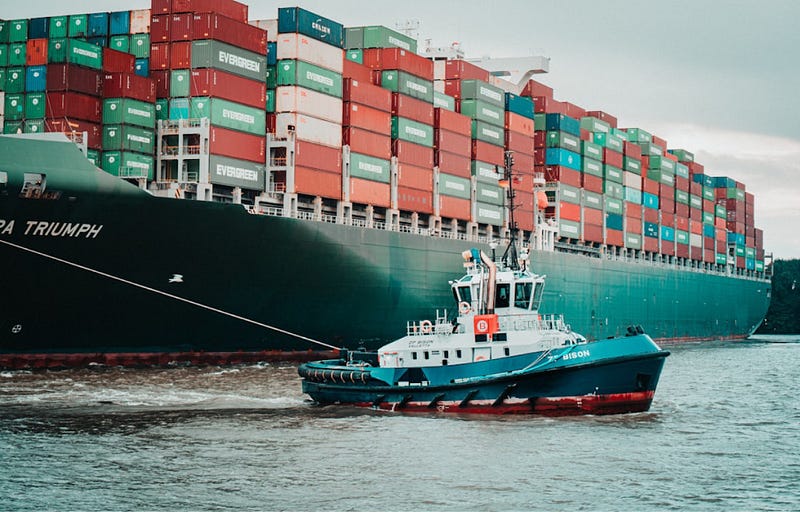
Another crucial factor in post-COVID inflation was the unprecedented supply chain disruptions.
Factory shutdowns, global shipping delays, and raw material shortages led to widespread bottlenecks, raising the cost of goods and services.
With demand surging due to stimulus-driven consumer spending and supply unable to keep pace, inflation soared.
The semiconductor shortage, which crippled the auto and electronics industries, and the backlog at major shipping ports both exacerbated price increases.
While government stimulus and private credit growth fueled demand-side inflation, supply constraints played a major role in limiting economic output, further pushing prices higher.
Inflation post-2020 was not just a monetary phenomenon - it was also a function of severe supply constraints caused by global production and logistics breakdowns.
Supply shortages set the stage. Some corporations may also have used the moment to widen margins while consumers absorbed higher prices.
Greedflation and Corporate Pricing Power
While supply chain constraints were a major driver of inflation, some corporations capitalized on the crisis - amplifying inflation even further.
Many industries, particularly those dominated by a few large firms, saw profit margins rise as companies used inflation fears to increase prices beyond their actual cost increases. Federal Reserve data suggests that corporate profits as a share of GDP surged in 2021, signaling that some firms used inflation as cover for price hikes unrelated to supply shortages.
Conclusion: Rethinking Inflation Narratives
The idea that government spending alone drives inflation is misleading. While deficits contribute, private credit expansion often plays an even larger role - especially when borrowing is cheap and banks are eager to lend.
The 2008 crisis showed that inflation doesn’t always follow government stimulus, while the post-COVID era proved that when government spending and private lending surge together, inflation can spiral out of control.
Politicians and media figures reduce this complexity to a soundbite:
“Government spending causes inflation.“It’s a half-truth that distorts public understanding and leads to bad policy.
If people believe deficits are the sole cause, they may support harmful austerity measures (think deep spending cuts that weaken public investment) while ignoring financial deregulation, reckless lending, and private sector credit booms.
Inflation isn’t just about government spending - it’s a system where private credit, Fed policy, and supply shocks all interact. The next time a politician blames inflation on government deficits alone, recognize it for what it is:
A misleading half-truth. The real story is more complex - and the sooner we understand it, the sooner we can demand better solutions.