Iran Fires Missiles at U.S. Base in Qatar — What Just Happened?
Missiles intercepted. No casualties. Flash in the Pan.
Rising tensions between Iran and the U.S.
Iran just fired missiles at a major U.S. military base in Qatar.
No reported casualties. Interceptors in the air. No joke.
But the message was loud and clear.
The strike comes after weeks of mounting conflict involving Israeli airstrikes, Iranian retaliation, and direct U.S. involvement.
A Brief History ~ (With Links)
U.S.-Iran tensions go back over 40 years, sparked by the 1979 Iranian Revolution and the U.S. embassy hostage crisis.
A cold war of proxy battles, economic pressure, and nuclear standoffs have shaped every administration’s relationship with Iran since.
The 2015 Iran nuclear deal briefly cooled things off, but the U.S. withdrew in 2018 and reset the clock.
The history of the U.S. ~ Iran relationship is far too complicated for a 3 minute explainer. Here are some additional sources for a deeper dive…
Congressional Report from 2025
June 2025: How Did We Get Here?
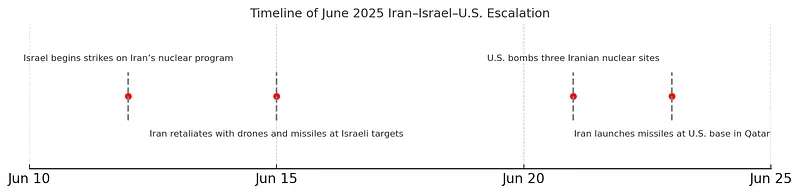
Earlier this month, Israel bombed Iranian nuclear facilities, claiming urgent security threats. Iran struck back.
The two nations have exchanged strikes almost daily since June 12.
Then the U.S. launched airstrikes on June 21st targeting Iran’s nuclear infrastructure ~ precision hits: underground centrifuges and enrichment sites.
That brings us to June 23, when Iran launched ballistic missiles at Al-Udeid Air Base in Qatar.
- U.S. and Qatari forces said they defeated the attack, with no U.S. casualties reported, according to CENTCOM’s June 23 statement .
- Early reports described advance warning and airspace closures, helping reduce the risk of accidental escalation.
- The strike remained dangerous, because a calibrated signal can become a war-opening failure if defenses, warnings, or assumptions break.
Iran called it “Operation Annunciation of Victory”, framing the strike as retaliation ~ not provocation.
Qatar condemned the strike and temporarily closed its airspace.
Why It Matters
This wasn’t just a warning shot. It was a message, carefully calibrated to avoid deaths while testing defenses and resolve. The risk sat in the mechanism: if an American had been killed, symbolic retaliation could have turned into direct escalation.
Questions remain:
- What if a missile slips through?
- What if warnings aren’t shared next time?
- What if this turns from symbolic to strategic?
Trump floated regime-change language publicly .