It’s Hard to Condemn what DOGE is Doing
The Wrecking Ball We Deserve?
There is something undeniably compelling about what the Department of Government Efficiency (DOGE) is doing.
It’s a radical effort to slash government spending, led by one of the most influential technocrats of the 21st century, Elon Musk, and backed by a president eager to prove that wasteful bureaucracies can be dismantled.
If you take it at face value, the initiative is a libertarian fever dream come to life: an unrelenting attack on what many view as an overgrown, inefficient federal apparatus. And yet, even as its agents storm agencies, freeze operations, and dismantle long-standing programs, it’s difficult to outright condemn DOGE.
Not because it’s a noble cause, nor because it’s being carried out in a particularly defensible manner.
Rather, it’s difficult to condemn because DOGE taps into a frustration that has long simmered beneath the surface of American governance.
The U.S. federal bureaucracy is, by most measures, bloated. Agencies overlap in jurisdiction, funding allocations are opaque, and entire institutions survive on inertia rather than necessity.
If DOGE is wielding an axe instead of a scalpel, it’s only because decades of failed reform efforts have left few other tools available.
The Unfinished Business of Government Efficiency

DOGE is hardly the first attempt to rein in government excess.
In the early 20th century, progressive reformers sought to streamline public administration through the creation of independent commissions and civil service protections.
The Hoover Commission (1947 to 1949), chaired by former President Herbert Hoover, was one of the most notable attempts to restructure the federal government. It produced sweeping recommendations for reducing redundancy, consolidating agencies, and making the executive branch more efficient.
Some of its proposals were enacted, but others fell by the wayside as political inertia took hold.
Later efforts, like the Grace Commission under Ronald Reagan in the 1980s, identified billions in potential savings but struggled to enact meaningful change.
The same could be said of Barack Obama’s Government Accountability and Efficiency Initiative, which aimed to modernize federal agencies but was met with bureaucratic resistance and ultimately delivered modest results.
The pattern is clear: every few decades, an administration attempts to make government more efficient, but entrenched interests, political gridlock, and bureaucratic self-preservation limit the impact.
In this sense, DOGE is a response to a long history of half-measures and abandoned efficiency crusades. The difference is that Musk and his team aren’t just making recommendations. They are shutting down agencies by force, bypassing Congress, and daring anyone to stop them.
The Real Culprit: Congressional Neglect
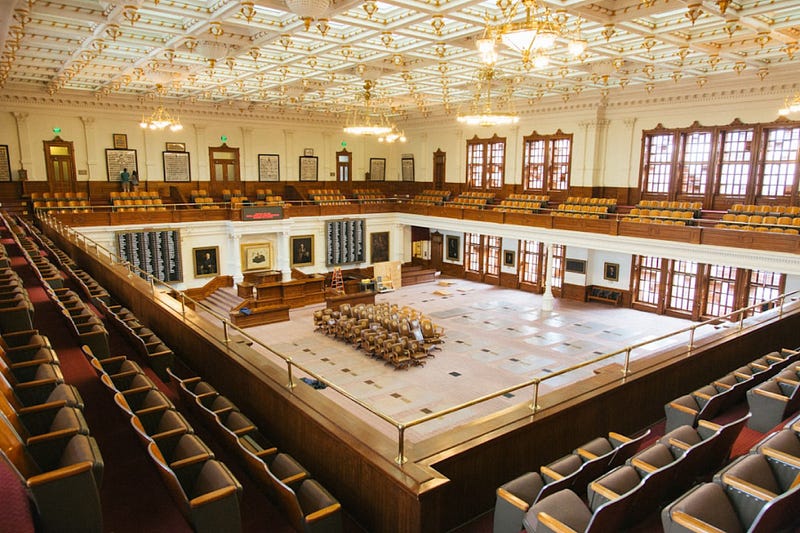
If inefficiency and corruption exist in the federal bureaucracy, they are symptoms, not causes, of government dysfunction.
The real failure belongs to Congress, which holds the power to oversee and reform these agencies but has largely abdicated its responsibility.
Every federal agency is subject to congressional oversight, a process meant to ensure accountability, transparency, and effectiveness. But in practice, oversight is often superficial, politically motivated, or nonexistent.
Congress routinely fails to review spending programs, rarely holds agencies accountable for inefficiencies, and has little incentive to clean up bureaucratic waste. Why? Because dysfunction benefits politicians. The more tangled and ineffective an agency becomes, the easier it is to use as a political talking point.
Take the Consumer Financial Protection Bureau (CFPB), an agency DOGE swiftly dismantled. The CFPB was created to protect consumers from predatory financial practices, yet it has often been criticized for regulatory overreach and a lack of accountability.
If the CFPB was wasteful or inefficient, that was Congress’s responsibility to fix. Instead, legislators either ignored the issue or used the agency as a partisan weapon, depending on who was in power.
The same is true of USAID, the foreign aid agency DOGE shut down, which has faced repeated allegations of mismanagement and corruption.
None of this should have required a technocratic blitzkrieg to address. Congress had ample opportunity to reform these institutions through normal legislative means. It simply chose not to.
The Myth of Bureaucratic Corruption

One of DOGE’s core justifications is that federal agencies are rife with corruption and self-serving career bureaucrats. But this is largely a red herring. While inefficiency exists, actual financial enrichment by civil servants is dwarfed by the fortunes amassed by elected officials.
In recent years, public scrutiny has turned toward the stock market activity of congressional leaders, spouses, and households whose portfolios can overlap with the industries Congress regulates.
The fact that members of Congress, who have direct influence over economic policy, regulatory decisions, and military contracts, can lawfully hold or benefit from market positions has led to widespread skepticism about the integrity of the system.
- High-profile trades by members’ spouses and relatives have made congressional stock activity a recurring symbol of perceived self-dealing.
- Even when trades are lawful and disclosed, the overlap between legislative influence and market exposure creates a legitimacy problem.
- Members across both parties continue to trade, or benefit from households that trade, in sectors affected by federal policy.
If an unelected bureaucrat took advantage of insider knowledge to personally enrich themselves, they would be in prison.
When Congress does it, it’s just another Tuesday.
While career bureaucrats are often vilified for their stable government salaries, they do not control legislation and they do not have the ability to shape markets in real time like members of Congress do. If corruption is truly the target, it makes little sense for DOGE to dismantle regulatory agencies while ignoring the financial conflicts that can accumulate around elected power.
The Wrecking Ball and Its Collateral Damage
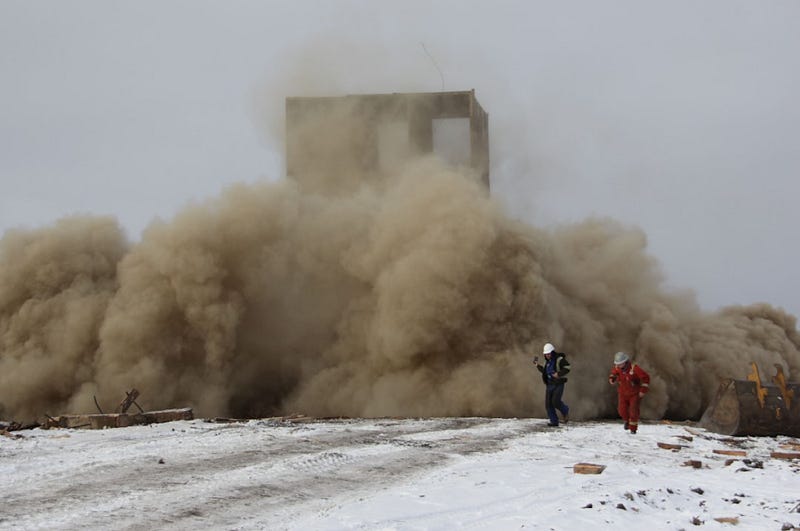
After decades of failed attempts to fix bureaucratic inefficiencies, it’s hard to argue that the wrecking ball isn’t necessary. The Hoover Commission, Grace Commission, and countless other reform efforts have repeatedly demonstrated that bureaucracy does not shrink itself. It has only grown more complex, more resistant to change, and more entangled with corporate and political interests.
But there’s a dangerous trade-off to swinging the wrecking ball indiscriminately.
Not all federal agencies are wasteful, and some perform functions critical to national stability, public safety, and economic oversight.
The Federal Aviation Administration (FAA) ensures air travel safety, the Centers for Disease Control and Prevention (CDC) manages pandemic response, and the National Weather Service (NWS) provides life-saving storm forecasts.
If DOGE’s cuts extend to agencies like these, the pursuit of efficiency could end up costing lives.
A leaner government may be desirable, but an absence of regulation can lead to corporate abuse, financial crises, and public disasters. And if DOGE succeeds, what’s next? Does the wrecking ball stop swinging, or is this just the beginning of a government remade by force?
The Temptation of Wrecking Balls
The genius of DOGE lies in its ability to force an impossible argument.
Defending institutions like the CFPB or USAID means defending waste, inefficiency, and bureaucratic stagnation. But endorsing DOGE means endorsing an unaccountable, unchecked technocracy with no clear endgame.
The initiative thrives on frustration, on the idea that if nothing else has worked, then perhaps radical measures are necessary.
This is why it’s so hard to condemn DOGE.
Not because it is right, but because the alternative, accepting the status quo, feels equally indefensible.
The real tragedy is that this binary choice exists at all.
If past efficiency efforts had succeeded, if bureaucratic reforms had been taken seriously decades ago, there would be no need for DOGE. Instead, the failures of previous generations have created the conditions for a reckoning that is neither rational nor orderly.
The wrecking ball was inevitable.
Will it clear a path for something better, or leave only rubble behind?