No Homo: The True History of Not Being Gay with Your Bros
A modern slang phrase, an older male ritual, and the long record of men trying to get close without being read wrong.
The $100,000 Reflex
LaMelo Ball was talking about defense.
The Hornets had just beaten the Bucks by one point. On the last play, Giannis Antetokounmpo missed a jumper. Ball explained the coverage in normal basketball language: the Hornets had loaded up, put a hand up, and lived with the result. Then came the reflex: “we loaded up, no homo.” The NBA fined him $100,000 for an “offensive and derogatory comment” in a postgame interview.1
That is the modern history of the phrase in miniature. The words before the phrase created a possible double meaning. Ball heard it before the room could finish hearing it. The disclaimer arrived to block the sexual reading and preserve the sports reading. It failed as public relations, but it succeeded as a ritual. Everyone understood the move.
The fine was not for an obscure phrase. It was for a familiar one.
“No homo” is not complicated because nobody knows what it means. It is complicated because its social job is so plain. A man says something that could be heard as gay, romantic, admiring, intimate, physically suggestive, or emotionally warm toward another man. Then he marks the boundary. The phrase says: this can happen, but not that way.
That is the basic machine: trigger, risk, disclaimer, audience, result.
The trigger can be a compliment, a joke, a touch, a confession, a sports phrase, a lyric, a hug, a look, a request, a piece of locker-room slang. The risk is being read as the wrong kind of man in front of other men. The disclaimer is the escape hatch. The audience can be the other man, the group, the camera, the internet, or the speaker himself. The result is permission. The man gets to say the thing and unsay the thing in the same breath.
“No homo” is modern. The ritual is older.
The phrase, the exact joke, and the exact anxiety all belong to their own period. “No homo” belongs to late twentieth-century and early twenty-first-century American slang, with roots in hip-hop and early web culture. The ritual structure is wider: men using words, ceremonies, jokes, codes, and shared institutions to manage the line between male intimacy and sexual suspicion.
The history has no clean straight line from colonial letters to Dipset to NBA fines. It has a recurring pressure. Men keep inventing ways to be close to men while protecting the public meaning of that closeness.
The Phrase Arrives
The best-supported public record places “no homo” in American hip-hop and early internet slang by the early 2000s, with scholarly accounts tracing it back to 1990s hip-hop lyrics. Joshua R. Brown’s 2011 article in the Journal of Homosexuality describes “no homo” as a discourse interjection that arose in 1990s hip-hop to negate supposed sexual or gender transgressions.2
That does not prove the first time anyone said it. Slang usually moves in speech before it leaves clean records. The responsible origin claim is narrower: by the early 2000s, the phrase had reached dated online and campus sources; by scholarly account, it had earlier roots in hip-hop.
Know Your Meme records an Urban Dictionary definition from October 21, 2003, and message-board appearances by December 2004. Urban Dictionary’s early definition gave the plain functional meaning: said after saying something that “sounded gay.” It gives the early web record a dated floor; it cannot carry the burden of a full origin.3
By 2007, the phrase was visible enough for The Daily Princetonian to treat it as campus speech. The column opened with a tiny, almost perfect example: “Yo, man, pass me my jacket … no homo.” The writer credited the Diplomats, especially Juelz Santana and Cam’ron, with popularizing it, and described young men using the phrase after statements that other guys might misconstrue as homosexual.4
The jacket example is useful because nothing sexual had happened. A man asked another man to pass clothing. The phrase made the moment sexual by insisting it was not sexual. That is one of the strange powers of the ritual. It does more than remove ambiguity. It often creates the ambiguity it claims to remove.
The Princeton column understood that. It joked that “I’m going out with Jimmy tonight” needed a “no homo” add-on because otherwise it could sound like a date. It also used examples as ordinary as asking for mayonnaise. By 2007, the phrase had become a reflex attached to sex and to male proximity.4
That is when slang becomes ritual: when the words no longer need a serious risk to activate. The group has learned the code so well that the code can generate its own emergency.
What the Disclaimer Lets Men Do
“No homo” is often described as a denial of homosexuality. That is true, but incomplete. The phrase also lets men perform forms of closeness that might otherwise be harder to risk.
It can manage affection. A man can tell another man he loves him, misses him, needs him, respects him, or would do anything for him, then add the disclaimer to protect the moment from being heard as romance.
It can manage admiration. A man can call another man handsome, well-dressed, built, talented, beautiful, sexy, or desirable to women, then block the idea that the admiration includes desire.
It can manage physical closeness. Sports, gyms, dorms, fraternities, barracks, locker rooms, and friend groups all create bodily contact: hugs, tackles, wrestling, slaps, crowded couches, shared beds, showers, celebrations, injuries, pileups. The disclaimer turns contact into comedy before it can turn into suspicion.
It can manage vulnerability. A man can reveal need, grief, loyalty, fear, or dependency, then joke his way back into the approved male register.
It can also insult. It can turn gayness into the thing everyone agrees must be avoided. It can put another man under pressure. It can discipline softness. It can make friendship possible only by marking someone else as the boundary. There is no contradiction between bonding and hostility here. The phrase can open a door between men by closing another door around what kind of man is allowed to enter.
Usage itself shows that double function. C.J. Pascoe and Sarah Diefendorf analyzed 396 instances of the phrase across 1,061 tweets and found a gendered pattern: the phrase appeared more often from male tweeters and often worked around masculinity, sexuality, friendship, pleasure, and non-normativity. Their account keeps both functions in view. The phrase can police boundaries, but the modal use they identified was tied to positive emotional contexts involving men’s pleasure, desire, affection, attachment, and friendship.5
That is the heart of the story. “No homo” is a wall and a gate.
The phrase says: I can come this far, but no farther. I can admire you, but not as a desiring man. I can love you, but not like that. I can touch you, but the joke must arrive first. I can be close, but only if the group sees me step back.

The joke gives closeness permission while marking the line around it.
The Sports Interview Trap
Sports may be the cleanest modern stage for the ritual because male bodies are already the subject. Athletes talk about length, penetration, backside help, physicality, toughness, contact, spacing, loading up, finishing, going hard, taking it deep, getting stretched, and putting a body on someone. Most of it is normal sports language. Much of it is also available for sexual double meaning.
That makes the sports interview a trap.
In 2013, Pacers center Roy Hibbert was asked about guarding LeBron James and said the Heat had “stretched” him out, then added “no homo.” The NBA fined him $75,000 for inappropriate and vulgar language, and Hibbert apologized.6
In 2018, Nuggets center Nikola Jokić was describing Bulls rookie Wendell Carter Jr. and said, “No homo, he’s longer than you expect.” The basketball meaning was obvious: reach, size, wingspan, defensive presence. The phrase arrived because the other meaning was also obvious. The NBA fined Jokić $25,000 for derogatory and offensive language.7
In 2023, Nets guard Cam Thomas was asked about teammate Spencer Dinwiddie joking that the Nets had acquired better-looking players. Thomas answered, “We already had good-looking guys, no homo.” Again the trigger was admiration of male appearance. Again the disclaimer tried to preserve the approved meaning. The NBA fined Thomas $40,000.8
Then came Ball in 2024, fined $100,000 after the “loaded up” remark.1
The pattern is too exact to ignore. Each case contains a normal male-coded setting, an accidental or semi-accidental double meaning, a disclaimer, a public audience, and a penalty. The fine amounts do not prove the phrase disappeared in private. They prove something narrower and clearer: on camera, in professional sports, the reflex became expensive.
That is the public fall of “no homo.” Not silence. Cost.
The Older World Before the Phrase
The phrase is modern because the social world that produced it is modern. It depends on modern sexual categories, modern public speech, modern mass media, and a particular style of American male joking. Earlier men did not need “no homo” because they did not always organize male intimacy through the same set of categories.
The past had its own complications; its grammar was different.
Richard Godbeer’s work on early American male friendship shows eighteenth-century and early republican men writing to each other with a tenderness that can startle modern readers. The Museum of the American Revolution’s excerpt of Godbeer’s The Overflowing of Friendship describes founding-era male letters filled with love and tenderness. Men walked arm-in-arm and wrote effusive poetry to one another, while male friendships ranged from brotherly collaboration to romantic affection.9
Godbeer’s book does not say, “These men were secretly using modern categories.” It asks readers to set those categories aside long enough to understand the emotional world on its own terms. Johns Hopkins University Press’s description of the book notes that when eighteenth-century American men wrote phrases such as “dearly beloved” to one another, their families and neighbors would not necessarily have been surprised.10
This is the first major historical lesson: male intimacy does not always need a disclaimer when the surrounding culture already provides an acceptable script.
In the early republic, that script could be friendship, sensibility, virtue, brotherhood, classical learning, religion, shared politics, or affectionate correspondence. A man could write to another man with warmth because the form itself carried meaning. The letter said what kind of intimacy this was supposed to be.
That is very different from “no homo.” But it answers a related problem. It tells the audience how to read male closeness.
Romantic Friendship and the Boundary Problem
The nineteenth century gives a sharper example because it includes both intimacy and anxiety.
The National Park Service’s account of Charles Sumner, Henry Wadsworth Longfellow, and Samuel Gridley Howe places them in an era of “romantic friendships”: close, intimate, often ambiguous same-sex relationships that could include deep affection, physical closeness, and emotional dependence. Homosexuality was taboo or illegal, but the categories and communities later attached to modern homosexuality did not yet work in the same way in early nineteenth-century America.11
Sumner met Longfellow and Howe in 1837. The three men spent long stretches of time together. Sumner called himself and Howe “bachelors both” and wrote of evenings in “free and warm communion.” He worried that Howe would marry, a worry that points to one of the period’s boundaries: male devotion might be intense, but marriage often reorganized it.11
The NPS account does not force a modern sexual label onto the men. It says the relationships were essential to them and that their exact sexual orientation cannot be known with certainty. That is precisely why the example is useful. The historical evidence shows intimacy, attachment, jealousy, marriage pressure, secrecy, and later interpretation problems. It does not license a cheap claim that these men were “really” doing a nineteenth-century version of “no homo.”11
The parallel is structural, not genealogical.
Sumner, Howe, and Longfellow were not secretly speaking the language of 2007 campus slang. Their example instead shows how a male culture lets men be close while controlling the public meaning of that closeness. In their world, the answer might be friendship, bachelorhood, letters, literary feeling, or eventual marriage. In the “no homo” world, the answer is a joke stapled to the end of a sentence.
Different tools. Similar pressure.
Brotherhood as Permission
Male societies have often solved the boundary problem by giving intimacy a public name.
Fraternity is one such name. So is the team. So is the army. So is the lodge. So is the school. So is the nation.
French revolutionary culture gives a vivid case. The “fraternal kiss” became one of the visible signs of Revolutionary fraternity. Georgia Comte’s study of the ritual describes the kiss as a public expression of commitment, patriotism, forgiveness, peace, sincerity, inclusion, and unity. In some contexts, the kiss could mark someone as a good patriot. In others, it could become a test of belonging.12
The kiss belonged to political brotherhood, with a different job from a heterosexual disclaimer and a different slang universe from “no homo.” That frame told the audience what the gesture meant.
This is the historical analogue worth keeping: a male-coded public ritual of closeness becomes legible because the culture supplies an approved interpretation. The kiss is not desire; it is fraternity. The embrace is not romance; it is patriotic unity. The body contact is safe because the public meaning has already been assigned.
Military life created another kind of permission. Brian Joseph Martin’s Napoleonic Friendship traces affectionate friendships in the French Army from 1789 to 1916 and argues that Revolutionary and Napoleonic military life helped create new forms of camaraderie, physical closeness, and emotional attachment among soldiers.13
The army does not abolish suspicion. Barracks life can generate its own forms of policing, coercion, hierarchy, and rumor. But military brotherhood gives male intimacy a job. Men share danger, sleep near each other, tend wounds, grieve, embrace, and pledge loyalty under the name of service. The institution tells the audience how to read the closeness.
Historical analogy has to be handled with care. Brotherhood rituals do not all hide the same thing. Men repeatedly build social frames that permit closeness by naming it something else.
When Being Read Wrong Became a Modern Risk
“No homo” belongs to a world where male intimacy can be treated as evidence of sexual identity.
That world did not appear all at once. Modern categories of sexual orientation hardened over time. Public suspicion then acquired legal, workplace, military, and social consequences. By the mid-twentieth century, being read as homosexual could threaten a man’s job, reputation, security clearance, and public standing.
The Lavender Scare made that risk explicit. The National Archives describes how, from the late 1940s through the 1960s, thousands of gay federal workers were fired or forced to resign. The 1950 Hoey committee report treated homosexuals as unsuitable for federal employment and as security risks. Eisenhower’s 1953 Executive Order 10450 folded “sexual perversion” into the language of federal employment investigations.14
The Lavender Scare is background, not an origin story for “no homo.” The phrase emerged much later, in a different social setting. But the Lavender Scare shows a key modern condition: being classified as homosexual could carry real penalties. Once the category becomes dangerous, signs of belonging to it become dangerous too.
At the adolescent level, that danger could become a daily masculinity test. C.J. Pascoe’s work on “fag discourse” argues that American adolescent boys often produced masculinity through continual repudiation of the “fag” identity. The insult was about sexual orientation and gender enforcement. It could temporarily attach to boys seen as unmasculine, weak, excessive, incompetent, emotional, or too close to other boys.15
That is the social soil “no homo” grew in. The phrase did not create the fear of being read wrong. It gave the fear comic timing.
The joke form matters. A man could deny suspicion without making the denial sound frightened. He could laugh first. He could make the room laugh. He could show that he knew the code well enough to violate it and repair it instantly.
The phrase performs fluency as much as it states a denial.
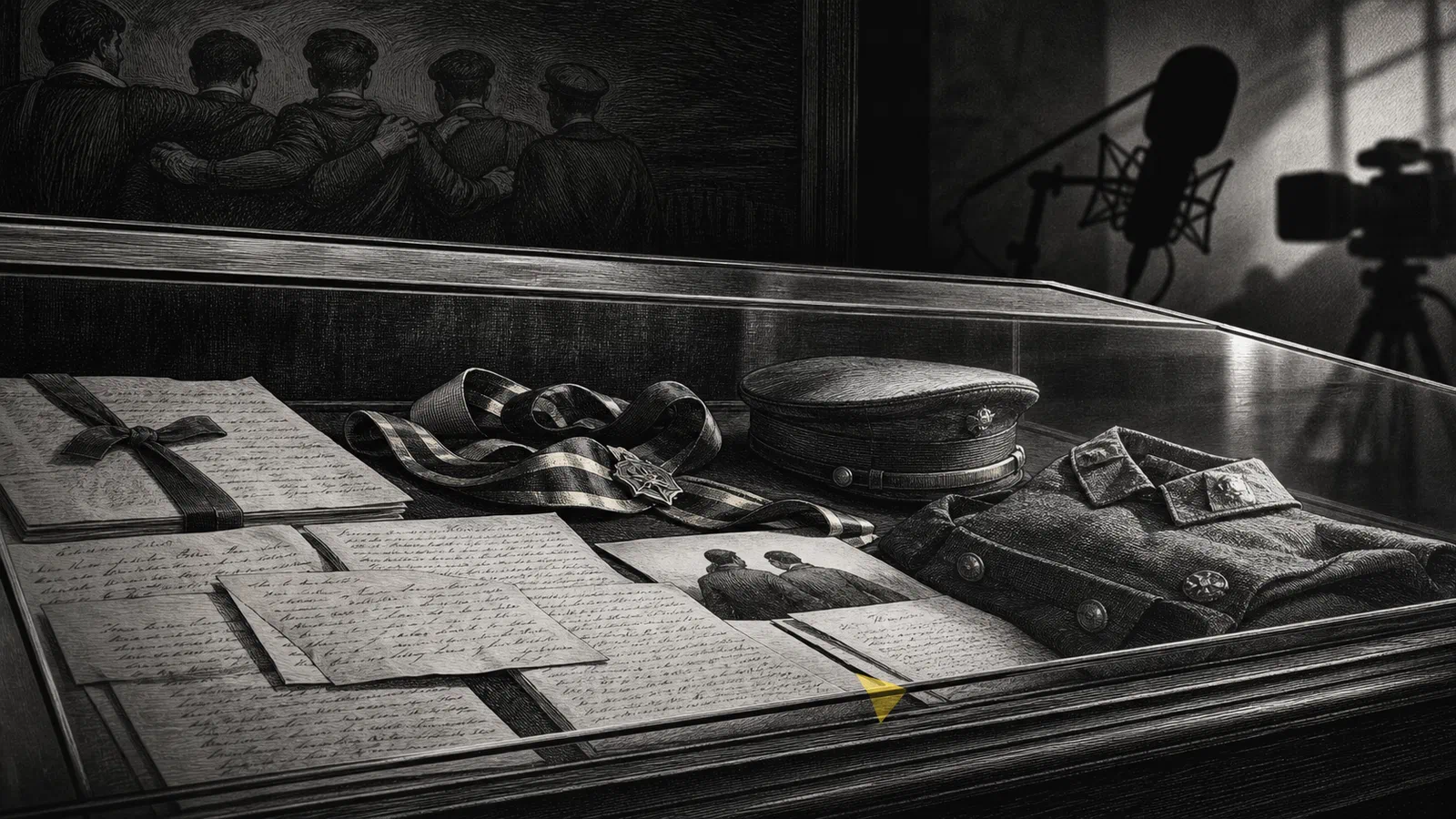
Older public scripts told audiences how to read male closeness.
The Campus Reflex
By the time “no homo” reached campus speech, it had become portable.
The Princeton column shows the phrase moving through everyday male talk: passing a jacket, going out with Jimmy, asking for mayonnaise, complimenting another man, requesting company. The examples are funny because they are too small. The phrase does not wait for a real sexual risk. It arrives at the first hint of interpretive trouble.4
This is the comic overgrowth of the ritual. The group becomes so trained to hear gay possibility that any male-to-male sentence can become suspect. The disclaimer is no longer tied to real desire. It is tied to the possibility of being joked into desire.
In that sense, “no homo” is less about homosexuality than about audience control. It is a way of telling the room: do not take that route. The words are addressed to the group imagination.
The phrase often sounds most revealing when the trigger is weakest. A man asking for a jacket does not need a sexuality disclaimer. The fact that he supplies one shows how thoroughly the group has learned to monitor male closeness.
The phrase is also a status signal. It says the speaker knows the rules of the room. He can walk near the boundary without being swallowed by it. He can produce intimacy and control the laugh. He can show he is one of the men by showing he knows what must be denied.
Comedy Finds the Panic
Once the phrase became recognizable, comedy could expose the mechanism by exaggerating it.
The Lonely Island included a track titled “No Homo Outro” on Turtleneck & Chain, released in 2011. Its value here is less as a source of the phrase than as a sign that the phrase had become broadly legible enough to parody.16
Parody works because the ritual is already visible. The audience must know the setup: a man says something affectionate or suggestive, then slams a disclaimer over it. The more absurd the trigger, the clearer the panic. Comedy does not need to explain the masculine rule. It only needs to speed it up.
By the 2010s, “no homo” could mean several things depending on the speaker and room. It could be sincere. It could be ironic. It could be nostalgic. It could be aggressive. It could be parody. It could be a deliberate refusal of speech norms. It could be a mistake.
That range is one reason frequency alone would not settle the question. A chart might show whether the phrase rose or fell, but it would not show whether each use was earnest, mocking, quoted, condemned, revived, or replaced. The phrase had become both a tool and a topic.
The Public Fall
The phrase declined first as respectable public speech.
That is a narrower claim than saying it declined everywhere. It probably continued in private groups, online jokes, teenage speech, gaming spaces, sports talk, and parody long after reporters, leagues, companies, and campuses became less tolerant of it. The best evidence is not disappearance. It is penalty.
Roy Hibbert in 2013. Nikola Jokić in 2018. Cam Thomas in 2023. LaMelo Ball in 2024. Four NBA cases, all with similar mechanics: male-coded sports speech, sexual ambiguity, disclaimer, public audience, formal discipline.6781
The penalty does not mean the phrase stopped working inside male groups. It means the public audience changed. What once marked fluency in one room could mark liability in another.
This is the key difference between a friend group and a microphone. In the friend group, the disclaimer may preserve status. In the public interview, the disclaimer may destroy it.
That shift is part of the phrase’s fall. The ritual did not disappear, but public innocence around using it openly began to disappear. Once a phrase becomes recognized as derogatory by leagues, workplaces, media, and critics, it no longer functions as a simple throwaway. It carries a record.
By the 2020s, saying “no homo” could deny gayness, but it could also signal that the speaker was behind the public code, rejecting the public code, parodying the code, or speaking to a different audience than the official one.
The phrase had not died. It had become marked.
The Replacement Slot
When a ritual is useful, it does not vanish just because one phrase becomes costly. It changes passwords.
“Pause” did much of the same work. So did “ayo,” depending on context. “Sus” turned ambiguity into accusation or suspicion, especially in internet and gaming speech. “Not like that” and “not in a gay way” kept the older explanatory form alive.
Then came “No Diddy.”
In 2024, “No Diddy” spread online as a replacement or cousin for “pause” and “no homo.” Know Your Meme describes it as synonymous with “No Homo” and “Pause,” spreading through X and Reddit and gaining attention in 2024. XXL described the phrase going viral as a replacement for “No Homo,” and also reported Cam’ron and Ma$e discussing the switch from “pause” to “No Diddy” on their sports talk show. The Daily Dot gave the same basic definition: a phrase used after statements or actions that could be interpreted as queer, meant to affirm straightness.17181920
This is the strongest evidence for a return, but not exactly the return of “no homo.”
The exact phrase appears in search-visible 2026 online conversation, including Reddit threads where users debate whether it is inherently offensive or joke about whether anyone uses it unironically anymore. That is evidence of persistence, not a proven national comeback.21
The stronger claim is this: the ritual slot remains open.
The slot is the place in speech where a man senses ambiguity and reaches for a marker. The marker can be “no homo.” It can be “pause.” It can be “ayo.” It can be “sus.” It can be “not like that.” It can be “No Diddy.” The exact words change because every generation needs its own plausible way to say the same thing without sounding exactly like the last generation.
That is how the ritual survives. It sheds phrases.
What “No Homo” Really Preserved
The phrase’s defenders often treat it as harmless joking. Its critics often treat it as simple anti-gay speech. Both descriptions capture part of the truth. Neither is enough.
“No homo” can be anti-gay because it depends on gayness as the thing that must be disclaimed. The phrase works by using homosexuality as the boundary outside acceptable male speech; that boundary is central to the ritual.
But the phrase also reveals something about straight male intimacy. It shows how much men may want from one another: praise, closeness, loyalty, attention, physical ease, emotional recognition. It also shows the conditions under which those things are allowed.
The phrase is a small ritual of permission and enforcement at the same time. It lets a man move toward another man, then requires him to step back loudly enough for everyone to hear.
The phrase belongs in a history of male bonding as much as in a history of slang. It is a tool men used to get through a contradiction. Male groups often prize loyalty, devotion, sacrifice, brotherhood, contact, and admiration. They also often punish signs that those things might be sexual, soft, feminine, dependent, or gay. “No homo” compresses that whole contradiction into two words.
It is heterosexual paperwork filed after the act.
The Old Machine
The older parallels are not ancestors in a direct line. Early American men writing affectionate letters were not secretly waiting for Urban Dictionary. French revolutionaries kissing as brothers were not doing a proto-campus joke. Napoleonic soldiers did not need “pause.” Charles Sumner did not need to add “no homo” to “free and warm communion.”
Those men lived under different rules. They had other scripts: friendship, virtue, fraternity, marriage, honor, patriotism, military brotherhood, literary feeling, religion, class, school, nation.
But the recurring problem is visible. Men create closeness. Closeness invites interpretation. The group supplies a frame. The frame tells everyone what the closeness means.
Sometimes the frame is noble. Sometimes it is comic. Sometimes it is violent. Sometimes it is bureaucratic. Sometimes it is a kiss. Sometimes it is a uniform. Sometimes it is a locker-room joke. Sometimes it is a fine from the NBA. Sometimes it is two words at the end of a sentence.
“No homo” did not invent the problem. It exposed the machinery.
A man reaches toward another man. The room starts reading him. The speaker hears the room before the room speaks. The ritual arrives first. It says: yes, this is closeness. No, not that kind. Keep moving.
Sources
NBA Official, “Hornets’ LaMelo Ball fined,” November 17, 2024. https://official.nba.com/hornets-lamelo-ball-fined/ ↩︎ ↩︎ ↩︎
Joshua R. Brown, “No Homo,” Journal of Homosexuality 58, no. 3 (2011): 299-314. DOI: https://doi.org/10.1080/00918369.2011.546721 . PubMed record: https://pubmed.ncbi.nlm.nih.gov/21360388/ ↩︎
Know Your Meme, “No Homo,” added May 16, 2011; updated January 30, 2025. https://knowyourmeme.com/memes/no-homo ↩︎
The Daily Princetonian, “‘Nice article, no homo,’” November 8, 2007. https://www.dailyprincetonian.com/article/2007/11/nice-article-no-homo ↩︎ ↩︎ ↩︎
C.J. Pascoe and Sarah Diefendorf, “No Homo: Gendered Dimensions of Homophobic Epithets Online,” Sex Roles 80 (2019): 123-136; published online May 23, 2018. https://link.springer.com/article/10.1007/s11199-018-0926-4 ↩︎
NBC Sports, “Roy Hibbert fined $75,000 for ‘inappropriate and vulgar language’ in postgame interview,” June 2, 2013. https://www.nbcsports.com/nba/news/roy-hibbert-fined-75000-for-inappropriate-and-vulgar-language-in-postgame-interview ↩︎ ↩︎
NBC Sports, “Nuggets star Nikola Jokic fined for saying ’no homo’ during interview,” November 8, 2018. https://www.nbcsports.com/nba/news/nuggets-star-nikola-jokic-fined-for-saying-no-homo-during-interview ↩︎ ↩︎
BasketNews, “Cam Thomas makes anti-gay remark, apologizes after,” February 10, 2023. https://basketnews.com/news-185087-cam-thomas-makes-anti-gay-remark-apologizes-after.html ↩︎ ↩︎
Museum of the American Revolution, “The Overflowing of Friendship,” excerpt from Richard Godbeer, The Overflowing of Friendship: Love Between Men and the Creation of the American Republic. https://www.amrevmuseum.org/read-the-revolution/the-overflowing-of-friendship ↩︎
Johns Hopkins University Press, The Overflowing of Friendship: Love Between Men and the Creation of the American Republic. https://www.press.jhu.edu/books/title/3325/overflowing-friendship ↩︎
National Park Service, “An Era of Romantic Friendships: Sumner, Longfellow, and Howe.” https://www.nps.gov/articles/an-era-of-romantic-friendships-sumner-longfellow-and-howe.htm ↩︎ ↩︎ ↩︎
Georgia Comte, “A Kiss among Brothers? A Symbol of Fraternal Love in Revolutionary France, 1790-1799,” Annales historiques de la Révolution française 2024/1. https://shs.cairn.info/journal-annales-historiques-de-la-revolution-francaise-2024-1-page-99?lang=en ↩︎
Brian Joseph Martin, Napoleonic Friendship: Military Fraternity, Intimacy, and Sexuality in Nineteenth-Century France, University of Massachusetts Press. https://www.umasspress.com/9781584659563/napoleonic-friendship/ ↩︎
National Archives, “These People Are Frightened to Death: Congressional Investigations and the Lavender Scare,” Prologue, Summer 2016. https://www.archives.gov/publications/prologue/2016/summer/lavender.html ↩︎
C.J. Pascoe, “‘Dude, You’re a Fag’: Adolescent Masculinity and the Fag Discourse,” Sexualities 8, no. 3 (2005). https://journals.sagepub.com/doi/10.1177/1363460705053337 ↩︎
The Lonely Island, Turtleneck & Chain discography page. https://www.thelonelyisland.com/discography/turtleneck-and-chain/ ↩︎
Know Your Meme, “No Diddy.” https://knowyourmeme.com/memes/no-diddy ↩︎
XXL, “Cam’ron and Mase Joke About People Now Using ‘No Diddy’ Over ‘Pause,’” March 25, 2024. https://www.xxlmag.com/camron-mase-joke-no-diddy-pause/ ↩︎
The Daily Dot, “Pause No Diddy Meaning, Spread, and Usage.” https://dailydot.com/no-diddy-meaning ↩︎
XXL, “New Slang ‘No Diddy’ Goes Viral and Replaces ‘No Homo,’” March 23, 2024. https://www.xxlmag.com/new-slang-no-diddy-viral-replaces-no-homo/ ↩︎
Reddit thread cited as a fragile, anecdotal 2026 usage lead, not as quantified trend evidence. https://www.reddit.com/r/actuallesbians/comments/1t5bgw5/had_a_coworker_unironically_tell_me_no_homo/ ↩︎