Precious and Honored
On repentance and the courage to receive love.
We had promised ourselves we would be more patient this time.
Then came the sharp answer, followed by the familiar silence. We know whom we hurt. We know the apology we owe. What troubles us now is how often we have stood here before.
A failure we keep repeating can make us reluctant to approach God. We decide to put ourselves in order and return when we have something better to report. Meanwhile, the person who needs His help is left trying to become worthy of asking for it.
Receiving the words
In Isaiah 43 , the Lord tells Israel: “you are precious in my eyes and honored, and I love you.” He knows the people He addresses. Their failures are part of the same chapter. His promise of redemption comes with that knowledge.
As Christians, we hear those words alongside Christ’s revelation of the Father’s mercy. We may readily believe that God loves the person beside us. Receiving that love ourselves can be harder. We remember something we would rather He had not seen. Psalm 139 gives us a prayer for this difficulty. The psalmist places himself before the God who knows his thoughts and ways, and asks Him to search his heart and lead him. We can look honestly at our lives with the Lord beside us.
The God who made the stars made us too. We can place our lives before Him without having a spotless account to present. The Catechism describes conversion as a work of God’s grace. He gives us the strength to begin again. Our return already depends on the help we have been tempted to postpone asking for.
There is much in us that needs to change. We can let Him love the person who needs that change.
Repentance with hope
The image of missing the mark can help us acknowledge a failure and aim again. Yet sin wounds our relationship with God and our neighbor . Someone may have borne the cost of our anger, dishonesty, or neglect. We owe that person more than a better opinion of ourselves.
A well-formed conscience helps us name the wrong. The Church calls the sorrow that turns us toward repentance compunction. Contrition includes sorrow for sin and a firm resolve to avoid it. We admit what we have done, ask forgiveness, and choose how to act differently.
Shame may be the first way we feel a wrong we have done. The danger comes when that feeling hardens into a verdict that repentance is useless. We begin to believe that this failure is all we are, that forgiveness cannot reach us, or that we have exhausted God’s willingness to help.
Those thoughts can keep us circling the same fault while the apology remains unspoken. We have plenty of accusations against ourselves and little trust that a new beginning is possible. We can bring that lack of trust into prayer too.
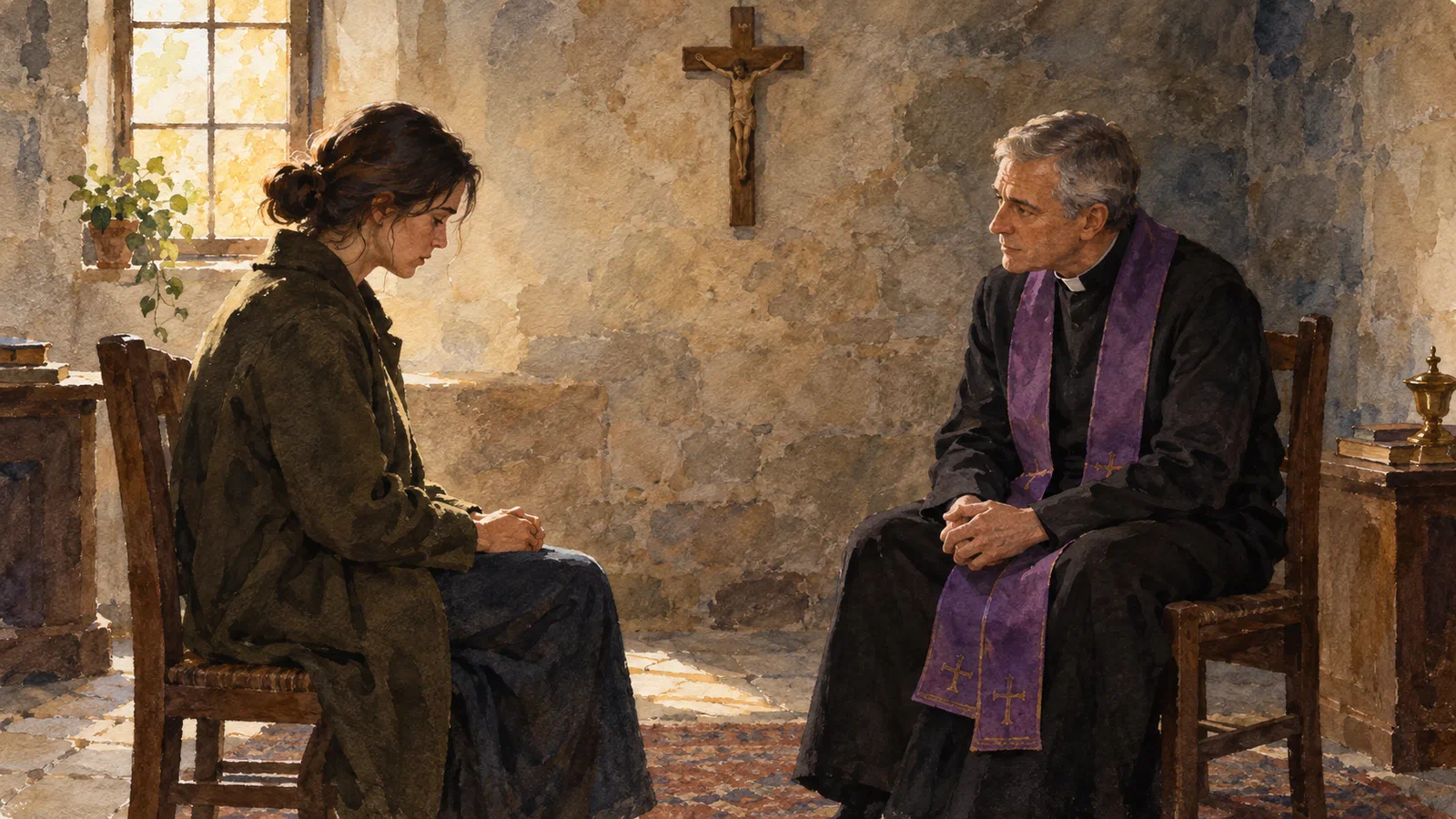
We can name the wrong and ask for mercy.
In the sacrament of Reconciliation, we confess our sins and receive Christ’s forgiveness through the ministry of the priest. The Church also asks us to repair the harm we can . A reputation may need restoring. An unfair advantage may need surrendering. Someone may need an apology without an excuse attached.
Forgiveness gives that work hope. We can take responsibility with God’s help, including for a fault we have confessed before.
Getting up and returning
In the parable of the lost son , the younger son comes to his senses and goes back to his father. He returns with the truth about what he has done. While he is a long way off, his father sees him and runs to meet him.
The older son has his own difficulty receiving the father’s generosity. He remains outside, angry at the welcome given to his brother. The father comes out to him as well. His invitation reaches the son who squandered his inheritance and the son who resents his return.
We may recognize ourselves in either one. Perhaps we have done something we dread admitting. Perhaps we have served faithfully and begun keeping a bitter account of everyone else’s failures. We can tell the Father where we are.

The apology we owe has somewhere to begin.
Christ came so that we might have life in abundance . We can ask for the grace to receive His love and let it change what we do next. The person we hurt needs our care. The sin we have been hiding can be brought to confession. Our desire to serve can begin again.
We are precious to God, even with the truth about us known. We can get up and go to Him.