The Ash Pond Under the Cloud
EPA's coal-water proposal turns AI's hunger for electricity into a fight over wastewater, grid reliability, and who lives downstream.
An ash pond is a quiet place for a server to cast a shadow.
It sits behind the fence line of a power plant, gray and workmanlike, carrying a vocabulary that sounds designed to keep ordinary attention away: leachate, effluent, combustion residuals, flue gas desulfurization wastewater. The words are technical because the thing itself is technical. Coal burned for electricity leaves ash. Air-pollution controls catch some waste before it leaves the stack. Water carries other waste through pipes, ponds, treatment systems, and permits.
On May 14, 2026, the Environmental Protection Agency put that waste stream back inside the argument over artificial intelligence. The agency proposed revising wastewater limits for steam electric power plants, saying the change could reduce electricity generation costs by as much as $1.1 billion per year while supporting grid reliability. The Associated Press reported that the proposal would relax limits aimed at keeping toxic heavy metals out of streams and rivers through polluted groundwater.
EPA’s public explanation joined two subjects that usually live in different rooms: coal-plant wastewater and data-center power demand. Administrator Lee Zeldin argued that AI and data centers are creating baseload demand that older rules failed to accommodate. In that framing, a wastewater rule becomes part of the national buildout for the cloud.
That is the useful thing about the proposal. It makes the cloud stop floating.
The Waste Stream With A Technical Name
The rule at issue lives inside the Clean Water Act’s machinery for industrial wastewater. EPA calls these standards effluent limitations guidelines, or ELGs. The name sounds narrow. The consequences are physical.
In 2024, EPA strengthened wastewater discharge standards for coal-fired power plants. The rule covered three wastewaters: flue gas desulfurization wastewater, bottom ash transport water, and combustion residual leachate. EPA’s own summary said coal-plant wastewater can contain selenium, mercury, arsenic, nickel, bromide, chloride, iodide, nutrients, and dissolved solids. It warned that these pollutants can contaminate drinking-water sources, recreational waters, and aquatic life, with health risks that include cancer, other disease effects, and lowered IQs in children.
That is a long way of saying that coal ash is never only ash. It is a record of what the plant burned, what its pollution controls captured, what water touched, and what the permit allowed to leave.
The Biden-era rule tried to tighten the handling of that record. The new proposal would loosen part of it by rescinding certain uniform limits for unmanaged combustion residual leachate and giving permit writers more room to set discharge limits case by case. EPA describes that as flexibility for a difficult waste stream. Industry groups call it a practical step for keeping power plants available during a demand surge.
Those arguments have to be taken seriously. Power is infrastructure, and infrastructure fails in public.
The Grid Argument Has Weight
The United States has spent years treating data centers as a zoning, tax, and real-estate story. That was never enough. A data center is also a standing demand on the electric system. It needs land, fiber, transformers, water, backup generation, transmission, and a utility willing to plan around a large load that may arrive faster than normal public planning can absorb.
The International Energy Agency says U.S. electricity consumption is set to rise close to 2 percent per year on average, more than twice the pace of the past decade, with data-center expansion as a major driver. In a separate report on energy demand linked to AI , the agency projects fast growth in electricity use by accelerated servers. The U.S. Energy Information Administration has also examined a high-demand scenario in which fossil generation rises if data-center power demand grows faster than expected.
The pressure is real. Utilities do not serve AI forecasts with press releases. They serve them with megawatts. If a region has too little transmission, too little dispatchable power, or too many large-load requests clustered around the same substations, the strain reaches households and businesses as cost, delay, reliability risk, or new generation.
Coal plants sit awkwardly inside that problem. They are older. They pollute. Many were headed toward retirement. They also have boilers, turbines, grid connections, fuel systems, and communities built around them. In a period of rising electric demand, an existing power plant can look, to a regulator or utility, like capacity that should be kept alive for a few more years.
That is the real tradeoff. Cheap and reliable power is a public good. Clean water is also a public good. The hard part is that the same community may need both, and the accounting systems rarely place them on the same bill.
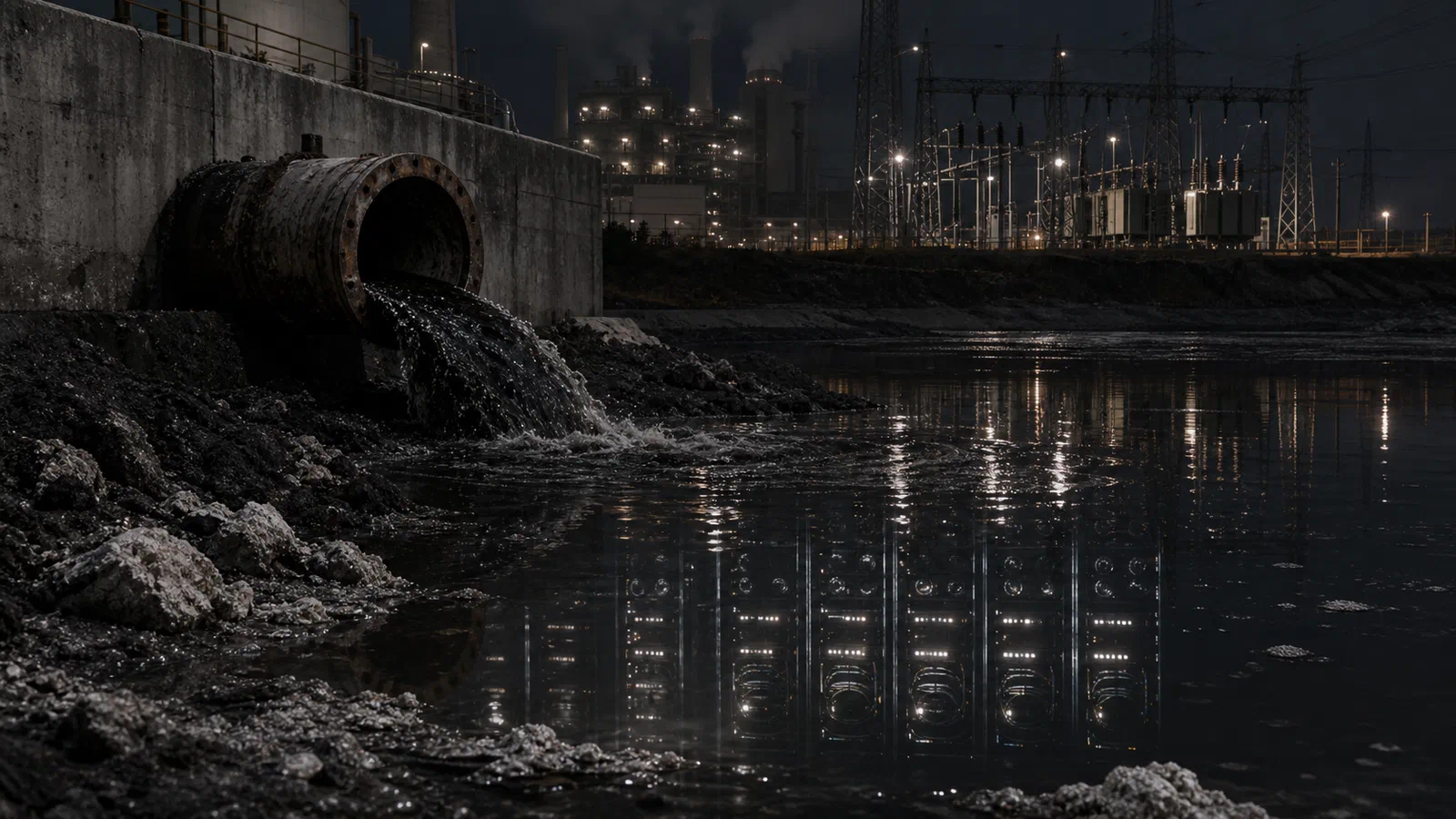
The waste stream gives AI’s electricity demand a physical address.
Where Flexibility Lands
Regulatory flexibility sounds harmless until it lands somewhere.
In this proposal, it lands near water. EPA says permit writers can set data-driven limits for unmanaged combustion residual leachate based on site conditions. That can be a defensible approach when the facts differ sharply across plants. Old ponds, closed units, groundwater pathways, treatment systems, and local waterways do not all look alike.
The same discretion can also weaken a national floor. A case-by-case system asks local permitting agencies to carry more judgment, more pressure, and more technical burden. Plant owners get another forum to argue cost. Environmental groups get another forum to fight plant by plant. Downstream residents get another reason to wonder which layer of government is actually protecting the stream, the well, or the reservoir.
The practical issue is permit design. A national rule tells every plant the minimum treatment standard. A more flexible rule may produce careful tailoring, or it may produce delay, uneven enforcement, and negotiated risk. The outcome depends on staff capacity, political pressure, plant-level facts, and public visibility.
Data centers add a new force to that old regulatory contest. The AI company may never appear in the wastewater permit. Its name may sit on a power contract, a campus announcement, a cloud-services forecast, or an economic-development package. The plant’s wastewater permit will carry another set of names: EPA, state regulators, the utility, the generating unit, the receiving water.
The connection is easy to miss because the documents are separated. The electrons travel through one system. The wastewater travels through another. The public argument travels through a third.
The Hidden Subsidy Of Cheap Power
A cheap megawatt can be paid for in more than one account.
One account is the electric bill. Another is the cleanup budget. Another is a discharge permit written in language only specialists read. Another is a river that receives what treatment leaves behind. Another is the household downstream that has no vote on a data-center contract and no practical way to cross-examine an industry cost model.
That does not make every coal plant a villain or every rule revision a surrender. It does mean the word affordability needs an address. Affordable for whom, over which years, on which bill, with which waste left behind?
AI’s public defenders often describe the technology as an engine of productivity, discovery, and national power. Some of that case is plausible. Better logistics, faster drug research, improved grid modeling, more capable defense systems, and better industrial design could all produce public value. The trouble begins when those benefits are treated as if they cancel the physical terms of the buildout.
Server farms may look placeless to the user. Power plants never are. Coal ash never is. A river never is.
The administration’s argument also rewards a particular behavior. It tells plant owners that rising power demand strengthens their case for relief. It tells utilities that old fossil capacity may gain new policy value if AI growth keeps straining the grid. It tells data-center developers that their urgency can move rules beyond the zoning board and into national environmental policy.
Those incentives may keep the lights on. They may also push public agencies to treat environmental protection as the adjustable part of an AI buildout.
What The Rule Should Force Into View
EPA will accept written comments on the proposal for 30 days. That comment window should force a clearer map of the trade.
Which plants gain relief? Which waste streams are affected? Which waterways receive the discharges? Which permit agencies have the staff and data to set careful local limits? Which communities have already carried coal-plant pollution? Which data-center loads are being used as evidence for keeping fossil capacity available? Which ratepayers get savings, and which people accept the water risk?
Those are not anti-technology questions. They are public-accounting questions.
A serious grid policy has to admit that reliability has a cost. A serious environmental policy has to admit that rules can be badly designed, too rigid, or poorly matched to plant-level facts. A serious AI policy has to admit that intelligence at scale is also electricity at scale.
The danger is a public debate that grants concreteness to only one side. The data center gets a ribbon cutting, a tax estimate, a power contract, and a promise of growth. The waste stream gets an acronym.
OIP should resist that imbalance. The cloud becomes physical when it asks the grid for power. The coal plant becomes local when its waste touches water. The EPA proposal becomes a public decision when it decides where flexibility lands.
At the ash pond, the cloud becomes a physical bargain: a load on the grid, a rule in a permit, a pipe at the water’s edge, and a set of people downstream. The national argument over AI will keep reaching for the future. The pond under the cloud asks what the future is allowed to leave behind.
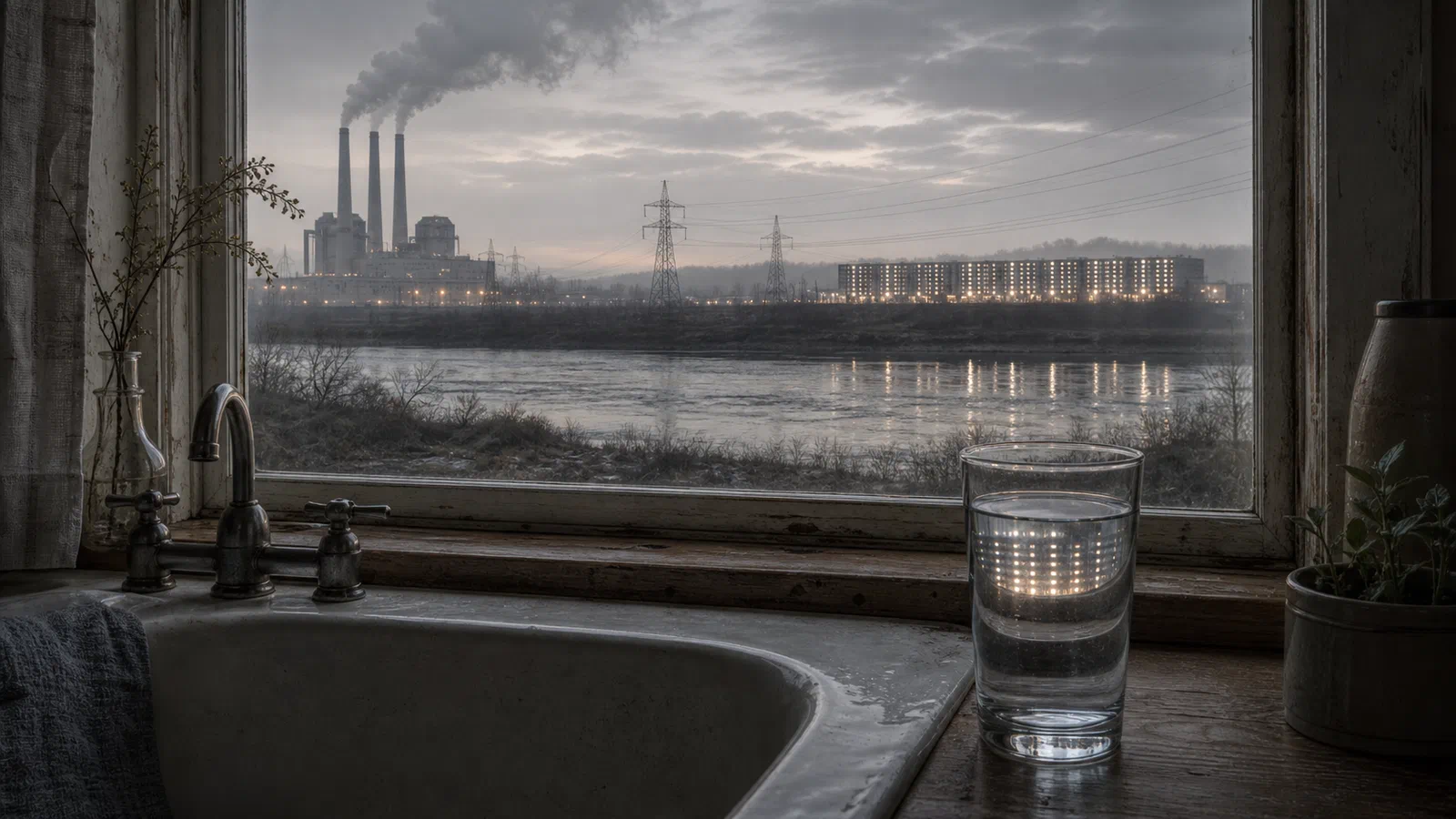
Public value has to include the places that receive the leftover risk.