The Blockade Has a Phone Number
Washington says Tehran can call when it wants to talk. The Strait of Hormuz is making a different argument in oil, jet fuel, sanctions, and ships.
A phone call sounds like diplomacy reduced to its simplest shape.
One side waits. The other side dials. A line opens. Voices enter the room before the ships do.
That was the picture Washington offered this weekend. On April 26, the Associated Press reported that President Donald Trump said he had told Steve Witkoff and Jared Kushner not to travel to Pakistan for Iran talks. Iran, he said, could call when it wanted to talk.
Iran answered with geography.
President Masoud Pezeshkian told Pakistan’s prime minister that Tehran would not negotiate while the United States kept a blockade on Iran’s ports. Iranian Foreign Minister Abbas Araghchi had gone to Islamabad, left for Oman, and was expected back in Pakistan as regional governments tried to keep a channel alive.
So the scene has the surface ingredients of diplomacy: envoys, mediators, proposals, travel plans, canceled travel plans, public messages, private instructions.
The real table is narrower.
It is the Strait of Hormuz, the thin waterway between Iran and Oman where energy, shipping, sanctions, military risk, and domestic prices now meet. The phone number matters. The strait matters more.
A Strait Is a System
The easiest mistake is to treat the Strait of Hormuz as a place on a map.
It is a place, of course. The International Energy Agency describes a passage only 29 nautical miles wide at its narrowest point, with separate inbound and outbound shipping channels and a small buffer between them. That is a tight piece of water for a large share of the world’s energy trade.
The harder fact is that a chokepoint is not just geography. It is an operating system.
The IEA says about 20 million barrels per day of crude oil and oil products moved through the strait in 2025, around one quarter of seaborne oil trade. It also says almost 20 percent of global LNG trade crossed the same passage, with Qatar and the United Arab Emirates depending on it for export routes that have no quick substitute.
That means a tanker queue near Hormuz reaches far beyond naval command. It is an electricity problem in Bangladesh and Pakistan. It is a refinery problem in China. It is a flight schedule problem in Europe. It is a gasoline receipt problem in the United States. It is a fertilizer, shipping, insurance, and currency problem in places that do not get invited into the first sentence of the crisis.
This is why the “call us” posture lands strangely.
A call can begin a negotiation. It cannot by itself reopen a waterway, insure a tanker, lower a fuel invoice, free a cargo, or tell a bank compliance officer that the rules have changed. Once a crisis has moved into shipping lanes and sanctions lists, diplomacy has to travel through machinery.
The machinery is already loud.
The Sanctions List Is Also a Map
On April 24, AP reported that the Trump administration imposed sanctions on a major China-based refinery and roughly 40 shipping companies and tankers connected to Iranian oil.
The Treasury Department’s announcement named Hengli Petrochemical’s Dalian refinery and described a wider target: the buyers, vessels, and intermediaries that let Iranian oil keep moving.
That is what modern sanctions do. They turn a foreign-policy dispute into a map of risk for private institutions.
A shipowner reads the list. A bank reads the list. A port operator reads the list. An insurer reads the list. A trader reads the list. A refinery reads the list. The legal command may come from Washington, but the daily enforcement happens in offices that decide whether a cargo, transfer, policy, or letter of credit is now too dangerous to touch.
Sanctions can be a way to avoid something worse. That deserves to be said plainly. A country facing a hostile state, a nuclear risk, or an armed proxy network may prefer financial pressure to another wave of missiles. Economic coercion can look restrained when the other option is open war.
The trouble is that sanctions never stay as clean as their noun.
They move through commerce. They produce detours. They reward middlemen. They turn some ships dark and make others more expensive. They push oil through shadow fleets, altered paperwork, and ports where everyone knows more than the documents admit. They ask ordinary firms to become the outer nervous system of state power.
Then the strait adds its own pressure.
AP reported that Iran was restricting movement through the Strait while the United States enforced a blockade of Iranian ports. Tehran also insisted that the blockade end before a new round of talks. Iran has made lifting sanctions and ending pressure part of what it wants from any deal. Washington wants to choke off revenue. Tehran wants leverage over the water. China wants oil. Airlines want fuel. Households want prices that do not rise faster than wages.
There is no single conversation here.
There is a crowded switchboard.
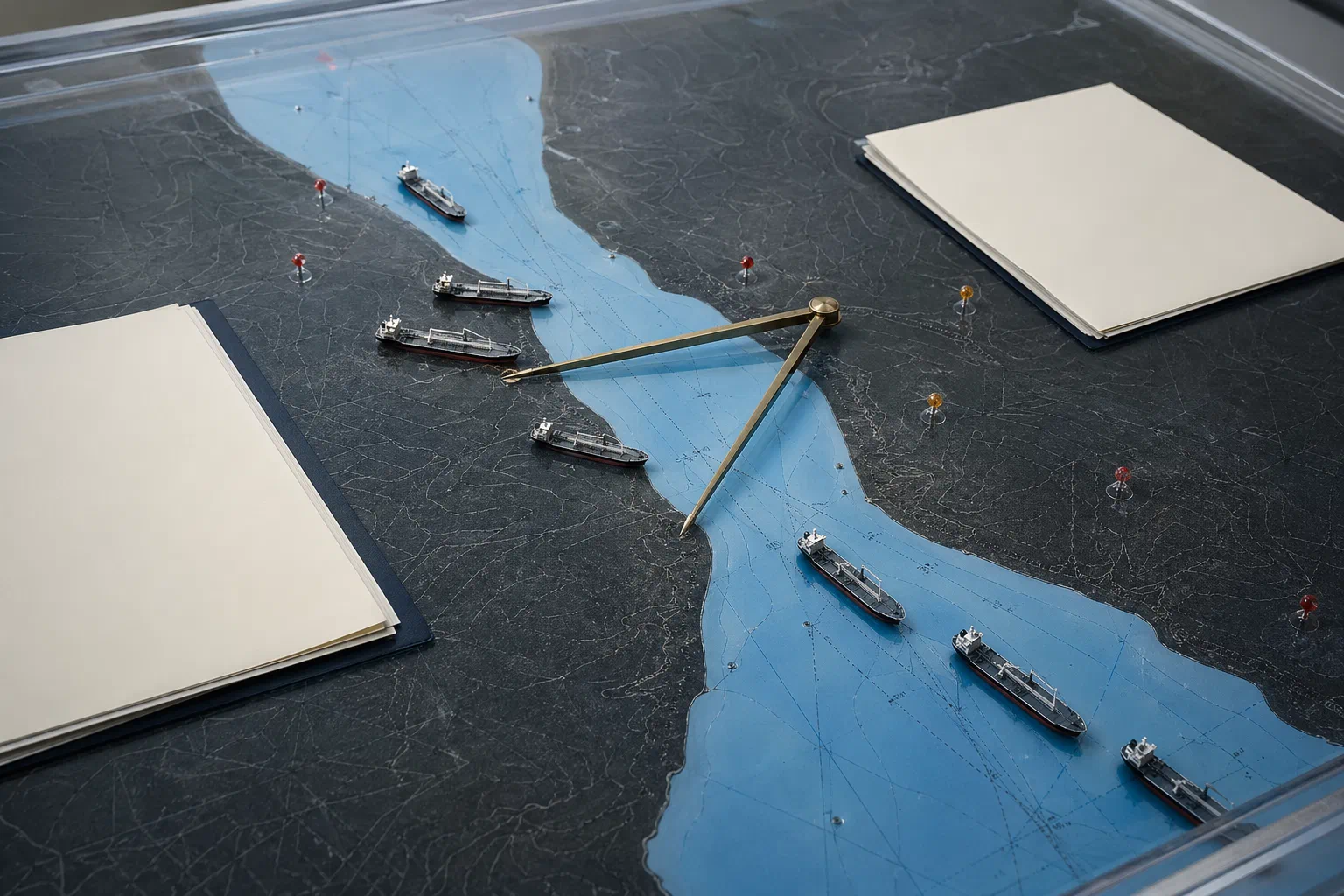
A narrow passage can become a bargaining table before anyone sits down.
The Market Hears First
Public officials speak in statements. Markets answer in prices.
The Energy Information Administration reported that crude oil and petroleum product prices rose sharply in the first quarter of 2026 after military action in the Middle East and the de facto closure of the Strait of Hormuz. Brent crude began the year at $61 a barrel and finished the quarter at $118. EIA said that quarterly increase was the largest on an inflation-adjusted basis in data going back to 1988.
That number is not a mood.
It is a tax that was never voted on. It moves through fuel pumps, airline balance sheets, delivery routes, chemical inputs, farm costs, and the monthly decisions of people who do not follow diplomatic calendars.
The aviation story makes the point because it is easy to see. In an April 16 AP interview , IEA Executive Director Fatih Birol warned that Europe had about six weeks of jet fuel left if oil supplies remained blocked by the Iran war. He described the crisis as a global energy shock that would hit weaker economies first and could drag some countries toward slow growth or recession.
On April 24, AP reported that airlines were already cutting flights as fuel costs rose. KLM cited rising kerosene costs in canceling 160 flights to and from Amsterdam’s Schiphol airport for the next month. Lufthansa’s parent company announced a far larger schedule cut.
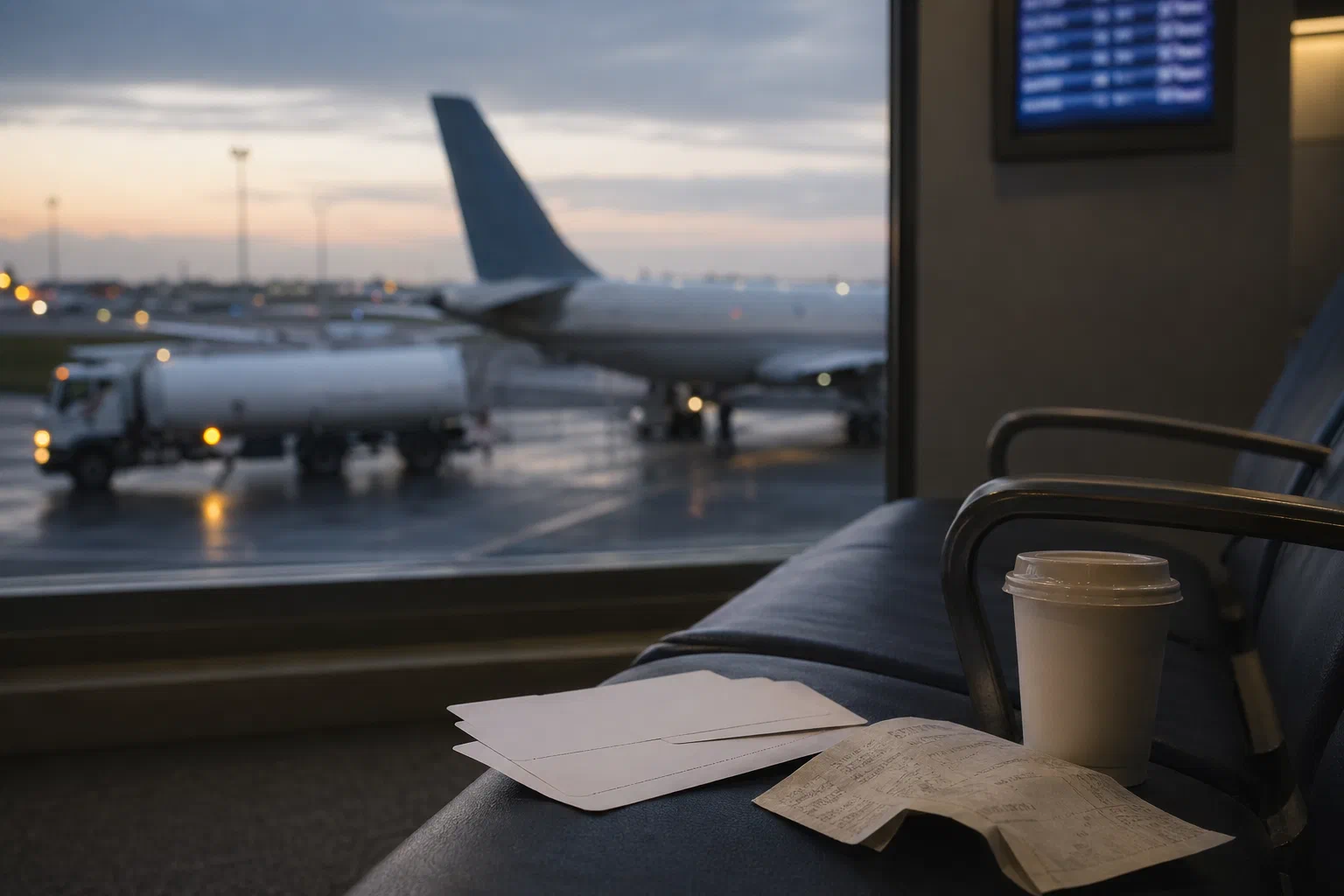
By the time a waterway reaches the gate, the crisis has already become ordinary.
This is how a strait enters public life.
Not as a map in a briefing book. As a canceled route. As a higher fare. As a narrowed vacation. As a shipping surcharge hidden in a product price. As a government budget that suddenly pays more for the same fuel. As a poorer country spending scarce currency to keep lights on.
The public often learns about geopolitics late, at the receipt.
That delay creates a political temptation. Leaders can talk as if pressure is free until the costs become visible. They can describe a blockade as leverage, sanctions as resolve, and talks as available on demand. For a while, the language works. Then fuel moves.
At that point the public begins to ask a different question.
What is the pressure buying?
The Waterway Teaches Bad Habits
There is a larger danger in this crisis than the immediate price of oil.
A chokepoint teaches the world what works.
If Iran can extract concessions by squeezing Hormuz, other states watch. If the United States can normalize a blockade as a bargaining instrument, other powers watch. If a waterway begins to operate like a toll booth, other waterways begin to look less like neutral passages and more like future bargaining chips.
Birol warned AP about that precedent. He singled out the risk of allowing a fee-for-passage system to harden around Hormuz, because the logic could travel to other passages such as the Malacca Strait.
The fear is not abstract. Maritime order depends on many legal arrangements, naval capabilities, commercial habits, and quiet assumptions. One of those assumptions is that narrow passages remain passages. Ships move. States argue. Insurance adjusts. The sea does not become a cash register every time one country wants leverage.
That assumption has always been fragile.
The world economy rests on old acts of trust that are easy to forget because they usually work. A container arrives. A plane refuels. A refinery gets feedstock. A utility receives gas. A farmer buys fertilizer. A family buys groceries produced inside a system of routes that stayed open somewhere far away.
When a chokepoint closes, the hidden treaty underneath ordinary life becomes visible.
Diplomacy carries so much weight here. A negotiation over Iran’s nuclear program or regional conduct is never only a negotiation over clauses. It is also a test of whether the parties can return a public artery to ordinary use before too many actors learn that the artery itself is the prize.
Pressure may bring people to the table.
Pressure can also become the table.
A Call Is Not an Off-Ramp
There is a hard version of diplomacy that does not pretend both sides are equally innocent.
Iran has made threats, backed armed groups, and built a nuclear program that has drawn years of sanctions and inspections. The United States has real interests in stopping a nuclear weapon, protecting shipping, backing allies, and limiting the money available to hostile forces.
None of that disappears because energy prices rise.
But a serious policy has to answer for its instrument. If the instrument is a blockade, say what ends it. If the instrument is secondary sanctions, say what conduct changes them. If the instrument is military pressure, say where the off-ramp sits before the public pays for a road with no exit.
“They can call” is not enough.
It is a posture, not a settlement design.
The harder diplomatic work is less telegenic. It means choosing which demand matters first, which concession can be sequenced, which mediator can carry a message without becoming a prop, which pressure can be lifted without rewarding bad conduct, and which public costs are acceptable for which public gain.
It also means remembering that credibility has two faces.
A government loses credibility if it threatens and then folds for nothing. It also loses credibility if it builds pressure so large that it cannot climb down from it without embarrassment. One failure teaches adversaries to wait. The other teaches them that Washington prefers performance to settlement.
The Strait of Hormuz does not care about either performance.
It counts hulls, barrels, premiums, delays, and risks. It tells the truth in physical units. A passage is open, restricted, priced, mined, patrolled, blocked, or feared. Speeches can decorate those facts. They cannot replace them.
That is what makes this weekend’s image so revealing.
Washington says the line is open. Tehran says the blockade must move first. Pakistan, Oman, and others keep trying to make room for a message. Tankers wait. Airlines cut. Markets price. Banks check names. Households feel the long route from policy to bill.
The phone may ring.
The water stays narrow.