The Blue Pool at the Memorial
The blue Reflecting Pool makes a simple civic point: public spaces should be clean, beautiful, usable, and treated as places worth improving.
In this article
The Blue Basin
A reflecting pool changes color loudly, even in silence.
For a century, the Lincoln Memorial Reflecting Pool has done its work by staying visually quiet. Water, stone, sky, and monument share the same long rectangle. The Washington Monument rises at one end. Lincoln sits at the other. Visitors stand along the edge and see a civic trick so familiar that it almost disappears: the capital asks people to look at power twice, once in stone and once in water.
That quiet changed this week when the pool became a worksite and a public reminder that famous places require ordinary care.
On May 9, 2026, the Associated Press reported that President Donald Trump had gone to the Reflecting Pool to inspect a new blue coating meant to hide algae and improve the pool’s appearance ahead of America’s 250th anniversary. The story described a broader burst of presidential attention to Washington’s federal spaces: the pool, East Potomac Park’s public golf courses, the Eisenhower Executive Office Building, Lafayette Square, the Kennedy Center, and other visible pieces of the capital.
The blue pool is the right place to start because it is simple enough to see. It involves water and coating, maintenance and image, federal land and public memory. A visitor can understand the improvement before reading a single procurement record. A blue rectangle now sits inside the national ceremonial axis, making upkeep visible in a place where neglect would also be visible.
That makes the pool more than decoration. It is maintenance with civic meaning.
The National Park Service describes the Reflecting Pool as part of the designed setting of the Lincoln Memorial and the Washington Monument. Its job is visual, symbolic, and spatial. It creates a long room outdoors. It slows visitors down. It makes the Mall feel like a place of memory instead of a corridor of attractions.
Care for that room should be treated as public work, not as an afterthought.
Improvement Has A Claim
Start with the obvious point.
Public spaces decay. Water turns green. Stone stains. Paths crack. Benches rot. Tourists notice the neglect before they notice the governing documents. A capital that lets famous places fall apart tells a story about itself, and the story is rarely noble.
The Reflecting Pool has long been difficult to keep clean. Its shallow water, heat, heavy visitation, and open-air setting make algae a recurring problem. A maintenance fix can be real, practical, and worthwhile. A coating that reduces algae, cuts chemical use, protects the basin, and keeps the site presentable during a major national anniversary earns the civic word stewardship.
Washington also has a maintenance backlog wider than the Mall. The public often demands beauty while starving the slow systems that preserve it. A clean pool, usable restroom, shaded path, safe bridge, working fountain, and maintained course do not appear because somebody gives a speech. They appear because budgets, contracts, crews, reviews, and boring routines hold.
The blue coating gives maintenance a public face: a cleaner national room, a more legible landmark, and a standard that should extend beyond the anniversary photograph.
The next issue is how to make improvement durable.
A presidential visit can make maintenance look decisive, which is often useful. Public agencies can grow accustomed to slow deterioration, and a visible instruction can break that habit. A dramatic color can make the old problem obvious. A national anniversary can force attention onto places that should have received it earlier.
The work remains public when the result is clean, accessible, well maintained, and worthy of the place. That should be the standard.
The Park At The River Bend
The same tension appears across the river bend at East Potomac Park.
The AP story described Trump promoting a private-style overhaul of the public golf courses at East Potomac. The Washington Post has reported on renderings that would reshape the park with a new clubhouse, lodge, practice areas, and course changes, while removing or displacing familiar public uses such as open grass, picnic areas, tennis courts, and parts of Hains Point access. The National Park Service has said no final decision has been made.
That park is already a public place with a history, and it is certainly a place that can be improved. The National Park Service presents East Potomac Golf Links as a public golf course that opened in the early twentieth century and remains part of a public park system. Its civic value comes partly from being ordinary. It is a place where municipal recreation, national land, riverfront geography, race, class, leisure, and federal management all share the same ground.
A better golf course could serve the public. Better paths, better drainage, better practice areas, better food service, cleaner buildings, safer edges, clearer circulation, and more beautiful grounds could all make the park more useful. The hard work is keeping those improvements public in price, access, design, transportation, and surrounding park life.
That is the park version of the pool lesson.
Maintenance asks how to care for a public thing. Transformation asks how much better that public thing can become. Those questions belong near each other because good public works rarely stop at repair. A neglected place may need forceful attention. A beautiful rendering may show possibilities that routine maintenance never reaches. A project framed as rescue can become a public gain if it keeps the everyday user in the design.
The people who already use the place should become the reason the picture improves.
The Capital’s Odd Ownership
Washington is a city, a symbol, and a federal workplace at the same time.
That gives its public spaces unusual national weight. Local parks in most cities are governed by local processes. The National Mall, East Potomac Park, Lafayette Square, and federal office buildings sit inside a more complicated map. Congress, the executive branch, federal commissions, local officials, preservation offices, park managers, donors, contractors, tourists, residents, and advocacy groups all claim some piece of the decision.
The arrangement creates real benefits. National sites receive national attention. Federal land can preserve views and meanings that a normal real-estate market might erase. The Mall exists because public power set aside a ceremonial corridor and kept private development away.
The arrangement also creates responsibility.
Washington residents live with the traffic, construction, closures, policing, noise, crowds, and park changes. Visitors bring national attachment. Federal officials bring authority. Contractors bring proposals. Each group sees a different version of the same place, and each group has a reason to want the place cared for.
When decisions move quickly, that shared interest should shape the work.
A blue coating on a pool may be reversible. A golf-course redesign may be revised. A white paint job on a historic building may be delayed by review. Small outcomes can reveal the governing habit underneath. In a capital of federal land, public improvement works best when the public can see what problem is being solved and what value is being added.
That is where process becomes more than paperwork. It is how a public place turns money, taste, urgency, and expertise into work that can survive the first announcement.
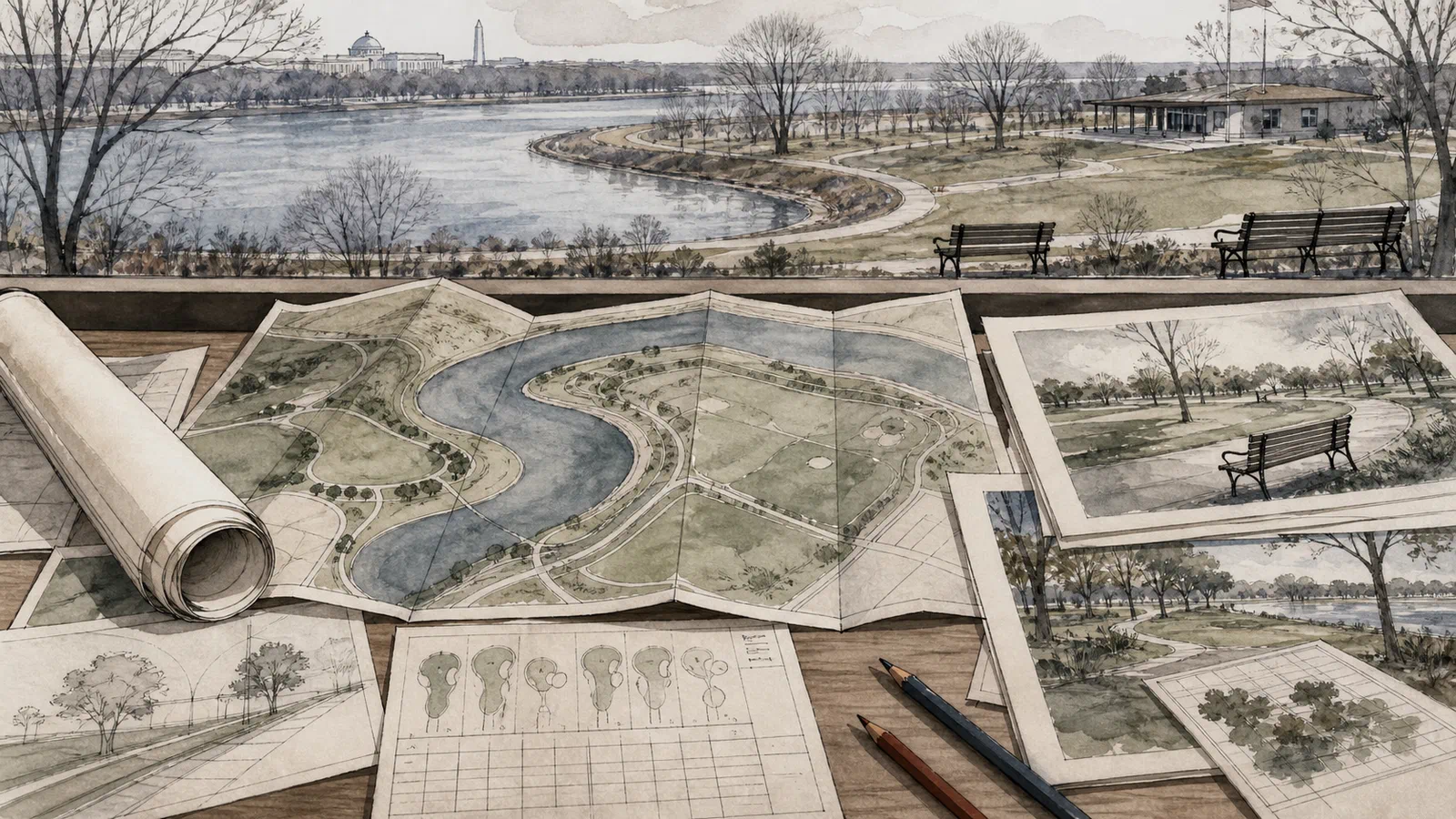
A park plan works when ordinary public use is the measure of success.
Beauty And Process
Beauty is a legitimate public interest.
The country should care how its capital looks. The Mall should be maintained. Federal buildings should be cared for. Public parks should feel safe, useful, and worthy of the ground they occupy. A nation that treats its capital as disposable loses something civic.
Process is how that interest becomes reliable.
The AP reported that Trump has pressed to paint the Eisenhower Executive Office Building white, a proposal involving a historic federal building beside the White House. The same report said a federal planning review has asked for more detail on the project. That is exactly what review should do. It does not need to reject beauty in advance. It should help beauty make its case through material, cost, justification, preservation effect, public comment, and fit with the building’s history.
The point is simple enough: public beauty deserves public discipline.
Private taste can be brilliant. Public taste can be timid. A city often improves because somebody notices ugliness, insists that the place can look better, and pushes a sleepy system to act. Public process should not exist to smother that instinct. It should make sure the instinct becomes a durable public result. The capital is full of surfaces that invite care. Paint the building. Brighten the pool. Rebrand the theater. Redesign the course. Clear the square. Build the arch. Each action can be argued on its own terms. Together, they test whether national places can be made more beautiful without becoming less public.
There is a reason preservation reviews, environmental records, procurement rules, commission meetings, and public comment periods frustrate builders. They make a place answerable to more than the first good idea. Used well, they can also improve the idea.
That friction can become excessive. Agencies can take too long. Reviews can become ritual. Preservation can freeze useful improvements. The public can romanticize decay and then complain about ugliness. A serious account has to admit that.
The cure for slow public process is not to surrender beauty. It is to make the process capable of saying yes to the right improvements.
The Anniversary Frame
America’s 250th anniversary gives the whole story an organizing clock.
Anniversaries intensify the appetite for visible change. They make leaders want unveilings. They turn maintenance into ceremony. They invite monuments, paint, lighting, flags, stages, concerts, restorations, and gestures large enough to fit on television.
That is useful when it directs resources toward neglected public things. The anniversary can make a country look at its shared places and decide that dirty water, tired buildings, cracked paths, and mediocre public rooms are not good enough.
A capital prepares for the public by taking care of public places. It also prepares by showing how public decisions are made. The anniversary should not require Washington to look untouched. Cities live. Parks evolve. Buildings need repair. Designs change. The Mall itself is the product of plans, revisions, demolitions, plantings, memorials, protests, marches, fences, security layers, and repairs.
The question is how the change earns its place and keeps serving the public.
Does the record explain the problem? Does the contract protect the public? Does the design improve access? Does the review account for history? Does the plan preserve ordinary use? Does the price make sense beside other needs? Does the project serve the public after the cameras leave?
Those questions are plain. They help care become more than display.
What The Pool Reflects
The blue coating may work. It may age badly. It may become a footnote after the anniversary. The East Potomac plans may shrink, improve, or stall. The Eisenhower building may stay gray. Some of the current pressure may produce better maintenance in places that needed it, and that would be a real public good.
Uncertainty belongs in the story because public space changes slowly even when the announcement is loud.
The more durable fact is the invitation. Washington’s federal spaces are being treated as places that can be cleaned, repaired, brightened, redesigned, and taken seriously. The record remains unfinished, which gives the public a practical job: ask how the improvement works, who it serves, what it costs, and how long it will last.
A reflecting pool should reflect more than color.
It should reflect a country willing to care for the places it asks people to share. It should reflect the workers who maintain it, the visitors who cross the Mall to see it, the residents who live with the consequences of change, and the officials who decide that public beauty is worth money and attention.
The capital belongs to too many people to be left shabby out of fear that improvement might become political.
At the Lincoln Memorial, the water has always been more than water. It has been a surface for memory, scale, grief, ceremony, protest, tourism, and national self-regard. Turn that surface blue, and the invitation becomes impossible to miss.
Make the shared places better. Then make the improvement worthy of the people who share them.
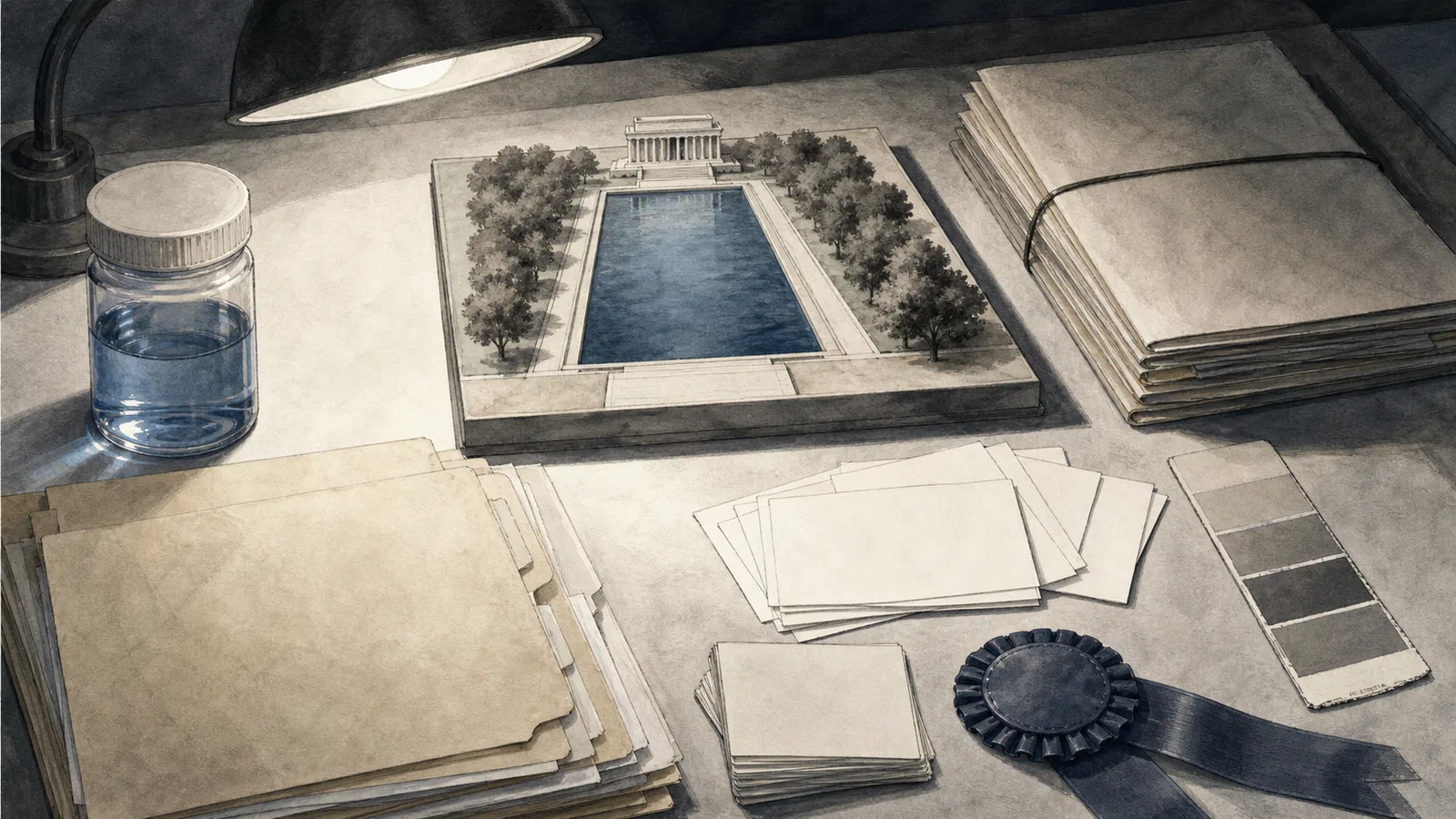
The color is visible first. The public value has to last.