The Crucifix: Courage Training to Speak Truth in a False World
The Christian image does something to the human nervous system ~
Walk into a hospital, a church, or your grandmother’s living room and you might see it: a crucifix on the wall.
Not an “empty cross,” not a tasteful logo ~ the crucifix.
A body. Wounds. Humiliation. Public execution.
It’s quite strange when you really think about it.
Christians made the central symbol of their faith an instrument of torture, and they refused to sanitize it. They didn’t pick a sunrise. They didn’t pick a crown. No rainbows. No moral slogans.
They picked the worst thing possible ~ and made it their cornerstone.
People talk about the crucifix as a reminder of love, sacrifice, forgiveness, salvation. All true. Even so, there’s another dimension that feels obvious once you say it out loud, and weirdly absent from most discussions.
The crucifix calls us to be courageous in the face of lies.
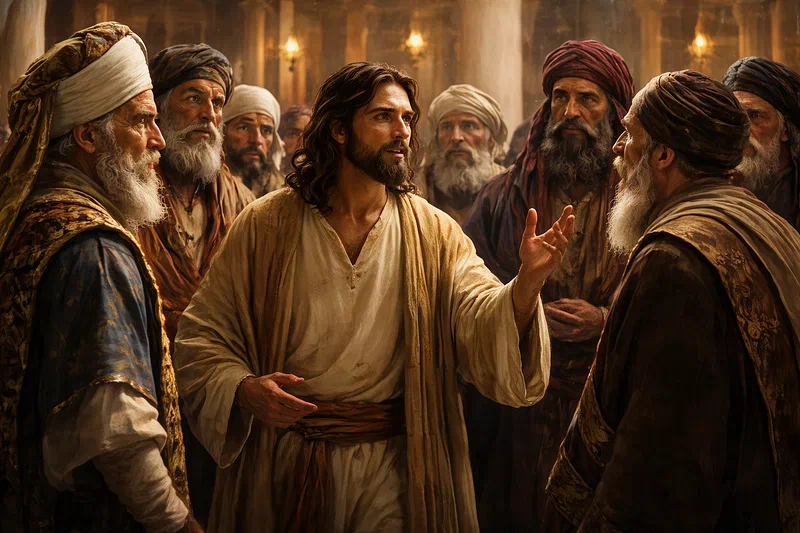
Jesus was crucified for speaking the truth to corrupted spiritual leaders! When we look at his body, pierced and bleeding, we see the worst possible consequence imaginable. And we are called to speak the truth as well.
“If anyone desires to come after Me, let him deny himself, and take up his cross… ” ~ Matthew 16:24, NKJV
Jesus calls us to speak the truth even when we know the cost ~ when you know the world will despise you ~ and when we know the powers of this world will attempt to destroy us for exposing their lies.
Exposure therapy, in plain English

In psychotherapy, there’s a well-known idea called exposure therapy . In simple terms, it’s a structured process where a person gradually and repeatedly faces what they fear, until the fear response loses its grip and avoidance stops running their life.
The American Psychological Association describes exposure therapy as a method developed to help people confront fears, in a safe setting, through exposure to feared objects, activities, or situations.
You can think of it like this: fear thrives in the dark. Avoidance feeds it. Exposure changes the relationship.
A person learns, over time, “I can face this. It doesn’t own me.”
Now take that idea and look at the crucifix again.
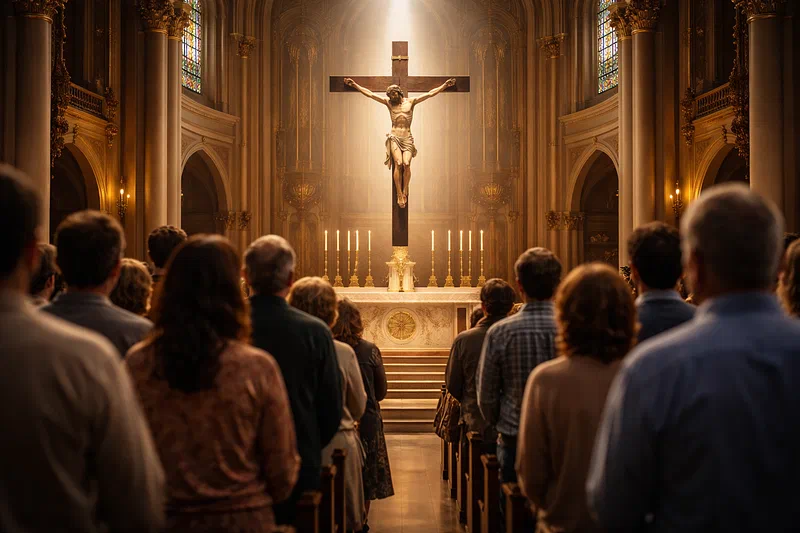
The crucifix is a forced look at the worst-case outcome
If you follow Jesus, you are not promised comfort.
You are not promised status.
You are not promised safety.
You are promised conflict.
Jesus says it directly:
“If the world hates you, you know that it hated Me before it hated you. ” ~ John 15:18, NKJV
That’s not poetic fluff. It’s a promise.
The crucifix is the visual representation of that promise ~ raw exposure to what “hate” looks like when it wins in the short run.
The image doesn’t let you pretend the truth is always rewarded.
It doesn’t let you pretend that goodness always gets applause.
It doesn’t let you believe the lie that “if I’m kind and reasonable, people will be kind and reasonable back.”
Sometimes they won’t. Sometimes they’ll do the opposite.
The crucifix says: “The most holy man to ever live, God incarnate on Earth, was murdered for speaking the truth. This is what will happen to you, too, my son.”
The world is essentially a false place, and those who control this earthly realm will do anything within their power to avoid being exposed by the truth. Part of our calling as followers of Christ is to recognize and refuse the world’s lies and deceit.
“Woe to you, scribes and Pharisees, hypocrites! For you shut up the kingdom of heaven against men; for you neither go in yourselves… ” ~ Matthew 23:13, NKJV
The Word of God exists in us ~ accepting the lies of this world diminishes our spirit and leaves us disconnected from the Spirit of Truth and Goodness. Sometimes speaking the truth is going to upset the crowd, and it will almost always upset the people in power.
Truth-telling is the offense ~ not “meanness”
A lot of modern moral life is built around a social rule that goes something like: “Be a good person, and everyone will love you.”
People treat conflict as proof that you did something wrong. If you get punished, then (obviously) you must have deserved it.
The gospels demonstrate the naivety of that kind of simple logic.
Jesus wasn’t executed because He was “rude.” He was executed because the truth threatened people who were invested in a counterfeit moral order.
He talks about truth as liberation:
“You shall know the truth, and the truth shall make you free. ” ~ John 8:32, NKJV
The truth is not neutral. It breaks the spell. It dissolves a lot of profitable arrangements ~ social, religious, political, personal.
If you are a person whose identity and authority depend on that worldly spell, you will always hate the one breaking it.
That’s one reason the crucifix matters so much as an image.
The message of the crucifix isn’t just that “suffering happened.”
It’s that “suffering happened because the truth was spoken.”
The parables weren’t just cute stories ~ Jesus was speaking over the crowd’s head
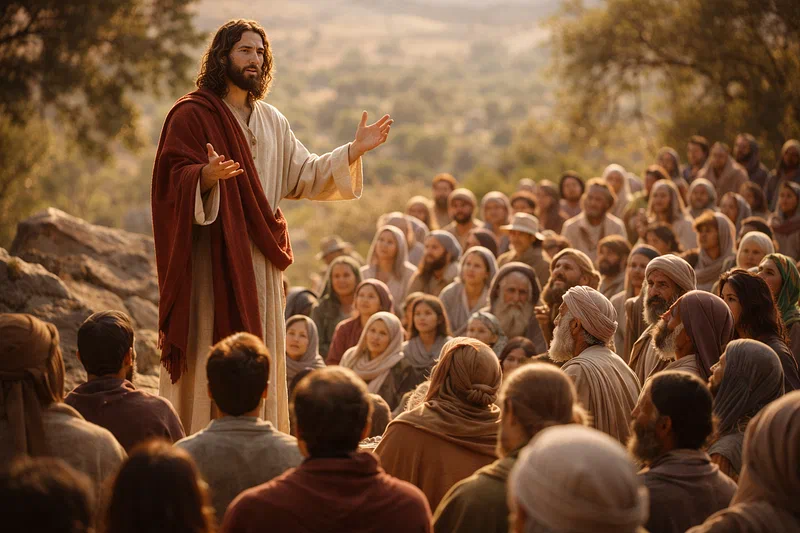
Jesus spoke in parables that largely masked meaning from the masses, while religious leaders clearly understood, and they hated Him for it.
Jesus gives a pretty blunt statement about the parables functioning as both revelation and concealment:
“Because it has been given to you to know the mysteries of the kingdom of heaven, but to them it has not been given. ” ~ Matthew 13:11, NKJV
A person can be highly trained yet closed ~ and that kind of person tends to experience truth as an attack. Why should anyone become visibly upset when another questions their dogma? The tendency to reject new information out of hand is especially pernicious when found in places of authority.
(Generally, I find when one raises their hackles in response to even cursory questioning… they are concealing some deep seated deceit or falsehood that may undergird their entire belief system or power structure.)
This is where the crucifix gets uncomfortable. The people most confident in their moral superiority are also the most likely to punish dissent.
Jesus ran into that. So will anyone who tries to walk with Him.
Christianity is not a permission slip for hate
Jesus does not form His people by teaching them to despise their enemies. He teaches the opposite:
“But I say to you, love your enemies… ” ~ Matthew 5:44, NKJV
He also gives a public “tell” for what His followers should look like in real life:
“By this all will know that you are My disciples, if you have love for one another. ” ~ John 13:35, NKJV
So when people try to paint Christianity as a tribal hate machine, they’re either ignorant of the text, lying about it, or reacting to Christians who have drifted from their Master’s core teachings.
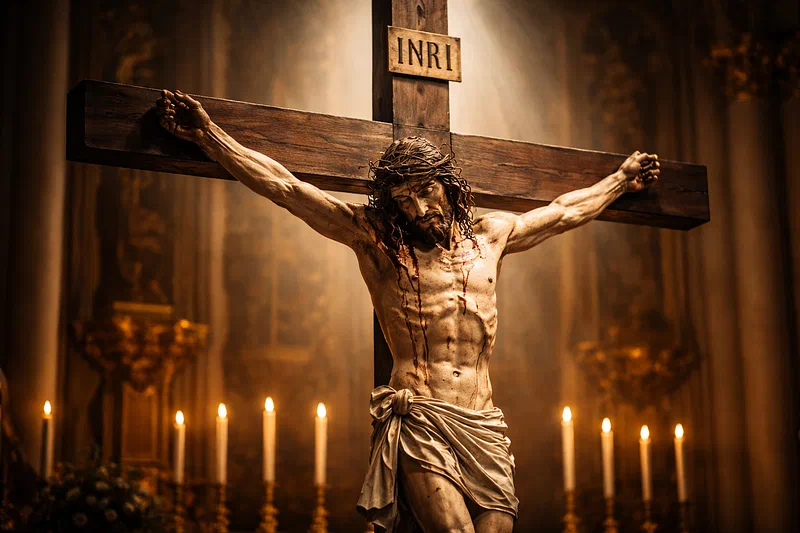
The crucifix itself is the rebuttal.
It’s an innocent man absorbing violence, refusing retaliation, and praying through betrayal. It’s not the banner of a lynch mob.
It’s the banner of self-sacrifice.
The modern temptation ~ moral language as group struggle
Some modern moral language borrows the structure of group struggle ~ even when the speakers do not name the older theories behind it.
The frame is familiar:
- Society is primarily a struggle between oppressor groups and oppressed groups; moral status attaches to group position
- History is interpreted as domination
- Guilt and innocence get assigned by identity rather than personal action
- Speech becomes “violence” when it threatens this story.
That moral language can feel righteous. It becomes cruel and false when it gives people a clean excuse to hate a category of person while claiming ultimate virtue.
Christianity does something that clashes with that frame at its most fundamental level.
“It says the line between good and evil runs through every heart.” ~ Aleksandr Solzhenitsyn
It says you can’t purchase righteousness by joining the correct crowd. It says truth is not created by power ~ truth judges power. It says,
“There is one Lawgiver, who is able to save and to destroy. Who are you to judge another? ” ~ James 4:12, NKJV
That is why the crucifix hits so hard. It reminds you that the crowd can be wrong, the authorities can be wrong, the moral majority can be wrong ~ and most importantly, you can be wrong!
Yet, we are required by God to speak and live what’s true.
If your personal ethic is “I will say what keeps me safe,” then you don’t need a crucifix. You need to revisit the Gospels.
A final look ~ and the question the image asks
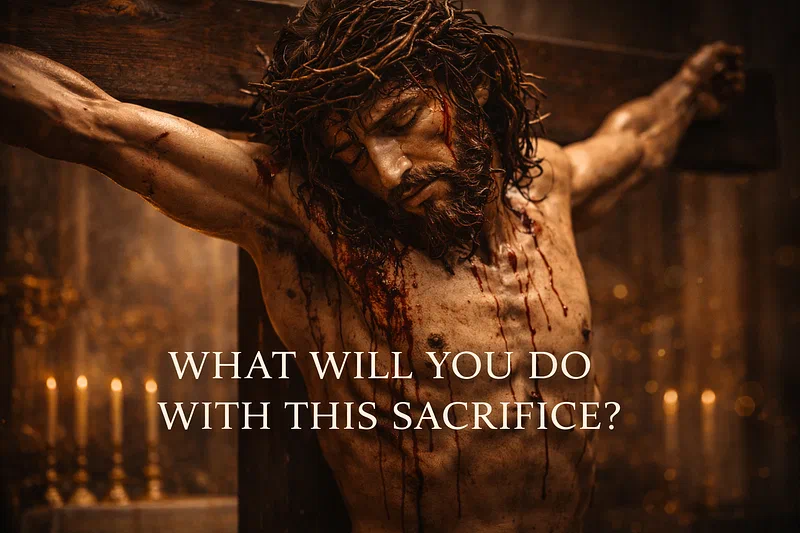
The crucifix is a kind of spiritual exposure therapy: repeated contact with the fears we spend our lives trying to dodge.
Fear of rejection.
Fear of being labeled.
Fear of losing comfort.
Fear of being alone.
Fear of paying a price.
Fear of death.
Jesus names the stakes with no sentimentality:
“Do not be afraid of those who kill the body, and after that have no more that they can do. ” ~ Luke 12:4, NKJV
And He pairs realism with a command to stand upright anyway:
“In the world you will have tribulation; but be of good cheer, I have overcome the world. ” ~ John 16:33, NKJV
So here’s what I’m asking myself, and maybe you should ask yourself too ~ believer, skeptic, somewhere-in-between:
When you look at Christ on the cross,
What do you feel?
Do you flinch?
Do you avert your eyes?
Do you rush past it like background décor?
Or do you let it do what it was meant to do: to confront you with the cost of truth, and then to steel your mind and body towards Christ.
Because the crucifix doesn’t merely say, “You are forgiven.”
It says, “This is what it looks like to refuse the lie. This is what it
costs.
This is what love does. Now go, and speak truth.”