The Dolphin Company
The Rise and Fall of the World’s Largest Dolphin Empire
A Tragedy and a Filing
“Jett, a 14-year-old bottlenose dolphin, died from acute head trauma in March 2025.”
- USDA inspection report, quoted in Panama City News Herald
On a beautiful spring afternoon in 2025, families gathered at Gulf World Marine Park in Panama City Beach, Florida, expecting a classic spectacle. Trainers clapped, music swelled, and Jett ~ a 14-year-old bottlenose dolphin ~ soared through the air.
He misjudged the landing, struck the shallow end, and never recovered.
March 4th USDA inspection
According to a March 4th USDA inspection, the tank where he died was so clouded with algae that “it was difficult to see the dolphins if they are approximately three feet below the water.”
USDA described the cause of death as “blunt force trauma to his rostrum and skull.”
It was the fourth dolphin death at Gulf World in a year.
On March 27th, 2025, Florida agents raided the park.
Days later, the park’s parent company filed for Chapter 11 bankruptcy in Delaware. The Dolphin Company, a Mexico-based conglomerate that once called itself “the world’s largest dolphin family,” was on the brink of collapse with more than $200 million in liabilities.
The collapse wasn’t just about mistreatment of dolphins ~
This is what can happen when a business built for leveraged-debt scale collides with a public record it cannot outrun.
and then collides with changing social norms and economic reality.
You can think of this story as three major forces colliding ~
- Leverage pushing a company to keep expanding
- Culture turning against the product on offer
- Property law treating intelligent marine mammals as chattel
The Rise and Fall of the Dolphin Company is a case study in what happens when all three of these forces line up, and the whole thing falls down.
From Motel Pools to Marine Parks
“Four bottlenose dolphins… were housed at a motel pool for training.”
- Panama City News Herald, 1969
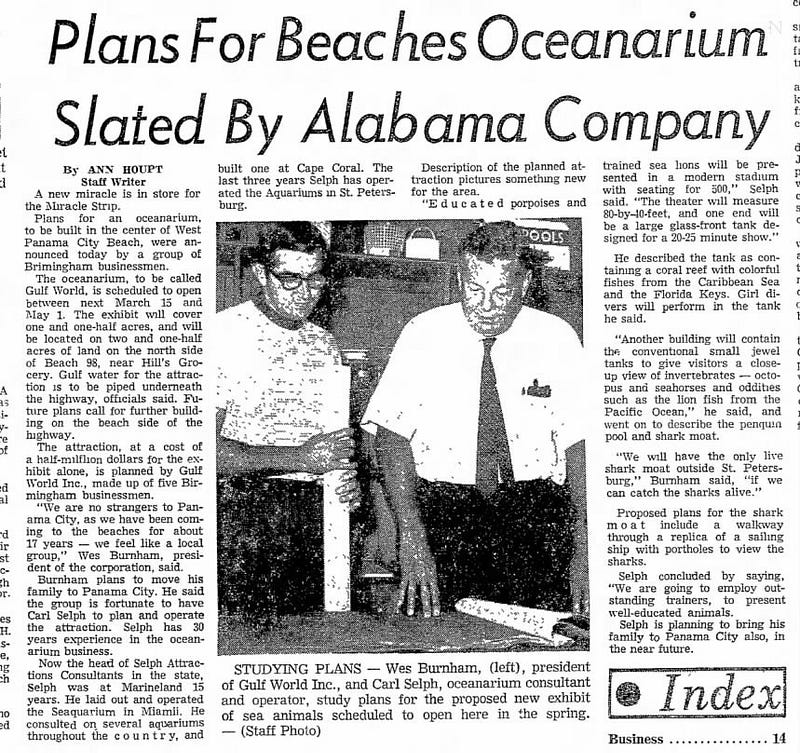
To understand how it all unraveled, you have to go back to the beginning.
Gulf World opened its doors in 1970, the brainchild of five Alabama businessmen. The park’s first performers weren’t born in captivity ~ they were captured in the wild.
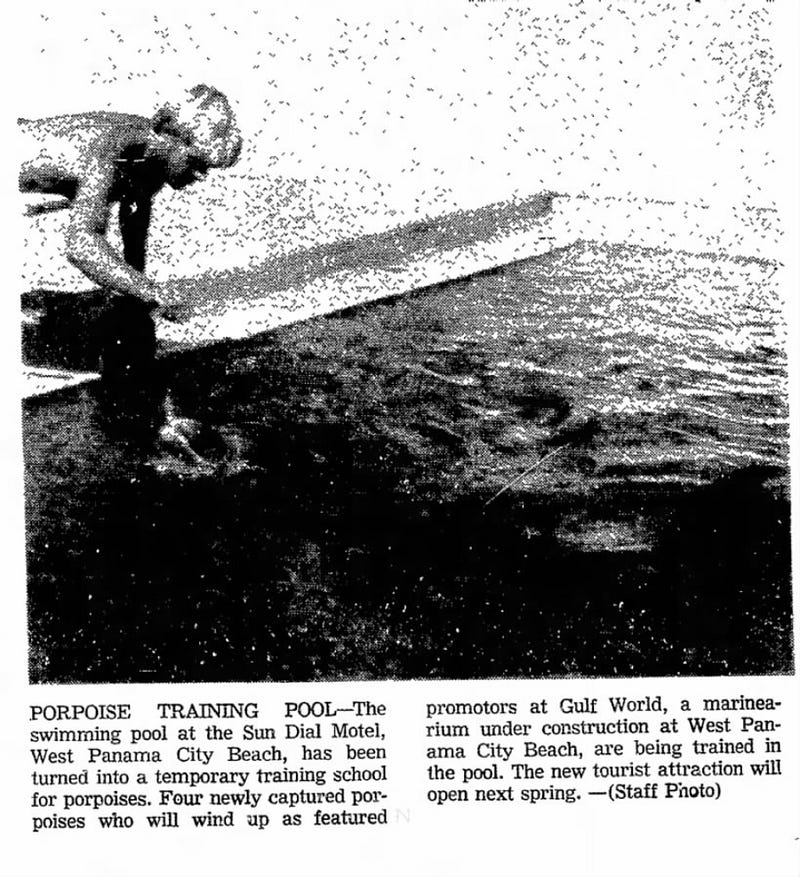
Four bottlenose dolphins were netted off the Florida gulf coast in 1969, dropped into the Sun Dial Motel swimming pool for training, and then placed in the concrete tanks of the new park.
This was standard practice at the time.
Under U.S. law, animals like dolphins were considered regular property. The Marine Mammal Protection Act of 1972 later restricted captures, but existing parks like Gulf World were grandfathered into a legal framework that allowed them to continue operating to the present day.
For decades, dolphin shows were beloved by the public, lucrative for owners, and generally uncontroversial.
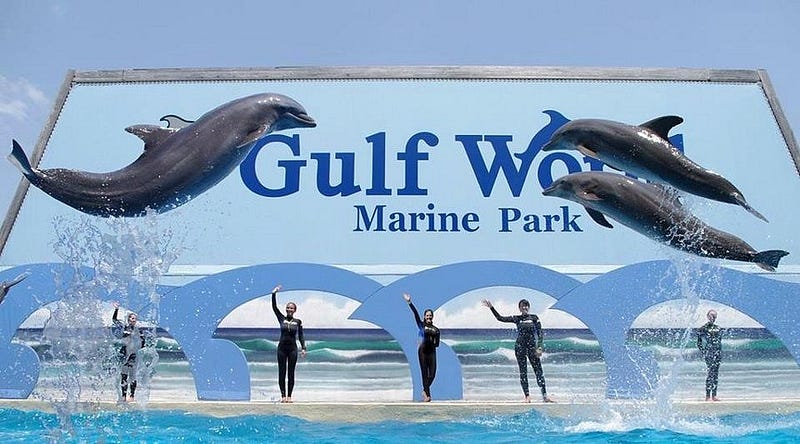
By the 80s and 90s, Gulf World was pulling in steady crowds. It added sea lions, penguins, and even tropical birds. For local families, it was a mix of roadside attraction and civic landmark.
The formula was simple: dolphins as entertainment, and the park as reliable business.
Gulf World: A Local Landmark in the Panhandle
For families in the Florida Panhandle, Gulf World was more than a tourist stop. School field trips came here, grandparents brought kids, and vacationers folded it into spring break. It was an institution that lasted more than fifty years ~ which made its sudden closure all the more jarring.
A Mexican Dolphin Dynasty Emerges
“Since 1994, The Dolphin Company has contributed to the study and conservation of marine mammals.”
- Company press release
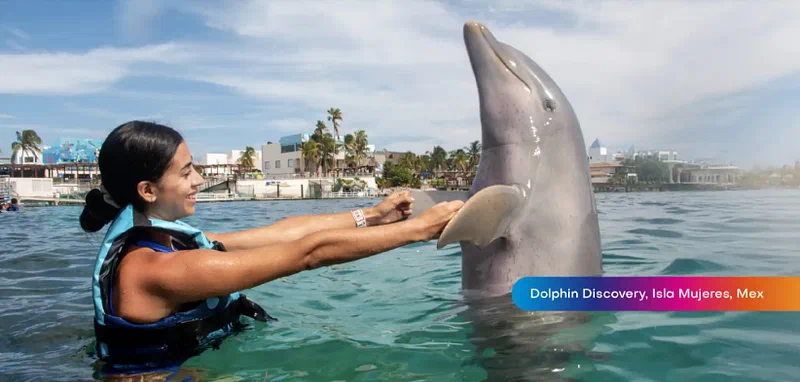
Meanwhile, across the Gulf of Mexico, a different vision for the dolphin business was taking shape. In 1994, Mexican entrepreneur Eduardo Albor launched Dolphin Discovery in Cancún. His model was simple and aggressive: tie dolphin encounters directly to resort tourism and build a captive-breeding pipeline to meet demand.
The concept spread quickly across the Caribbean and beyond. By the mid-2010s the company had facilities in multiple countries and was adding properties through acquisition. In 2015 it bought Gulf World in Florida; in 2019 it acquired Marineland in St. Augustine.
The company listed shares on the Mexican stock exchange in 2016 under the name Grupo Dolphin and rebranded itself globally as The Dolphin Company.
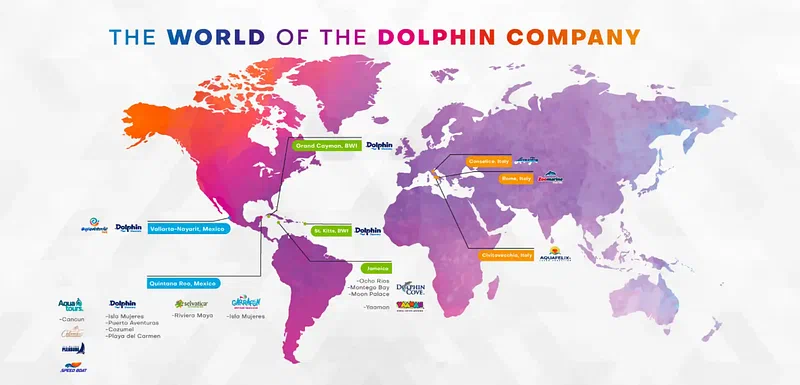
Public-facing language leaned into scale and family-friendly imagery. Inside the business, leadership touted a large captive-breeding program and rapid cross-border expansion.
That mix of branding and growth would define the next decade.
The Growth Playbook ~ Debt and Branding
“Leisure Investments and 14 affiliates… filed for bankruptcy last month, burdened by over $200 million in debt.”
- Law360
From the outside, The Dolphin Company looked ascendant.
Websites and brochures called it “the world’s largest dolphin family” and “the #1 dolphin company in the world.” Behind the curtain, the engine was debt-fueled expansion.
By early 2025, the company owed about $200 million to lenders including Prudential and Cigna. To keep things moving, money was shuffled between affiliates ~ one park helping to cover another.
That worked for a while, but it also masked growing stress across the group. In Jamaica, for instance, Dolphin Cove’s stock traded on promises that were underwritten by the parent company’s support.
Bringing Marineland under the brand in 2019 was a triumphant moment for the company ~ an iconic American oceanarium joining the portfolio.
But the model carried obvious risk. Tourism is cyclical. Hurricanes, recessions, and travel shocks hit demand. In good years, debt service was manageable. In bad years, leverage turned into a trap. Add a product facing a slow-moving reputational storm, and the spread between marketing copy and reality widened.
What’s a “roll-up,” in plain English?
A roll-up is when a company grows by buying many smaller properties and bundling them under one brand and one financial structure. It can look smooth in good times ~ more locations, more revenue, more “scale.” The risk is that a shared debt load and shared reputation can turn one troubled property into a portfolio-wide problem.
You don’t have to call The Dolphin Company a “roll-up” to see the pattern.
Its operational footprint spread across multiple countries, and the company’s liabilities and brand reputation were exposed to the world.
Character Sketch: Eduardo Albor
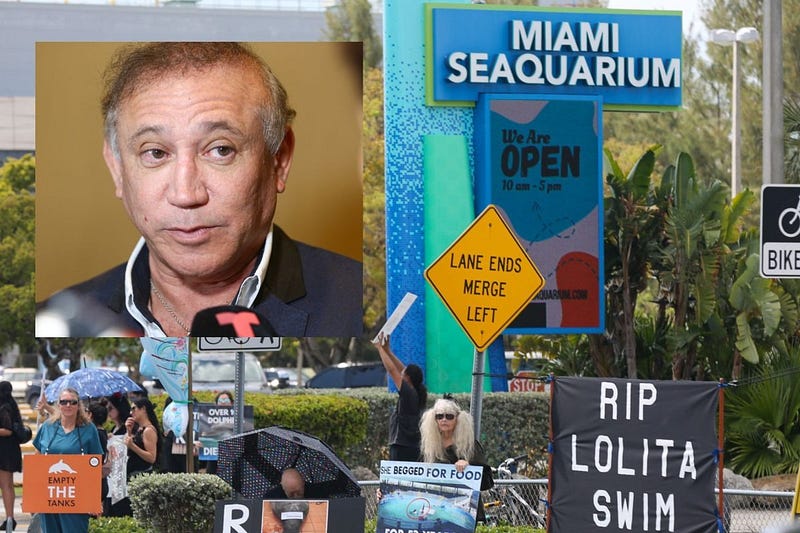
Eduardo Albor has been the driving force behind The Dolphin Company since its founding.
Trained as a lawyer in Mérida, with an MBA in corporate law from Universidad Anáhuac, Albor brought a business-minded approach to the dolphin tourism industry.
In 1994, he launched Dolphin Discovery in Cancún, betting that resort guests would pay a premium for close encounters with captive dolphins. That bet paid off, and within two decades the company had expanded across the Caribbean.
Albor has often framed the business as a mission, not just a commercial venture. He told reporters this while defending his record in 2024 ~
“Other than people safety, animal health care comes first. We don’t look at this as strictly business. This is a mission that we have.”
In CEO letters during the pandemic, he promised that both dolphins and staff were ready to welcome visitors again. When Miami-Dade County moved to evict his company from the Seaquarium, Albor struck a defiant tone, arguing the lawsuit was taken “with heavy hearts but clear minds” to protect the company’s legacy.
Those words contrasted sharply with growing criticism and public outcry.
Activists called on him personally to address the plight of Lolita, the orca at the Seaquarium , while lenders in a Delaware bankruptcy court moved to strip him of control.
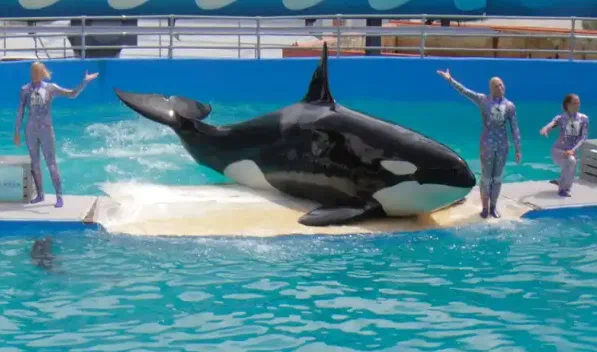
Albor embodied the entrepreneurial vision of Mexican tourism. At the same time, Albor was the face of a business model whose time had passed.
His story mirrors the company’s arc: ambitious, expansionist, and ultimately trapped between a dream and shifting cultural landscapes.
Warning Signs
“The County… filed a lawsuit to evict The Dolphin Company… to ensure the safety and wellbeing of the animals.”
- Miami-Dade County filing, 2024
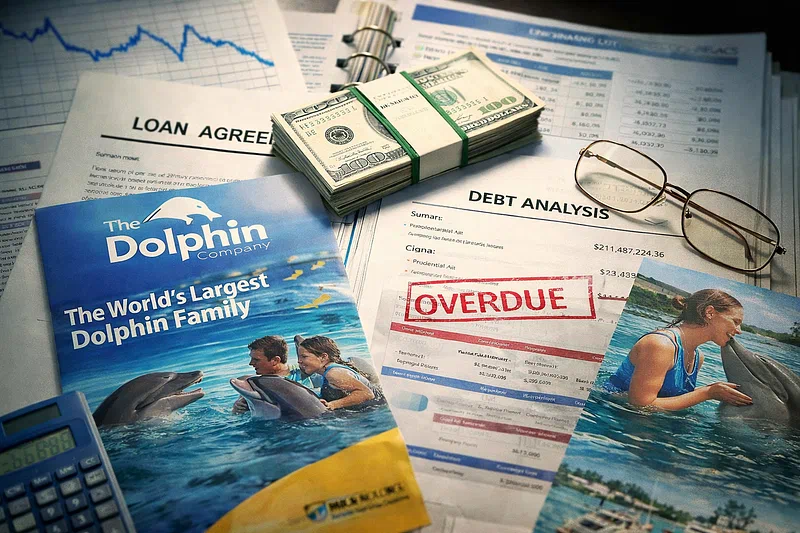
By the mid-2010s, cracks in the business started to show.
After the 2013 documentary Blackfish , marine parks around the world faced sharper scrutiny. The Dolphin Company didn’t house killer whales, but the tide was shifting ~ concrete pools with performing animals began to seem less and less humane for a growing share of the public.
The Blackfish Effect
The 2013 documentary Blackfish focused on SeaWorld’s treatment of orcas, but its impact reached far beyond one company. It reframed the way millions of people thought about marine parks, turning what once felt like wholesome entertainment into a symbol of cruelty. Attendance at parks dropped, lawmakers pushed for tighter regulation, and activists found a louder voice.
The Dolphin Company never kept orcas. Even so, it operated in the shadows of the cultural shift that came as a result of the film’s overwhelming popularity.
This is the “social license ” problem.
A business can be legal and lose its cultural permission slip. Once that permission slip starts tearing, every operational mistake becomes a moral outrage, not just a story about poor maintenance and misfortune.
Regulators grew less forgiving. In early 2024, Miami-Dade County moved to evict the Seaquarium’s operator , citing repeated welfare and safety issues.
In Panama City Beach, federal inspectors were already documenting problems. At Gulf World, a January 2025 USDA inspection reported algae-choked water, broken filtration, inadequate testing, and reduced visibility in show pools. Staffing was thin. Separately, a former trainer who worked there for years said conditions worsened after the 2015 takeover.
Dolphin deaths began to pile up.
In October 2024, three bottlenose dolphins died in quick succession ~ Gus, Turk, and Nate. Activists flew drones over the park, posting video of murky pools and sluggish animals.
Then, Jett died during a live show in March 2025, and it was the most visible and horrific death yet. The spectacle itself became evidence.
Markets reacted to the news almost immediately.
The Dolphin Company’s listed affiliate in Jamaica, Dolphin Cove , saw selling pressure mount as stakeholders began to demand information about the parent company’s debt and exposure.
When the news broke about the company’s U.S. bankruptcy filings, the narrative became clearer than, well, than the dolphin tanks at Gulf World.
Breaking Point ~ Dolphin Deaths + Bankruptcy
“Today, at my direction, FDLE and FWC executed a search warrant at Gulf World Marine Park.”
- Florida Attorney General Ashley Moody, press release, March 2025
The collapse came fast and hard.
In less than a year, Gulf World went from a struggling tourist park to a police-taped investigation site.
In October 2024 the park lost three dolphins ~ Gus, Turk, and Nate. In March 2025, Jett died mid-show after striking the pool wall.
On March 28, 2025, the Attorney General’s Office, Fish & Wildlife, and state investigators executed a search warrant after the park refused wellness checks. Agents reported algae-clogged pools, broken pumps, and inadequate staffing.
On March 31st, The Dolphin Company filed for Chapter 11 in Delaware,
the form of bankruptcy that allows a business to keep operating while it
works out its debts. To stay afloat, it borrowed $8 million in
emergency financing approved by the court.
That cash was earmarked for basics like paying staff and feeding
animals.
Samira, a female bottlenose dolphin, died in May 2025 ~ the fifth dolphin to die in eight months at a facility that housed about a dozen animals.
What is Chapter 11?
Chapter 11 is the U.S. bankruptcy law that lets a business reorganize its debts while keeping the doors open. Instead of selling everything off, a Chapter 11 debtor negotiates with creditors under court supervision. Think of it like a reset button: the company gets time and legal protection to try and survive, while lenders line up to see how much they’ll eventually recover.
Gulf World Closes for Good
Gulf World shut its gates to the public in May of 2025 after 55 years.
To many onlookers, the transfers looked less like rescue and more like a reshuffling of pieces on an overleveraged board.
When the park closed, the surviving animals didn’t just vanish ~ they were quickly moved to other facilities owned by The Dolphin Company.
Under the law, captive marine mammals are both living beings and transferable, depreciable assets just like a car or a tractor.
What should happen to these intelligent creatures?
In the following section, we will take a deeper look at how the law treats marine mammals in the modern day.
Bankruptcy Mechanics ~ Assets on Paper, Animals in Pools
“This is to acknowledge the May 29, 2025 request for an emergency waiver to transport 7 bottlenose dolphins.”
- NOAA emergency waiver
Chapter 11 gave the company breathing room to keep operating while it reworked its capital stack, backed by $8 million in debtor-in-possession financing to cover near-term costs like payroll and animal care.
DIP Loans and How They Work
A debtor-in-possession (DIP) loan is a special kind of financing given to companies already in bankruptcy. No one wants to lend to a bankrupt firm, so the court allows DIP lenders to jump to the front of the repayment line. That priority makes the risk worth taking. In practice, a DIP loan works like emergency life support ~ it pays for payroll, utilities, or in this case, dolphin food ~ but it doesn’t solve the deeper problems that caused the collapse.
Once the Delaware court recognized new leadership for the U.S. restructuring, regulators signed off on moving the remaining Gulf World animals.
Seven bottlenose dolphins were cleared for transfer to Marineland Dolphin Adventure and Dolphin Connection in Florida. Four rough-toothed dolphins were later moved to Clearwater Marine Aquarium under a state order.
The U.S. Chapter 11 filing sat beside a parallel Mexican process ~ a “quiebra” reorganization initiated in late February 2025 grouped dozens of subsidiaries under court oversight. Reports described a footprint of 30 dolphinariums across eight countries.
The paperwork and creditor updates reveal a blunt reality: the animals themselves appear on the balance sheet.
Collision Course ~ Finance Meets Ethics
“The debtors are seeking approval of an $8 million… DIP facility to support operations.”
- Delaware bankruptcy filing
The tension between animal rights activists and financial reality snapped into sharp focus during the bankruptcy filings.
In court-supervised restructuring, the animals are handled through property, custody, and transfer paperwork ~ the same institutional language used for land, pumps, and machinery.
On paper, they’re assets ~ assets that will be used to satisfy $200 million in claims backed by institutional lenders like Prudential and Cigna.
In the real world, they’re living animals ~ intelligent beings used as collateral in a multinational restructuring of a failed business empire.
You can see both sides in the paperwork.
Debtor-in-possession credit keeps the lights on and pays the staff, and it preserves “value” for creditors. Regulators signed off on transfers to Marineland, Dolphin Connection, and Clearwater. Those moves kept the animals inside the same corporate network ~ a solution that made sense for operational continuity but reads like balance-sheet shuffling to critics.
The Dolphin Company’s collapse was bigger than any single park.
The Mexican quiebra rolled dozens of subsidiaries into one process across eight countries, which meant every decision about care, custody, and sale reverberated across a far-flung portfolio.
The language used in the legal dispute reminds us why tempers run so hot when it comes to marine mammals ~
Under existing law, animals are property.
They’re treated like any other asset ~
“Things” not “People”
The Mexican Quiebra Process
Alongside the U.S. Chapter 11 filing, The Dolphin Company entered a “quiebra” proceeding in Mexico. Quiebra is the Mexican legal framework for corporate insolvency, similar to Chapter 11 but run under local courts.
It let the company group dozens of subsidiaries into one process, from Cancún resorts to dolphinariums abroad.
In effect, The Dolphin Company was fighting the same battle on two fronts ~ Delaware and Mexico City ~ with creditors and regulators watching closely.
Once a living creature is treated as property inside a distressed capital structure, every “care” decision becomes a “value” decision.
Aftermath and Legacy
“Seven bottlenose dolphins… received at Marineland Dolphin Adventure and Dolphin Connection.”
- Florida Fish & Wildlife Commission statement
Gulf World closed its gates on May 27, 2025, ending a 55-year run in Panama City Beach.
New leadership at The Dolphin Company ~ Steven Strom and Robert Wagstaff ~ was brought in to steady the restructuring. Their mandate was simple: keep operations stable, animals alive, and creditors calm.
The Dolphin Company’s meteoric rise was fueled by late twentieth- and early twenty-first-century resort excess. The company’s dramatic fall and collapse were precipitated by an evolving public conscience and risky business practices.
For decades, marine parks sold an experience that felt good ~ families got a once-in-a-lifetime experience, and investors got a steady cash flow. The dolphins? They were beloved performers and close friends for decades.
At some point, the narrative began to change. Movies like Flipper and documentaries like Blackfish humanized marine mammals and exposed the inherent mistreatment that can come with capturing and confining intelligent creatures. Once the public frame shifted, people stopped watching the amazing aquatic acrobatics on display ~
Focusing instead on the concrete tanks, algae-green water, and deep sadness in the animals’ eyes.
The Dolphin Company used leveraged debt to grow as fast as possible.
Debt is a growth drug. It pushes expansion, rewards optimism, and punishes hesitation. But what happens when the customers decide that they fundamentally disagree with the business?
In a normal tourism business, a bad season hurts. In a levered captive-animal business, downturns force tradeoffs you can’t hide. Filtration upgrades, staffing depth, and preventive care become exposed to the same cost pressure. The animals bear the risk first because they can’t just walk away.
Staff are asked to do more with less, and customers are sold a continuity that may no longer exist.
And the company has no choice but to keep the wheels turning, even as they dig themselves deeper and deeper into the mud.
The multinational structure obscures the picture further.
A network spread across borders can exploit uneven rules, cheaper labor, different enforcement capacity, and tourist-heavy demand. When one property becomes a liability, the brand can route animals, money, and attention elsewhere. The Dolphin Company built a system designed to extract value even as the moral basis for its product collapsed.
That’s the legacy.
Entertainment didn’t just “go wrong.”
The fundamental business proposition (dolphins as captive entertainers) tailspun into decline as the company’s debt model required more and more growth. When those forces collide ~ the audience’s conscience and the balance sheet ~ something has to give.
Closing Reflection
“State investigation under way… after four dolphins died in the past six months.”
- Florida Department of Agriculture & Consumer Services, 2025
What comes next?
The courts will wring value from what’s left. Officials will condemn animal cruelty and argue over responsibility. Some parks may rebrand or quietly wind down.
The larger takeaway is simple ~ Financial engineering can stretch an old model for a surprisingly long time, but it can’t reverse a cultural turn.
When the pools stop drawing crowds ~
the math changes fast.
If you want to see the skeleton of the story, it sits in a small stack of documents: inspections, warrants, waivers, and filings.
Different agencies, different styles, same story.
When the paper trail gets thick, the ending usually isn’t a comeback story.
Source Note
This story was inspired by the work of the Florida Department of Business and Professional Regulation. The agency’s case against Gulf World ended with the park losing its operating license. Investigations also surfaced serious concerns about veterinary oversight at the facility.