The Favor
Help without strings attached is nice.
A friend comes over to help carry a couch up two flights of stairs. They lose a Saturday morning. You both laugh when the couch catches on the landing. By noon, it’s in place. You say you owe them one.
Gratitude has a place. So does a return favor.
Trouble starts when the couch never quite leaves the room. Weeks later, the friend wants a ride, a hand with a chore, or your silence in an argument. The old favor sits inside the new request, though nobody ever named a trade.
Gratitude is real, and so is the right to ask for something in return. Yet a gift with an unspoken price leaves the other person blind to the price. They can’t accept or decline honestly. They only feel the pull later, when saying no is awkward.
Sometimes it’s a loose promise: “I’ll get you next time.” That can be warm and easy, yet it turns heavy when one person treats it as a blank check and the other person never saw a balance.
With or Without Expectations
A favor stays kind when its price is named or absent.
One sentence can prevent resentment. “I can help today, and I may need a hand with my shelves next month. Would that work for you?” Something like that gives the other person a chance to agree, decline, or offer something else. No debt needs to hide. Ambiguity isn’t a license to demand later.
People can ask for what they need, and the request stands on its own.
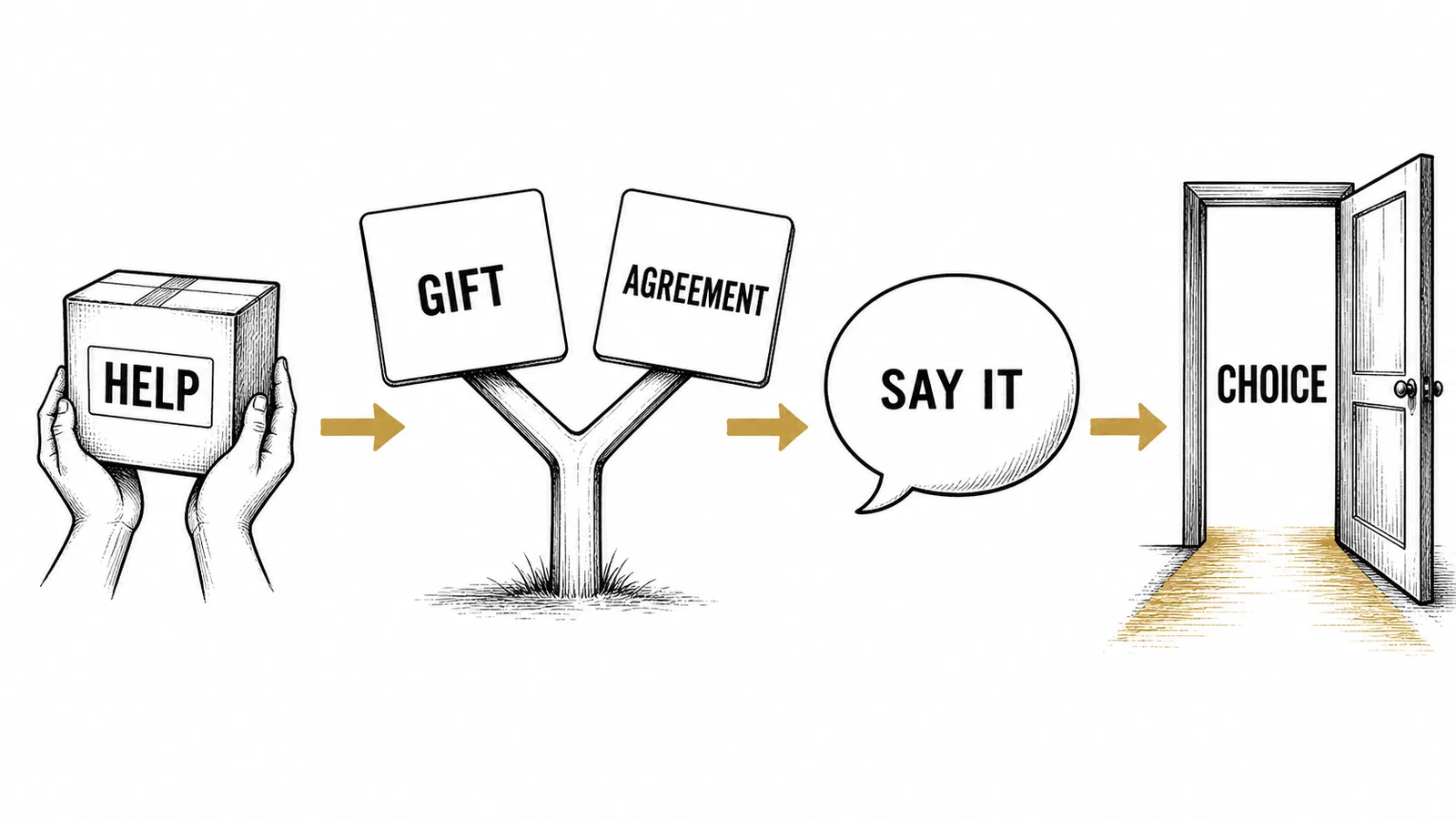
Help can be a gift or an agreement. Clear words leave room to choose.
If help is a gift, let it be a gift. If you need something back, say so while the other person can answer freely. The answer may be yes, no, or a different plan.
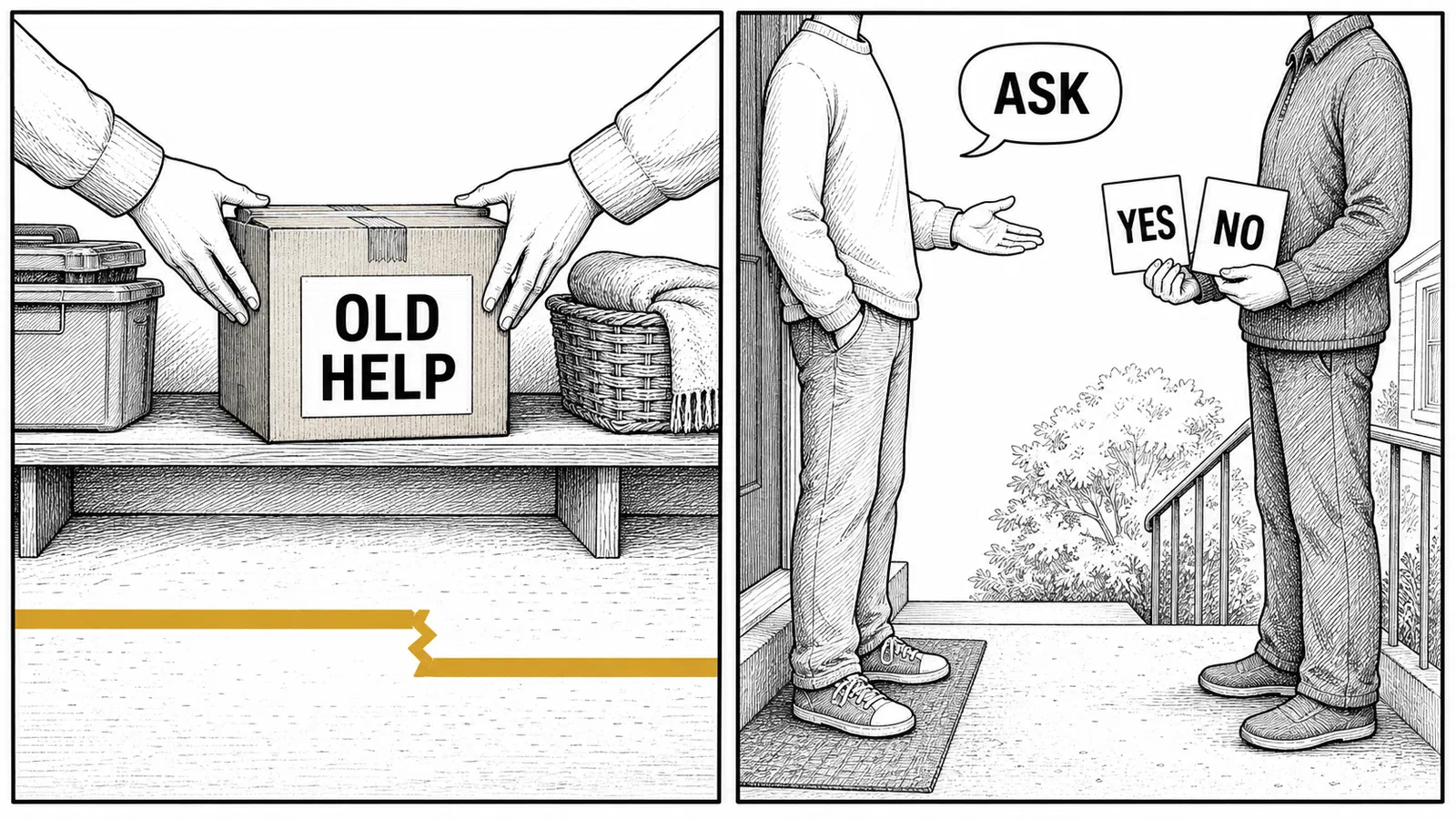
Old help ends. A new request deserves plain words and a free answer.
Offer what you can give, name what you need, and leave the other person their choice.
Respect yourself, respect the other person.