The Fed Chair Is Not a Button
Kevin Warsh may soon inherit a job the White House wants to treat as a lever. The harder fact is that interest rates pass through inflation, a committee, and institutional trust.
There is a strange faith in the office at the head of the table.
A president names a chair. Markets stare at the name. Senators ask about independence. Cable panels ask whether mortgages will get cheaper. The whole room begins to talk as if one person can walk into the Federal Reserve, find the interest-rate lever, and pull it down.
That is the cartoon version of central banking.
The real version is more stubborn. A chair matters. A chair can set the tone, frame the debate, choose the words, and build a coalition. A chair can also discover that the economy has already entered the room.
That is the point worth holding onto as Kevin Warsh moves closer to the Federal Reserve chairmanship.
On April 24, the Associated Press reported that the Justice Department had ended its criminal investigation of Jerome Powell over the Fed’s building renovations. The probe had become one of the ugliest parts of the transition. It hung over Powell, delayed Warsh, and turned a costly construction project into a proxy fight over monetary independence.
The investigation ended. The pressure continued.
AP reported the next day that President Donald Trump continues to expect Warsh to deliver lower rates once he takes over. That expectation is easy to understand politically. Lower rates sound like relief. They promise cheaper mortgages, cheaper car loans, cheaper business credit, and a friendlier stock market. They also give a president something simple to demand.
Cut.
The trouble is that the Fed cannot govern by verb.
The Investigation Ended; the Pressure Did Not
The Powell probe always looked larger than its stated subject.
The official subject was a $2.5 billion renovation at the Fed’s Washington headquarters and Powell’s testimony about it. The political subject was control. Trump had spent months attacking Powell for keeping rates higher than the White House wanted. The investigation made that pressure look legalistic. It gave political anger a subpoena shape.
AP reported that a prosecutor conceded in March that the government had not found evidence of a crime, and that Judge James Boasberg later quashed subpoenas after saying prosecutors had produced essentially no evidence to suspect Powell. By the time the case ended, the point had already been made. A central bank chair who resisted rate pressure had been placed under criminal investigation.
No ordinary leadership change begins against that backdrop.
Warsh now enters the story as both nominee and test case. He has promised independence. He has also been chosen by a president who has made no secret of wanting lower rates. Those two facts can coexist only if Warsh is willing to disappoint the person who nominated him.
This is where the story stops being about Warsh’s personal courage and starts being about the architecture around him.
The Federal Reserve was built to make monetary policy harder to seize in a moment of political appetite. Its insulation is not perfect. Presidents nominate governors. Senators confirm them. Congress writes the statute. Public anger reaches the building eventually. The system tries to create distance between election-cycle desire and the price of money.
That distance protects democracy from its own short-term cravings.
Cheap money is popular until inflation eats the gain. Tight money is hated until prices stop running. A central bank that answers every immediate demand becomes a mirror of political need. A central bank that ignores the public becomes an unaccountable priesthood. The hard job lives between those failures.
Warsh is walking into that middle ground with almost no honeymoon.
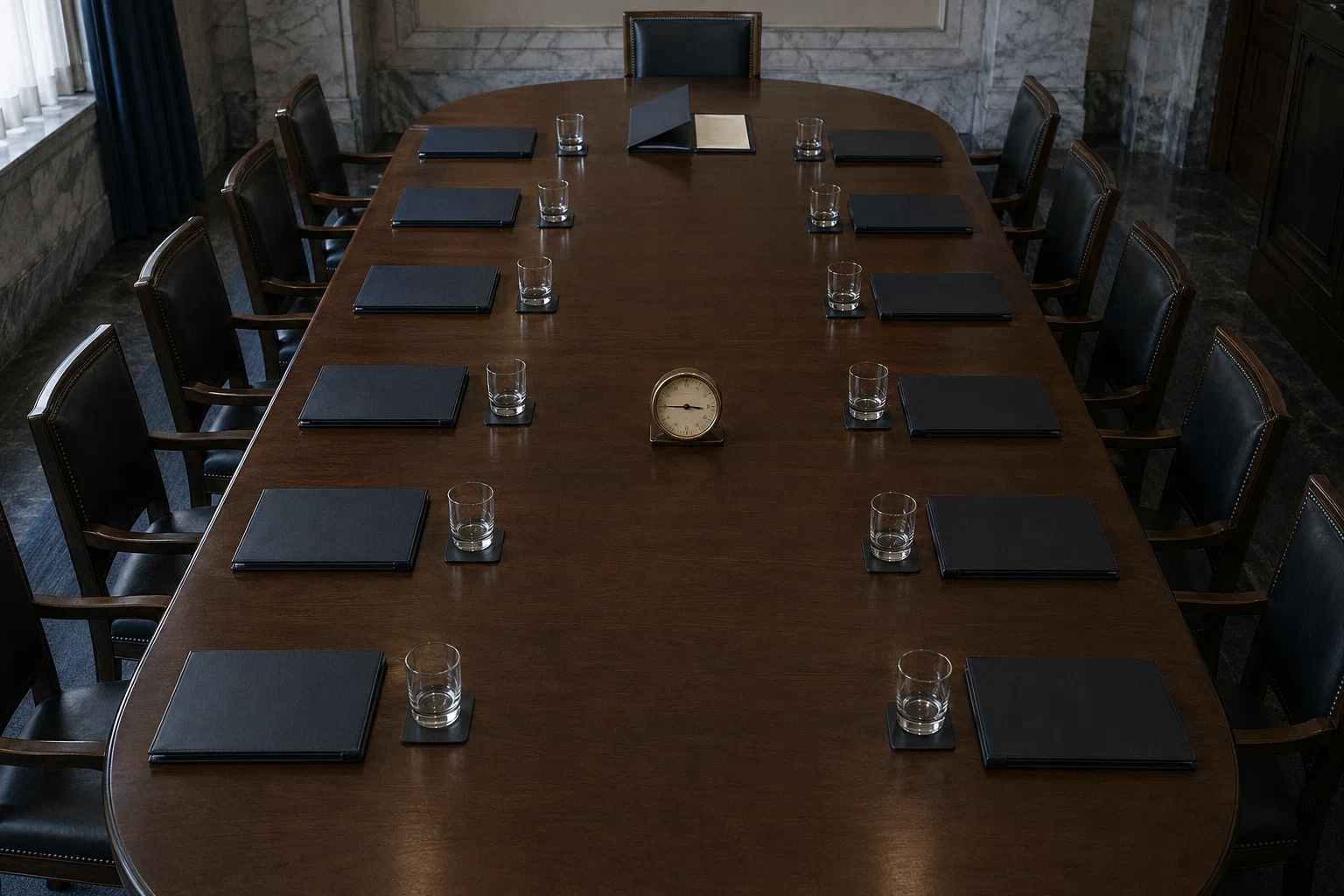
The chair sits at the head of the table, but the table sets the terms.
A Chair Has Influence, Not Magic
The Federal Reserve chair is the most visible person in the room. That visibility can trick people into mistaking the room for the person.
The Federal Open Market Committee runs through votes, minutes, and dissent. At its March 18 meeting , the committee voted to hold the federal funds target range at 3-1/2 to 3-3/4 percent. Eleven members supported the hold. Stephen Miran dissented and preferred a quarter-point cut.
That vote shows the structure Warsh would inherit. The chair has power, but no private remote control follows him into the room. He needs a committee. He needs arguments that other policymakers can defend in public and in the minutes. He needs data strong enough to keep a cut from looking like obedience.
FRED showed the upper end of the federal funds target range remained at 3.75 percent on April 25, 2026. That number is boring by design. It is supposed to change only when the committee acts.
The committee’s own minutes explain the reason for the hold. The March minutes said participants saw inflation above the 2 percent goal, low job gains, elevated uncertainty, and a fresh shock from the Middle East conflict. Almost all participants supported holding rates steady. Some saw future cuts if inflation moved down as expected. Others wanted language that kept rate hikes on the table if inflation stayed too high.
The room was weighing two risks at once: inflation that may last, and employment that may crack.
This is why the “Warsh will cut” story is too simple. Warsh can want a lower-rate path. Trump can want a lower-rate path. Borrowers can want one too. The committee has to ask what the cut would say about inflation, about expectations, about political pressure, and about the Fed’s own spine.
Sometimes the first act of independence is not dramatic. It is silence. A hold. A refusal to convert a campaign preference into a policy meeting.
That is the strange burden Warsh may face. To prove independence, he may have to withhold the very thing the White House wants from him.
Inflation Is at the Window
Politics is only one pressure on the Fed.
Prices press from the other side.
The Bureau of Labor Statistics reported that the Consumer Price Index rose 0.9 percent in March and 3.3 percent over the prior 12 months. Energy did much of the damage. The energy index rose 10.9 percent in March, gasoline rose 21.2 percent, and fuel oil rose 30.7 percent.
Those numbers are not abstractions for a central bank model. They are the gas stop, the heating bill, the airline fare, the kitchen-table receipt.
Headline inflation can be messy. A war shock can fade. Gasoline can reverse. Core prices can tell a calmer story than energy. No serious person should turn one CPI report into a doctrine.
But a central bank does not get to pretend the report is not there.
Inflation is a credibility disease before it becomes only a price table. People can tolerate a bad month if they believe it will pass. They behave differently when they believe the people in charge have chosen convenience over restraint. Workers ask for more. Companies test higher prices. Lenders demand more. Consumers buy sooner. Expectations begin to do policy’s work in reverse.
That is why the Fed guards words almost as closely as it guards rates.
A premature cut would move more than the target range. It would tell the public how the new chair understands pressure. If the first move under Warsh looked like payment on a political promise, the rate decision would become secondary. The message would be larger: the Fed blinked.
Maybe conditions will justify a cut later. The March minutes leave that possibility open. Higher oil prices can hurt households and weaken demand. A low-hiring economy can turn quickly if employers pull back. A central bank that refuses to cut when the economy is slowing can do real damage.
Cuts may become necessary.
They also need to look earned.
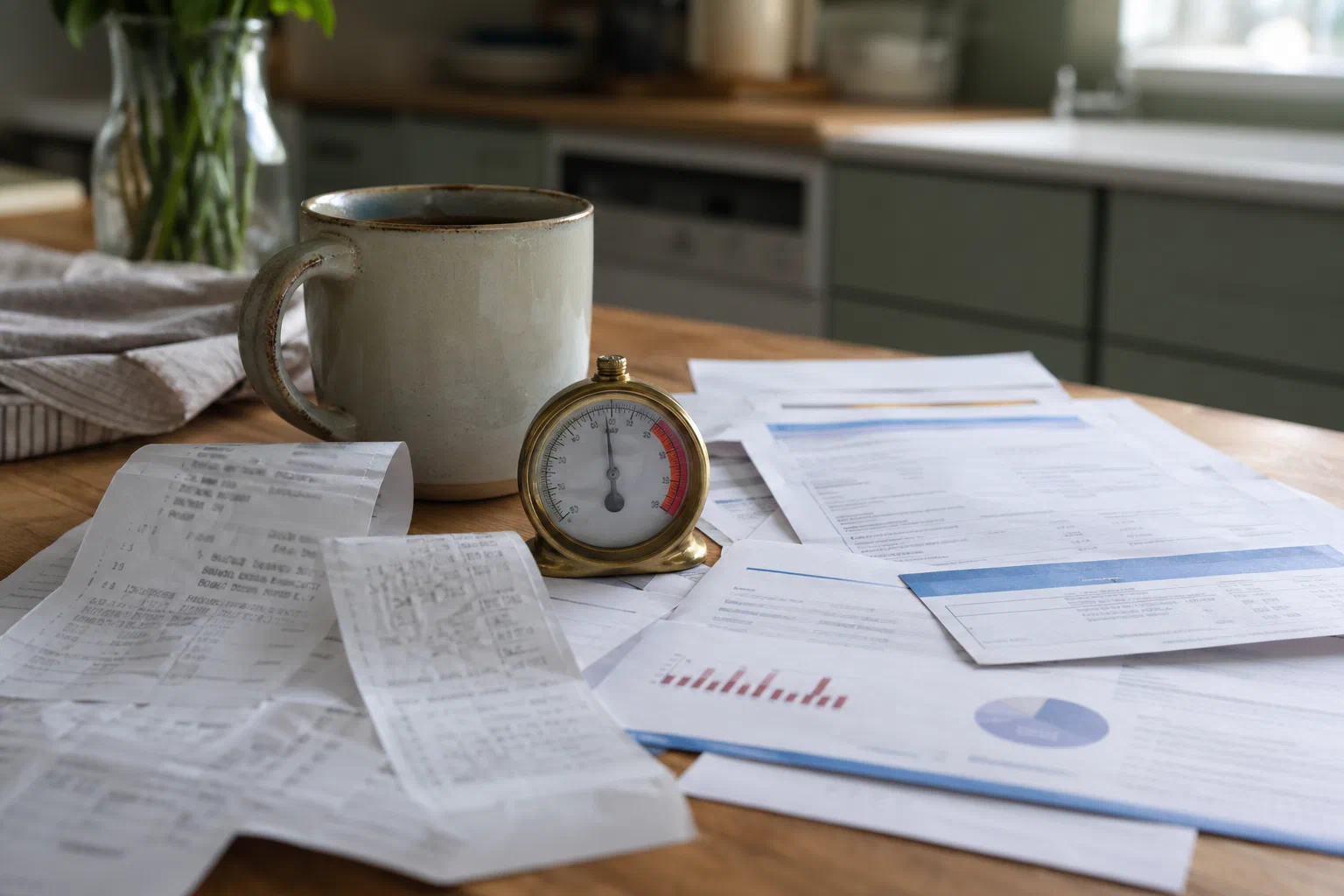
The rate decision eventually reaches the kitchen table, but it begins with prices people already feel.
The Fed’s Independence Is a Public Utility
Independence is usually discussed as if it belongs to the institution.
The Fed’s independence. The chair’s independence. The committee’s independence.
That framing only gets halfway there. Independence also belongs to the public. It is part of the plumbing that lets ordinary people believe the price of money is being set for economic reasons, not as a favor to the person in power.
That belief is useful even when people dislike the Fed’s decision.
A homeowner can be angry that mortgage rates are high. A small-business owner can resent expensive credit. A president can argue that the central bank is too tight. Those criticisms are fair game. The Fed should be argued with, scrutinized, audited, questioned, and forced to explain itself in plain language.
But there is a line between criticism and capture.
The Powell investigation crossed too close to that line. It showed how quickly policy disagreement can be dressed up as legal suspicion. It also showed why the institution’s guardrails cannot depend on politeness alone. Norms are useful until someone learns they are voluntary.
That leaves Warsh with a job bigger than rates.
If confirmed, he would have to manage inflation, employment, markets, the balance sheet, and a committee divided by risk. He would also have to manage the meaning of his own appointment. Every early statement would be read for obedience. Every pause would be read for defiance. Every cut would be examined for fingerprints.
That burden harms the country. A central bank chair should not have to spend his first months proving he is independent of the person who nominated him. Yet that is the cost of the pressure campaign that came before him.
There is a lesson here larger than one nominee.
Modern politics loves to personalize systems. It wants a face, a button, a villain, a savior, a single name that can be blamed when the machinery disappoints. The Fed resists that story poorly because it already has a face at the microphone. Powell before. Warsh perhaps next.
But the deeper machinery remains.
Rates are made from data, judgment, committee politics, legal design, market expectations, and public trust. Pull one piece too hard and the whole system answers back. Inflation answers. Bond markets answer. Voters answer. History answers too, often with old stories about presidents who wanted easy money and got something uglier.
That is where the button metaphor breaks down.
The chair is a steward of credibility. That sounds dull until credibility is gone.
Warsh may yet cut rates. He may hold them. He may surprise both the White House and Wall Street.
The first test is whether the public can tell the difference between a policy decision and a political delivery.
That difference is the institution.
Lose it, and the rate itself becomes less important than the suspicion attached to it.