The Future of AI and Technical Jobs: Why Review Work Is Your Best Bet (For Now)
AI is automating technical work, but human reviewers still matter. Here's why.
AI Is Here, And It’s Changing Everything
The AI revolution isn’t on the horizon. It’s already reshaping entire industries.
Technical jobs that once required years of expertise are now being handled by machines.
But does that mean human analysts are obsolete?
Not yet. The most critical role for analysts in the coming era won’t be the direct execution of tasks. It will be reviewing AI-generated work.
Those who excel at review, evaluating insights, verifying results, and identifying errors or bias, will remain indispensable.
In fact, review work may soon become the single most valuable form of experience for technical analysts seeking to stay competitive over the next two to five years.
But beyond that? No promises.
Why AI Still Needs Human Reviewers
Despite AI’s rapid advancements, there are fundamental weaknesses that require human oversight:
- AI can be wrong and confident. AI models do not “understand” the work they generate; they recognize and apply patterns. This means they can confidently produce incorrect or misleading results.
- A financial model might misinterpret an economic shock.
- An engineering model might propose a structurally unsound design.
- A cybersecurity AI might overlook an exploit due to gaps in its training data.
One of the most infamous examples comes from Amazon’s failed AI hiring tool.
Designed to automate candidate selection, the system analyzed 10 years of hiring data, but because the majority of previous hires were men, the AI taught itself that male candidates were preferable.
It penalized resumes that mentioned “women’s” (such as “women’s chess club captain”) and even downgraded graduates from all-women’s colleges.
Amazon adjusted the system, but there was no guarantee the model wouldn’t find new ways to encode bias.
The company ultimately scrapped the tool, proving that even sophisticated AI can fail catastrophically when left unchecked.
- AI lacks contextual and ethical judgment. AI operates on statistical relationships, not real-world judgments.
Models can’t grasp the ethical implications of their recommendations or adjust for unquantifiable nuances.
For example, a model predicting economic growth may fail to consider political instability, or an AI-generated engineering design may optimize for cost without considering sustainability concerns.
The Amazon case also highlights this issue.
The AI wasn’t designed to discriminate, but because it lacked an understanding of historical bias, it reinforced past inequalities.
It didn’t question why women were underrepresented. It simply mirrored the patterns in the data.
- AI struggles with ambiguity. Technical fields often deal with uncertainty and incomplete data.
AI models excel in structured environments with clear parameters but falter when confronted with ambiguous problems.
Amazon’s case shows how AI can misinterpret human behavior when patterns aren’t fully understood.
If a hiring model trained on biased data can fail so badly, what happens when AI is used in higher-stakes fields like medicine, finance, or security?
For the short to medium term (2 to 5 years), these limitations pretty much guarantee that review work will be necessary.
Companies, governments, and institutions can’t afford to blindly trust AI with high-stakes decisions.
Will AI Make Human Reviewers Obsolete?
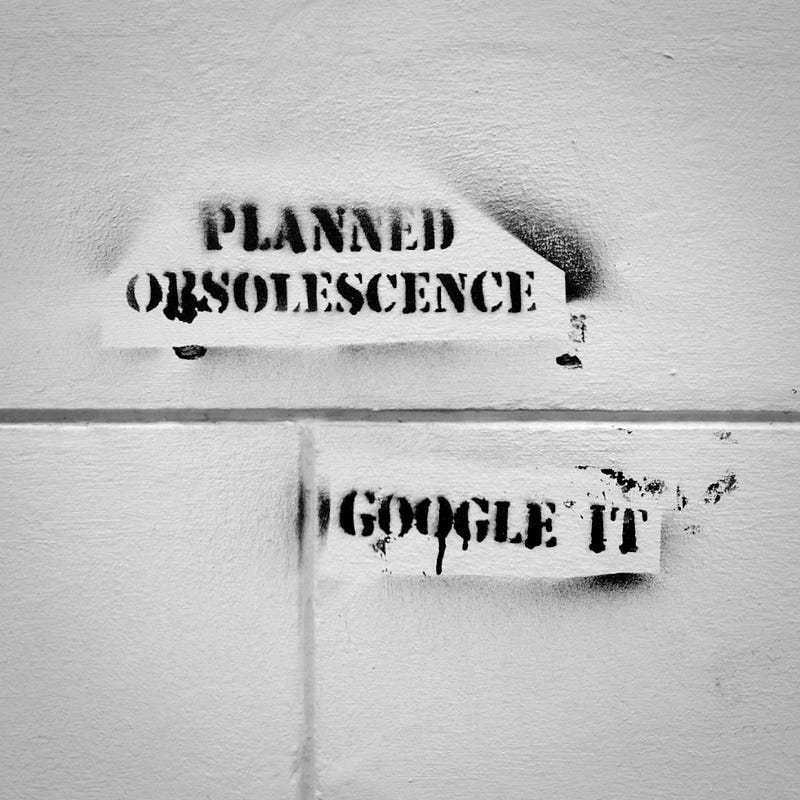
The bigger unknown is what happens after AI improves further.
Right now, review work is critical because AI still makes errors, lacks transparency, and cannot independently verify its own outputs.
But what if that changes?
There are already efforts to make AI:
- More explainable (so it can show its reasoning instead of spitting out black-box conclusions)
- More self-correcting (so it catches and fixes its own errors)
- More reliable across novel situations (so it doesn’t need human interpretation when data is messy)
If AI can solve these problems, what happens to the reviewers?
AI auditors replace AI reviewers. Humans shift toward ensuring AI aligns with policy, ethics, and legal compliance. Analysts no longer verify accuracy. They enforce accountability.
AI self-validation becomes sufficient. AI models improve to the point where they don’t just detect their own errors. They explain and correct them without human intervention.
Human oversight becomes symbolic. AI-generated results still require a final sign-off, but it’s mostly a formality. Like pressing a button to approve an autopilot landing, the review process exists, but it rarely matters.
The reality is that review work is a great bet for the next few years, but it may not be a safe long-term career strategy.
How Technical Analysts Can Stay Ahead of AI

If you’re a technical analyst today, getting experience in reviewing, refining, and validating work is probably the best way to remain competitive.
That’s where the immediate value lies.
But don’t assume this will last forever.
The best strategy is to:
Develop a deep understanding of AI systems. Learn how AI models work, where they fail, and how they’re improving. The more you understand the system, the more valuable you’ll be when it changes.
Position yourself for higher-level roles. Don’t just review work. Think about ethics, compliance, and strategy.
AI auditors, policy experts, and risk analysts will be in demand long after review jobs disappear.
- Keep an eye on AI’s progress. Pay attention to major breakthroughs.
If AI starts reliably explaining its reasoning and correcting itself, review work could shrink fast. Stay ahead of the shift.
- Build skills AI can’t easily replace. Critical thinking, strategic decision-making, and interpersonal communication are still uniquely human strengths.
AI can crunch numbers, but it doesn’t negotiate, persuade, or innovate like people do.
The safest bet isn’t just to focus on review work, but to prepare for the moment AI no longer needs you.
The Future of AI Review Work: What Comes Next?

More capable AI systems are coming for execution-based technical jobs. But review work will remain critical for at least the next two to five years as AI struggles with accuracy, ambiguity, and ethical judgment.
Analysts who can validate AI-generated insights will be in high demand.
Long-term, though? That’s less clear.
AI might eventually self-correct and explain its reasoning well enough that human reviewers become obsolete, or at least much less necessary.
Those who adapt, evolve, and position themselves beyond review work will stay relevant.
Those who don’t?
They may wake up one day to find that AI isn’t just doing their job. It’s double-checking its own work, rewriting the rules, and deciding who gets to play the game.