The Repair
An apology names the harm. Repair begins with the next honest act.
A broken promise often comes with a quick explanation: your day filled up, the call slipped your mind, you didn’t see the message, and you didn’t think the words landed that hard.
With an ordinary, repairable harm, some of those things may be true. But the other person is left with the missed call, the sharp words, the undone task, or the hour they set aside for you. An explanation can add needed context. It can’t carry the whole weight of repair.
After a Broken Promise
Say what broke. Then bring your hands to the repair.
You may wait for the perfect apology. You may want enough insight, enough pain, enough explanation to prove you understand. You may want that understanding to sound complete before you risk saying anything. That wait can become a way of doing nothing. Plain words can start the work: I did this. It hurt you. I am sorry. Here is what I will do next.
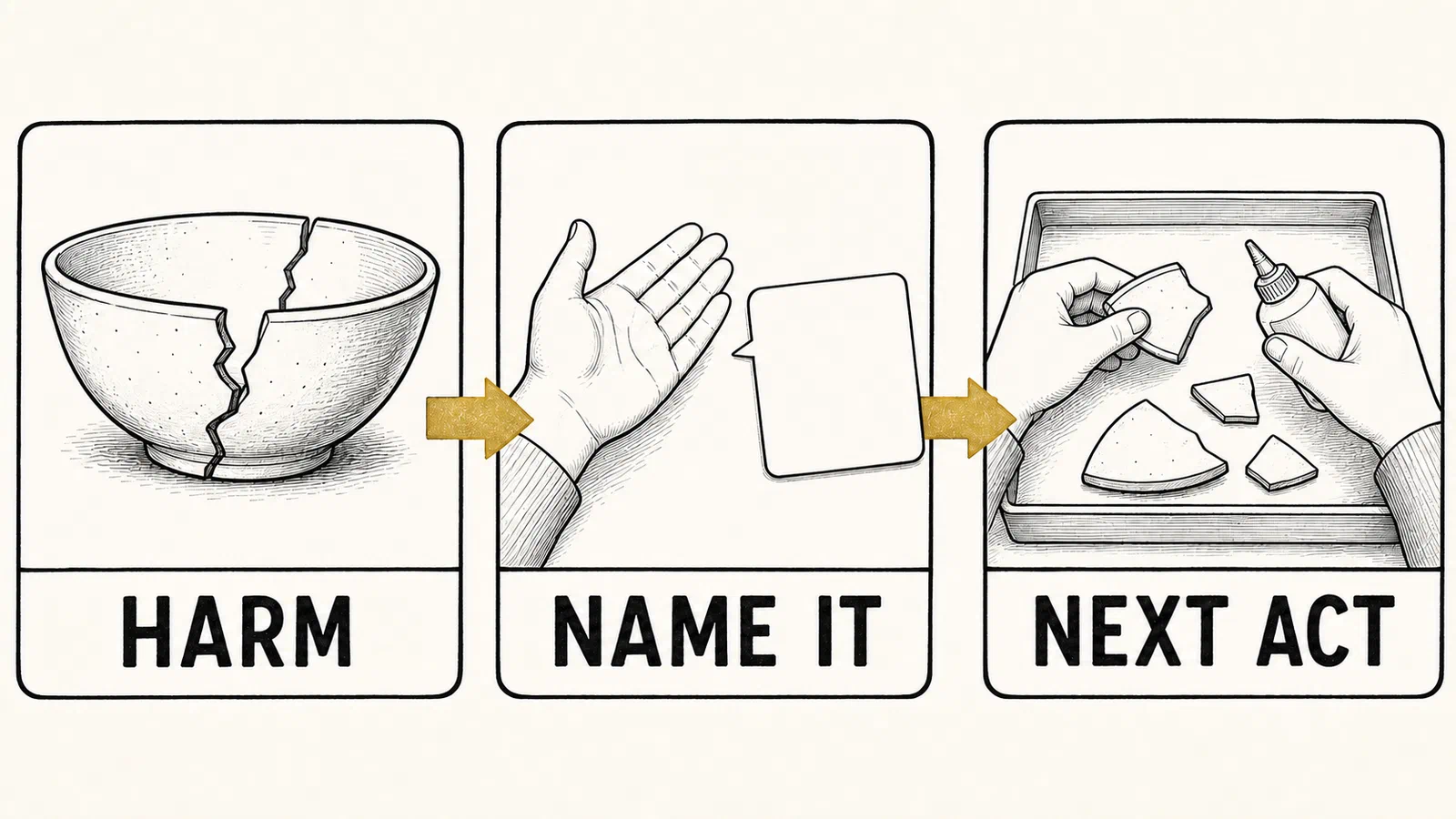
Name the harm, then take the next honest act.
An apology names your part. Say plainly: I said I would be there. I wasn’t. You had to carry it alone. The other person may need room. Say what happened, then let them decide what they need.
Then ask what the next honest act is: make the call you avoided, replace what you broke, pay the amount you owe, put the plan on paper, and show up when you said you would. Keep the next small promise before you make a bigger one.
Repair has a limit. Some harm can’t be fixed by one good deed. An apology can’t require forgiveness. Trust may return slowly, or it may not return at all. You can’t own that outcome. You can own whether you face the harm without making the other person carry your discomfort too.
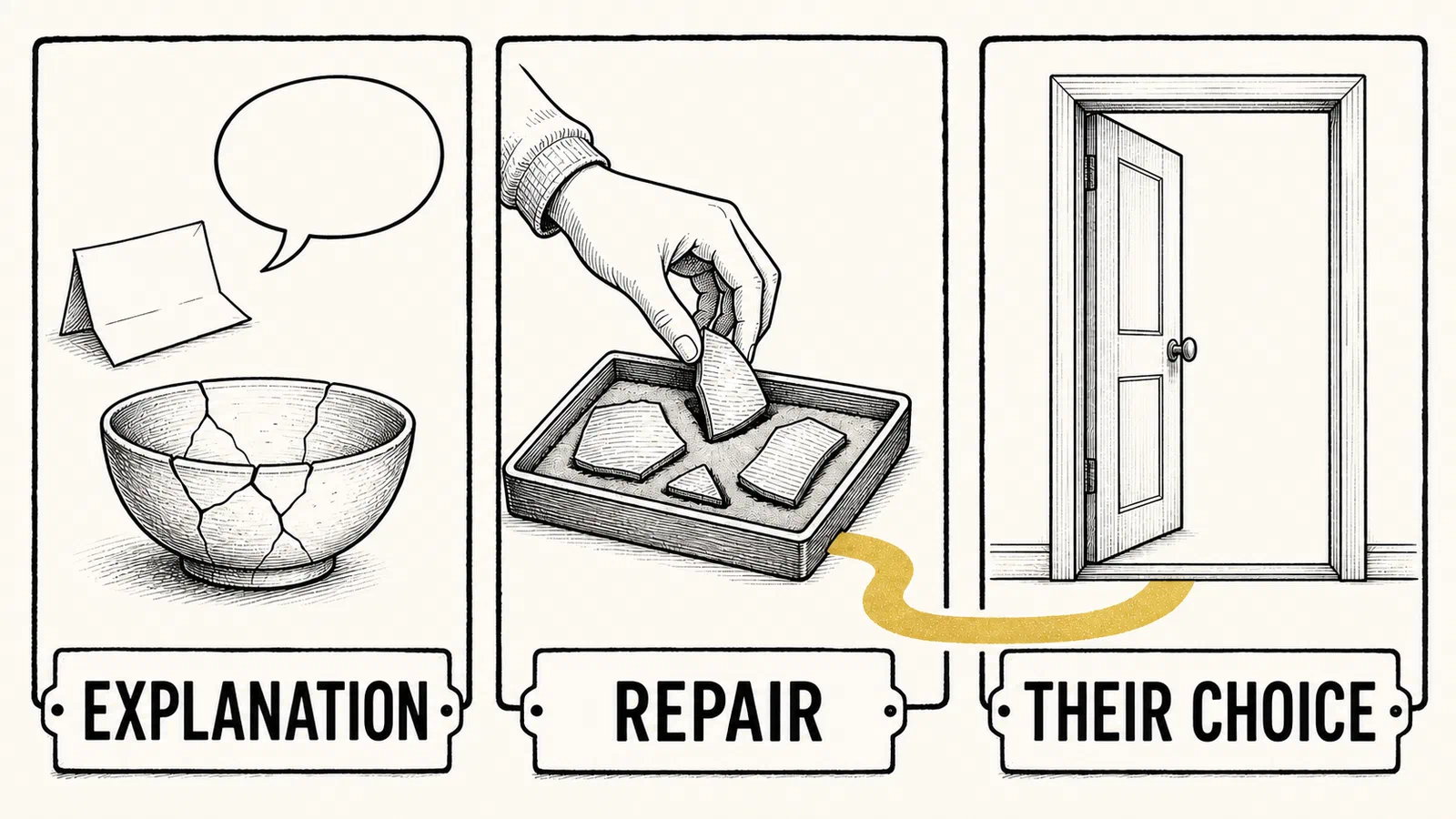
An explanation can help. Repair and their choice remain separate.
Feeling bad can become another way to stay at the center. A person can spend an hour explaining the hurt and leave the task untouched, even when the dish needs replacement, money needs returning, a ride needs arranging, or a promise needs keeping tomorrow. Don’t confuse regret with repair.
You don’t need to make the past disappear. You need to stop feeding it. Name the break. Do what you can. Give the other person room. Then let your next act be easier to believe than your explanation. A kept promise gives the other person something real to consider, not more pressure to manage.