The Sunset Date in the Code
DOE's zero-based regulating rule turns parts of the energy code into expiring objects, forcing old rules to justify themselves while shifting public risk onto the calendar.
An expiration date can look harmless in the Federal Register.
It appears as a line of procedural text, tucked near citations, docket numbers, comment deadlines, and authority clauses. It has no siren. It does not smell like gas, sound like a turbine, or glow like a nuclear warning light. It simply says that a rule will expire on a future date unless an agency acts first.
On May 29, the Department of Energy published a direct final rule called Zero-Based Regulating . The rule adds sunset provisions to many DOE regulations issued under major energy statutes, including the Atomic Energy Act of 1954, the National Appliance Energy Conservation Act of 1987, the Energy Policy Act of 1992, the Energy Policy Act of 2005, and the Energy Independence and Security Act of 2007.
The basic mechanism is plain. Covered regulations receive a conditional sunset date. If DOE extends a regulation before that date, the rule survives. If DOE lets the date pass, the regulation expires, loses force, and can be removed out of the Code of Federal Regulations.
The department also published a companion proposed rule , giving the public a backup route for comments if the direct final rule draws significant adverse objections. Comments run through June 29, 2026. The direct final rule is scheduled to take effect July 13, 2026, unless DOE withdraws it.
That is the official action.
The civic story is larger. DOE has taken a body of energy regulation and added a timer. That timer may discipline stale rules. It may also turn public protection into a missed appointment.
The Date Stamp
The rule grew out of President Trump’s April 2025 Executive Order 14270 , titled Zero-Based Regulatory Budgeting To Unleash American Energy. The order directed covered energy agencies to insert conditional sunset dates into regulations tied to selected energy-production statutes, so rules would expire unless the agency found an extension warranted.
DOE’s May 29 rule applies that instruction to a long list of Title 10 parts. Many covered parts get a one-year date. A smaller set gets five years because DOE says those parts govern classified information, human reliability, worker health and safety, nuclear material production, and security personnel at DOE and National Nuclear Security Administration sites.
The difference is revealing.
DOE is not treating every regulation as disposable clutter. It carved out some safety and indemnification rules altogether. It gave other security-linked rules a longer clock. It acknowledged that some parts of the energy state work less like paperwork and more like load-bearing beams.
That distinction makes the rule worth taking seriously. The department is making a claim about review, burden, and institutional memory. It is also drawing lines around which rules deserve automatic pressure and which rules would make the market, the workforce, or the public too nervous if expiration came too easily.
Review Under Pressure
The best argument for sunset rules starts with a familiar failure. Government writes rules. Conditions change. The rulebook grows. Old sections survive because deleting them takes attention, paperwork, and political energy. Nobody owns the cost of keeping stale rules alive.
DOE’s notice states that automatic expiration gives the agency a stronger incentive to review its own code. The department says energy markets, needs, and technology change, and rules should keep pace. It also frames deregulation as a way to reduce cost and free energy production.
That argument has force.
A rule created for one market can become awkward in another. A reporting program can outlive its usefulness. A waiver process can slow research or contracts after its original purpose fades. The energy system changes through drilling, uranium supply, grid equipment, advanced nuclear projects, hydropower, efficiency standards, software, sensors, fuel markets, and security threats. A frozen rulebook can become its own hazard.
A review date can make government pay attention. It can force staff to ask what a rule does, which statute supports it, which records justify it, who pays for it, and which public interest it serves.
The trouble begins when review becomes pressure by deadline.
Under a normal review system, an obsolete rule has to be changed or repealed. Under a sunset system, a live rule may die if the agency misses the deadline, lacks staff, faces political pressure, receives confusing comments, or delays a written finding. The burden shifts. The old rule no longer has inertia on its side. The calendar does.
That shift changes incentives for everyone around the rule.
An industry that dislikes a requirement may gain by waiting. A public-interest group may have to monitor dozens of expiration dates. Agency staff may spend time preserving rules they once administered without crisis. Congress may see statutory programs implemented through regulations that now carry executive-branch time fuses.
The timer becomes a policy instrument.
Risk Moves To The Calendar
Energy regulation is a mixed shelf. It includes grant programs, uranium rules, classified access, contractor conduct, worker-safety procedures, financial assistance, decommissioning funds, patent waivers, civil penalties, pricing policies, radiation-related programs, and the architecture around national laboratories.
Some of that material is technical housekeeping. Some of it carries public risk.
The same page of the Federal Register can contain a rule that annoys an applicant, a rule that protects workers, a rule that shapes nuclear contracting, and a rule that preserves information inside a classified program. Deregulation language tends to flatten that range. Risk analysis has to separate it again.
DOE did some separating. The notice says certain nuclear safety rules tied to Price-Anderson indemnification are excluded because their sunset could interfere with statutory duties and chill the market for contractors. The department also gave five-year dates to rules that protect classified information, human reliability, worker health and safety, and nuclear materials work.
Those exceptions admit the central point. A regulation can impose cost and also supply confidence. Contractors sign. Workers enter. Communities tolerate. Investors finance. States coordinate. Courts defer. The public accepts energy infrastructure partly because some rules remain in force before an accident tests them.
Bad rules deserve removal. Automatic expiration should be judged as a transfer of risk as well as a paperwork reform.
The public sees the energy system through failures: a blackout, a spill, a mine collapse, a cracked tank, a security breach, a contaminated site, a waste dispute, a delayed project, a grid emergency. The rulebook is dull because it tries to keep those events rare. A line of legal text may be the only visible sign of an argument already settled after a prior harm.
Sunset review can be useful when it uncovers dead rules. It becomes dangerous when expiration supplies the discipline that evidence, staffing, and public explanation should provide.

The review table decides which rules deserve renewal and which risks move onto the calendar.
The Public Comment Clock
The procedural form matters.
DOE used a direct final rule, a device agencies use when they expect a rule to be noncontroversial. The department says the amendments merely add conditional sunset dates and do not immediately rescind any particular regulation. If significant adverse comments arrive by June 29, DOE says it will withdraw the affected part and use the companion proposed rule process instead.
That structure creates a narrow public window for a broad institutional change.
The rule does not repeal a named safety standard today. It does not close a lab, approve a mine, or change a utility bill tomorrow morning. Its effect is upstream. It changes the default condition under which future agency choices occur.
That is harder for the public to read.
A named repeal gives opponents an object. A sunset system creates many future objects, each tied to its own date, record, comment opportunity, and extension decision. The first fight concerns the timer itself. Later fights concern the rules on the timer.
This is where OIP’s source discipline matters. The agency frame says review and deregulation. The advocacy frame will likely say safety rollback. Industry may describe cost relief. Lawyers may describe authority and procedure. Each frame catches part of the truth and tempts the reader to stop early.
The primary record says something more specific: DOE is adding conditional expiration dates across many parts of its own rulebook, with one-year dates for most covered parts, five-year dates for selected security and safety-linked parts, exclusions for some rules DOE says cannot sunset lawfully, and a public comment deadline that may determine the path of the direct final rule.
That record is enough to form a cautious judgment. The rule’s power lies in the default.
The Code After Sunset
A sunset date is a small civic object. It looks like management. It acts like law.
The date stamp can force serious review. It can also reward neglect, lobbying, staff shortage, or ideological momentum. It can clear brush around obsolete rules, and it can unsettle protections whose value appears only when something goes wrong.
Each rule needs its own record: what it does, who pays for it, who benefits, who bears the risk after repeal, and what evidence justifies renewal or expiration.
DOE’s rule places that question on a clock.
That clock will now sit inside the energy code unless public comment, agency reconsideration, or litigation changes the path. It will tick under grant programs, uranium provisions, research rules, waiver systems, enforcement procedures, and the ordinary machinery that lets the federal energy state operate.
The calendar will make some rules prove themselves. It may also make the public prove, again and again, why a protection should remain visible before failure makes it obvious.
The Federal Register made the change in small type.
The expiration date is the story.
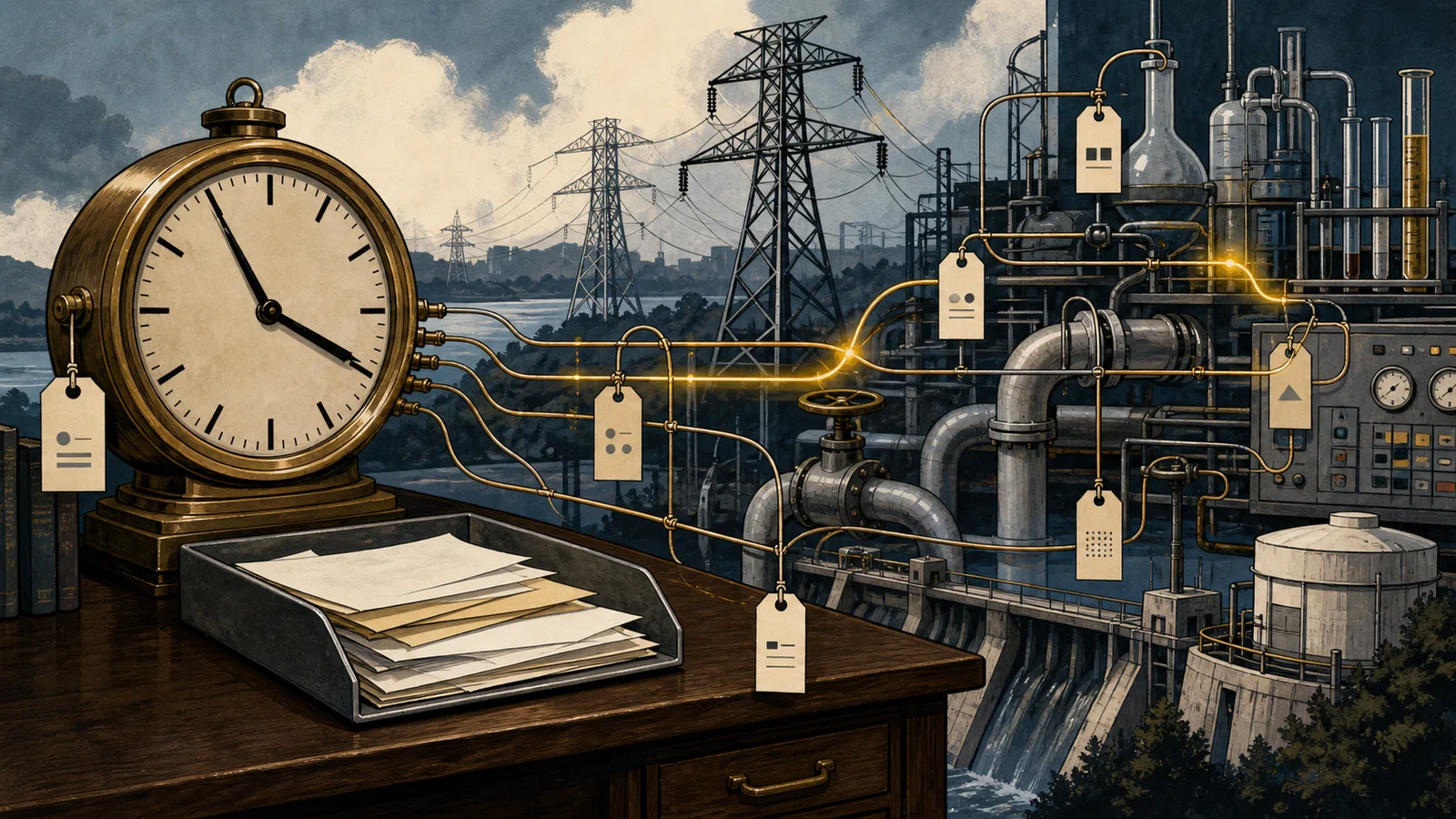
The comment clock starts before the public can see which future rule will need saving.