The Three-Body Problem: A Sci-Fi Epic That Redefines Civilization’s Place in the Universe
Should you read this viral book? (Yes)
Should you read this viral book?
Spoiler alert. Imagine waking up to find the laws of physics have changed overnight. Scientists scramble for answers. Reality itself feels unstable. Then, a message arrives, one that changes everything. We were never alone. From the moment I started reading, I was hooked. The sheer scope and scale of Liu Cixin’s storytelling kept me on the edge of my seat. My partner, sitting beside me on the couch, had to endure my gasps, laughter, and cheers as the story unfolded.
I became deeply invested, not just in the high-stakes mystery at the novel’s core, but in its characters, its ideas, and the unsettling implications of its answers.
This is not just a story. It is a challenge. It forces you to think, blending hard science with philosophy and exploring the fragility of civilization on a scale few novels dare to attempt.
A Tale of Science, Betrayal, and Unfathomable Forces
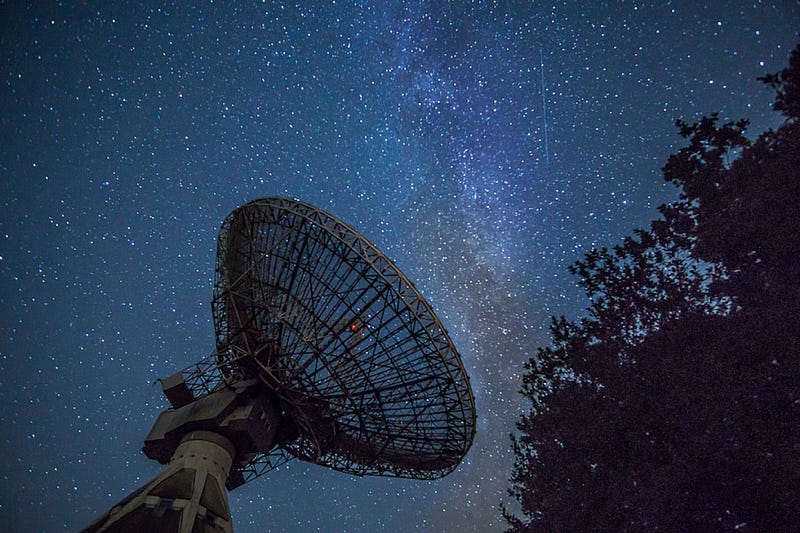
The novel opens amid China’s Cultural Revolution. Scientists are persecuted. Knowledge is a threat. Chaos reigns. Ye Wenjie, a young astrophysicist, watches her father beaten to death for refusing to renounce science. Disillusioned, she makes a choice, one that will alter the fate of humanity.
She answers a signal from an extraterrestrial civilization. Decades later, Wang Miao, a nanotech scientist, is pulled into a secret investigation. Physicists are dying under bizarre circumstances. The laws of physics themselves seem to be breaking. His search for answers leads him to a strange virtual reality game called Three-Body.
At first, it seems like a puzzle, an intellectual exercise about survival in an unstable alien world. Then, the realization hits.
This is not a simulation. It is a message and a warning. Humanity is not alone, and now it has been seen.
Characters: The Human Struggle Against an Unfathomable Universe
Ye Wenjie: The Scientist Who Lost Faith
Ye Wenjie is the novel’s most compelling figure. She’s not a villain, yet her choices shape humanity’s fate more than any antagonist could. Her worldview is forged by violence, betrayal, and the destruction of knowledge.
Ye does not believe humanity can save itself. The novel makes that despair feel earned rather than merely cynical: she has seen institutions punish truth and reward destruction, so she seeks salvation elsewhere.
Wang Miao: The Reluctant Investigator
Wang is our entry point into the novel’s mystery. A rational scientist at first, he soon spirals into paranoia and existential dread. The moment he realizes the fundamental laws of physics might be breaking is one of the book’s most chilling moments.
Unlike Ye, he is not driven by ideology. He is simply searching for the truth, and the possibility that physics itself might be unreliable turns his rationality into dread.
Shi Qiang (Da Shi): The Pragmatist
Blunt. Cynical. Fearless. Da Shi is the novel’s wildcard. While others theorize and debate, he cuts straight to the point.
He is a cop, not a philosopher. His gift is practical judgment: when danger is near, he asks what action stops it. In a book filled with existential dread, his pragmatism is a breath of fresh air.
Setting: A Story That Spans Eras and Worlds

The Cultural Revolution: The First Collapse
Liu Cixin does not just use history as a backdrop. He makes it a catalyst for everything that follows. The Cultural Revolution isn’t just setting; it’s where Ye loses faith in humanity. It’s where she makes her fateful choice.
It is a brutal but effective way to ground the novel’s cosmic ideas in real-world consequences. The political violence is not background noise; it is the institutional failure that makes first contact morally unstable.
The Three-Body Game: A Simulation of Survival
The virtual reality game Three-Body is one of the novel’s most brilliant inventions. Players experience a chaotic alien world where civilizations rise and fall unpredictably due to their planet’s unstable orbit.
At first, the game seems like a strange puzzle. Then, it becomes clear: this is not just a game. It’s a message from an alien race. And it holds the key to humanity’s first contact.
Themes: Science, Survival, and the Fragility of Civilization

Faith in Science vs. Despair in Humanity
The novel does not romanticize science. It dissects it. Coldly. Rationally. Science is neither good nor evil. It’s simply power.
Science appears less as moral rescue than as power. Ye Wenjie sees science as an escape from humanity’s self-destruction. Wang Miao sees it as something to be understood. The novel never chooses a side.
The Nature of Civilization and Progress
Is human progress inevitable? Or is it fragile, fleeting, and easily erased?
Liu suggests that intelligence alone does not guarantee survival. Adaptation, resilience, and sheer luck play just as large a role.
Writing Style: A Different Kind of Sci-Fi

Liu Cixin’s writing is dense, methodical, and idea-driven. It’s not emotional in the traditional sense, but it rewards patience. The translation by Ken Liu captures the novel’s complexity, though it can feel stiff at times.
The pacing? Slow at first. But the payoff? Enormous.
Impact and Legacy
The Three-Body Problem is one of the most important sci-fi novels of the 21st century. It bridges cultures. It challenges readers. It refuses to be simple.
The Netflix adaptation has already widened the audience for the story, and the harder question remains: can such a cerebral, deeply philosophical book ever be fully adapted without losing what makes it strange?
For those who love big ideas in sci-fi, this book is essential reading.
Verdict: Should You Read It?

Who will love this book?
Readers most likely to love it are fans of hard science fiction, slow-burning mysteries, deep philosophical questions, and science-fiction novels that actually challenge them.
Who might struggle with it?
It may be harder for readers who prefer fast-paced action, need deeply personal emotional arcs, or are put off by heavy scientific explanation.
Final Thoughts: A Sci-Fi Masterpiece or a Thought Experiment?
This book does not just linger in your mind. It alters how you see the universe. The framing of the physics problem as an immersive video game was a stroke of genius, setting up the book’s moral and ethical dilemmas perfectly.
I cannot recommend it enough to lovers of sci-fi and expansive fiction. If you want a book that will consume your thoughts long after the final page, The Three-Body Problem is essential reading.