The War Premium at the Auction
A 10-year Treasury yield above 4.5 percent turns war, energy, deficits, and Federal Reserve patience into one daily price.
The Bid
A Treasury note begins as a promise on paper.
It has a face value, a maturity date, a coupon, and the full faith and credit of the United States behind it. It looks clean because the form is clean. The government borrows. Investors buy. The public receives roads, aircraft carriers, benefit checks, border systems, interest payments, salaries, tax cuts, and war finance by way of a market transaction that can fit inside one line of auction results.
Then the bidders arrive.
On May 24, Reuters reported that Treasury investors had pushed benchmark 10-year yields above 4.5 percent as Washington tried to manage the Iran war, economic policy, and pressure on the Federal Reserve. That number is easy to treat as market weather. It deserves a more physical reading. A yield is the country’s rent on time.
The auction is where national intention meets cash. Washington can choose commitments, campaigns, strikes, tax policy, industrial policy, entitlement schedules, and debt issuance. It can argue over the moral case for each. Buyers then decide the price at which they will hold the obligation.
The 10-year note is one of the instruments that makes that judgment visible. It is a public promise priced by private and foreign balance sheets. The yield rises when buyers require more compensation for inflation, supply, risk, duration, and uncertainty. The number carries no ideology. It carries arithmetic, fear, opportunity cost, and trust.
The Strait in the Rate
The Iran war enters the auction through fuel, shipping, military spending, and time.
Reuters separately reported on May 24 that the United States and Iran had largely negotiated a framework that could reopen the Strait of Hormuz. The same report described the strait as a major shipping passage whose closure had helped produce a global energy crisis. Another Reuters report said Secretary of State Marco Rubio discussed maritime security, energy supplies, trade, and visas with India’s foreign minister while citing possible progress around Hormuz.
Those diplomatic lines sound far away. The bond market brings them home.
Oil affects headline inflation, transport costs, airline fuel, farm inputs, plastics, groceries, and household budgets. A military commitment affects appropriations, procurement, readiness, risk premia, and the path of future deficits. Shipping disruptions affect inventories, insurance, delivery schedules, and the price of replacement goods. None of those channels needs a dramatic speech to reach the Treasury market. The auction receives them as questions: how much inflation risk, how much borrowing, how long, and at what price?
The Treasury Department’s daily yield curve gives the public a plain record of that price. The Federal Reserve’s H.15 release does the same with market interest rates. The numbers are technical only until they touch a mortgage, a municipal bond, a credit card, a car loan, a construction budget, or the next Treasury refunding.
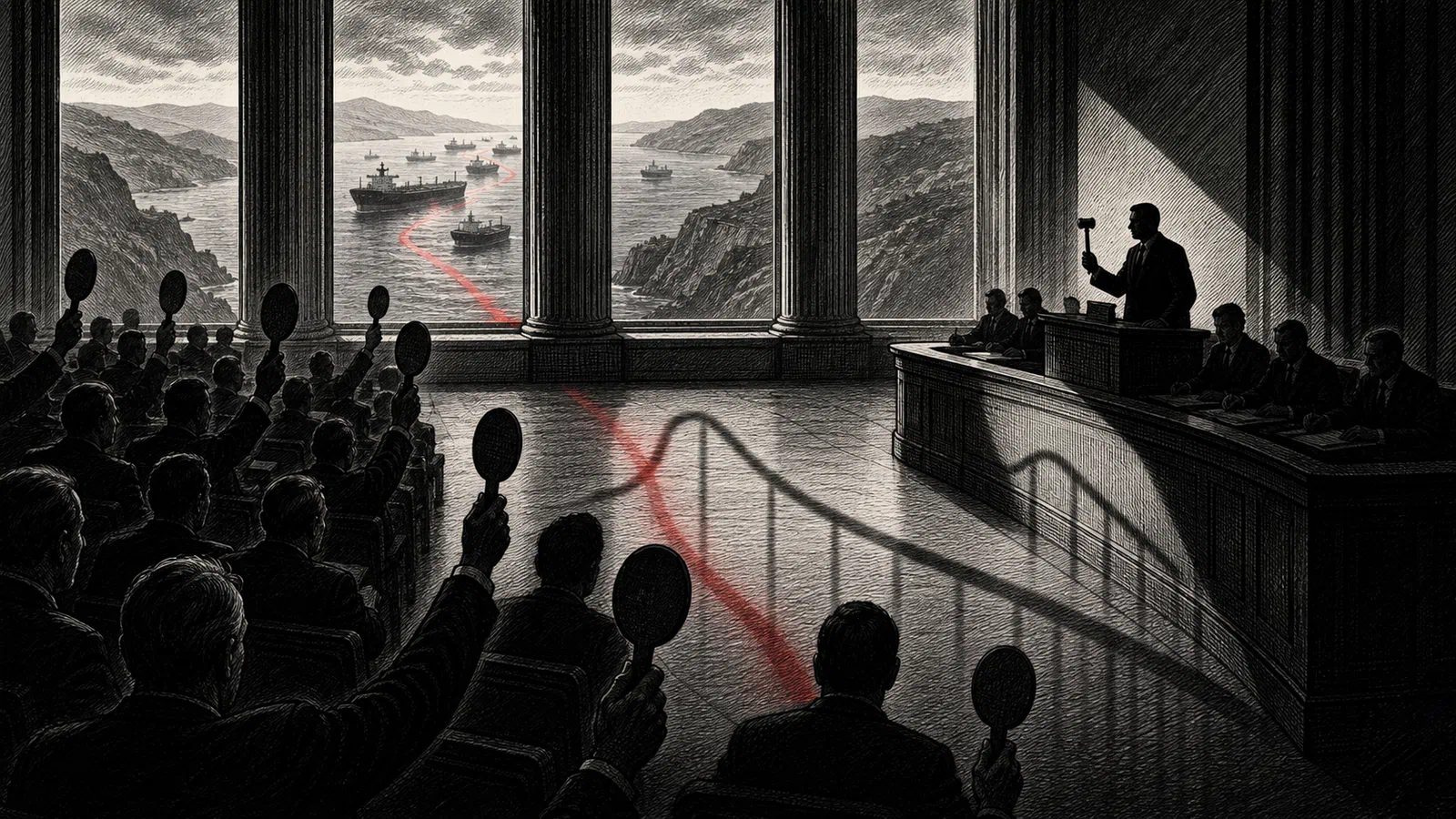
Geopolitics reaches the room as a required return.
The Cost of Room
Presidents like room.
They want room to fight, room to cut taxes, room to claim growth, room to subsidize favored industries, room to defend allies, room to avoid recession, room to lean on the central bank, room to promise relief at the pump, room to protect old voters, room to reward new constituencies, and room to call the whole package strength.
The bond market sells room. It does not grant it.
That is the discipline inside the 10-year yield. Treasury securities are treated as the safest asset in the world, but safety and cheapness are separate ideas. The United States can be an unmatched borrower and pay more for the privilege. Investors can believe the debt will be paid while demanding a higher rate to hold longer maturities during war, inflation pressure, heavy issuance, or political uncertainty.
The Congressional Budget Office has warned for years that federal debt and net interest costs are taking a larger place in the budget. The Treasury’s quarterly refunding documents show the routine machinery that turns those fiscal needs into market supply. The process is orderly. The pressure is real.
Higher yields do several things at once. They pay savers more. They make borrowing dearer. They can tighten financial conditions without a new law. They can raise the federal government’s own interest bill. They can compete with stocks and private investment. They can pull future taxes and future spending fights into the present through one ordinary coupon.
This is the part of public finance that campaign language hates. Every policy has a funding path. Cash comes through taxes, fees, borrowing, money creation, or some disguised version of those choices. Borrowing delays the tax question; it does not erase the investor question. The investor question arrives at auction.
The Fed’s Narrow Door
The Federal Reserve sits near the auction without owning it.
The central bank can set short-term policy rates, guide expectations, buy or shrink assets, supervise banks, and speak in careful paragraphs. It cannot make long-term investors ignore inflation risk, fiscal supply, energy shocks, or confidence. The White House can demand lower rates. The Federal Open Market Committee has to account for inflation, employment, financial conditions, and credibility.
Reuters’ note about Fed officials discussing possible rate increases carries force for this reason. A war-related energy shock can make rate cuts harder. A rising deficit can make investors more sensitive to inflation and supply. A president’s public pressure on the Fed can make credibility more expensive to protect. The Federal Open Market Committee must work through a narrower door.
This does not make the bond market wise in every moment. Traders can overreact. Yields can fall as quickly as they rise. A peace framework can lower oil pressure. Growth can weaken. Inflation can cool. Foreign demand can return. A single day of trading gives a signal, not final judgment.
The longer question is harder. How much does the United States spend to preserve freedom of action abroad while also preserving affordability at home? How much debt can be rolled into the future before interest becomes one of the government’s main programs? How much political pressure can a central bank absorb before investors charge extra for doubt?
The public often hears those questions as abstractions. The auction hears them as yield.
The Public Price
The 10-year note is not dramatic. It does not shout. It does not hold a press conference. It sits in spreadsheets, terminals, retirement accounts, bank portfolios, insurance ledgers, foreign reserve books, and mortgage models.
That quietness is the point. The Treasury market is one of the places where public power becomes legible without permission. It prices confidence, impatience, fear, and scarcity before officials finish explaining themselves.
A war can be justified and expensive. A deficit can be lawful and costly. A rate cut can be politically desirable and economically premature. A peace deal can be promising and incomplete. A bond auction has room for all of those truths because it has no need to flatten them into a slogan.
When the 10-year yield rises, the country is being asked a plain question: what return should buyers receive for financing this much future?
The answer changes every day. The obligation remains. Somewhere in the machinery, another note is offered, another bid is entered, and the war premium finds its price.
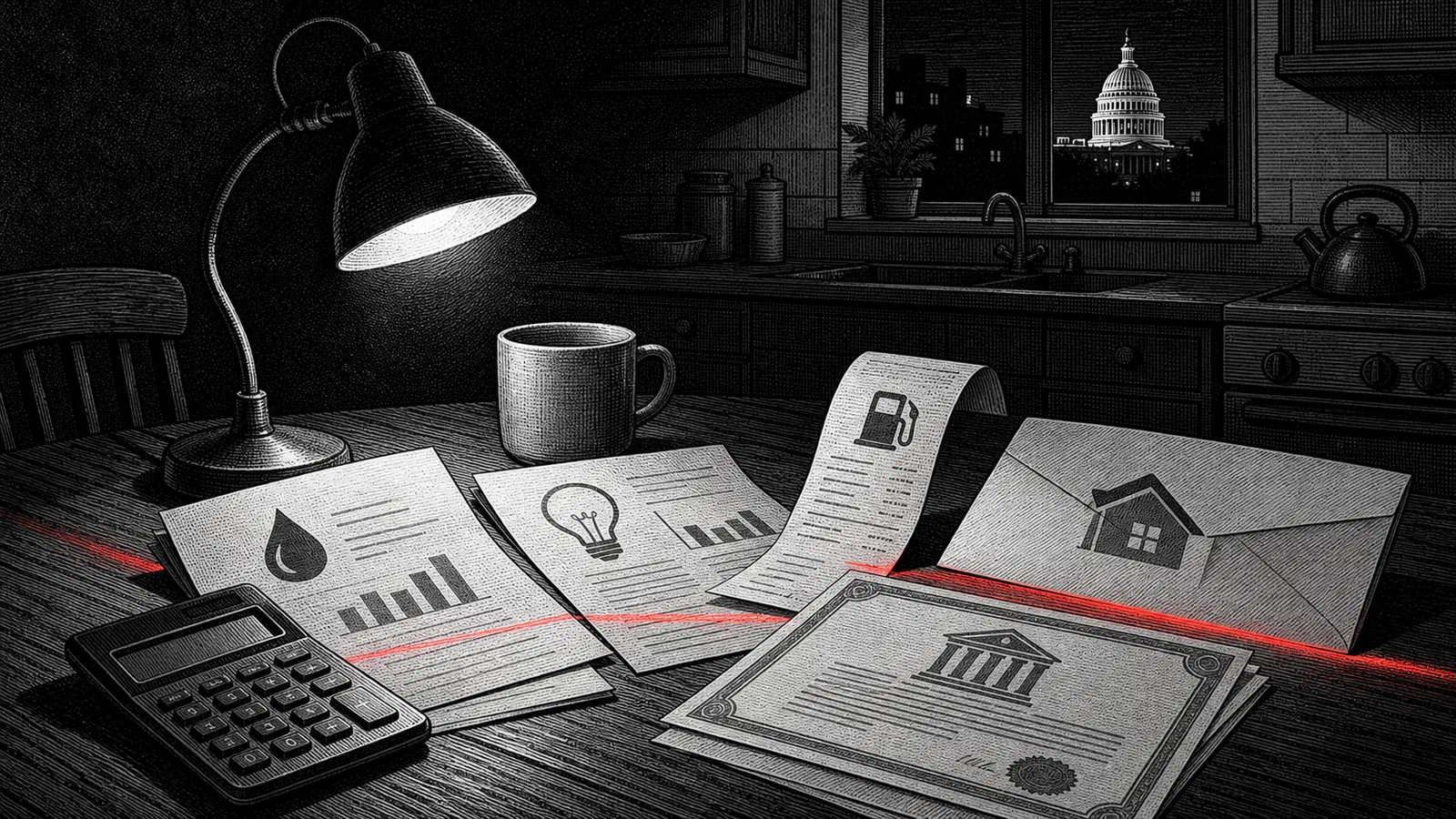
The public price eventually reaches the kitchen table.